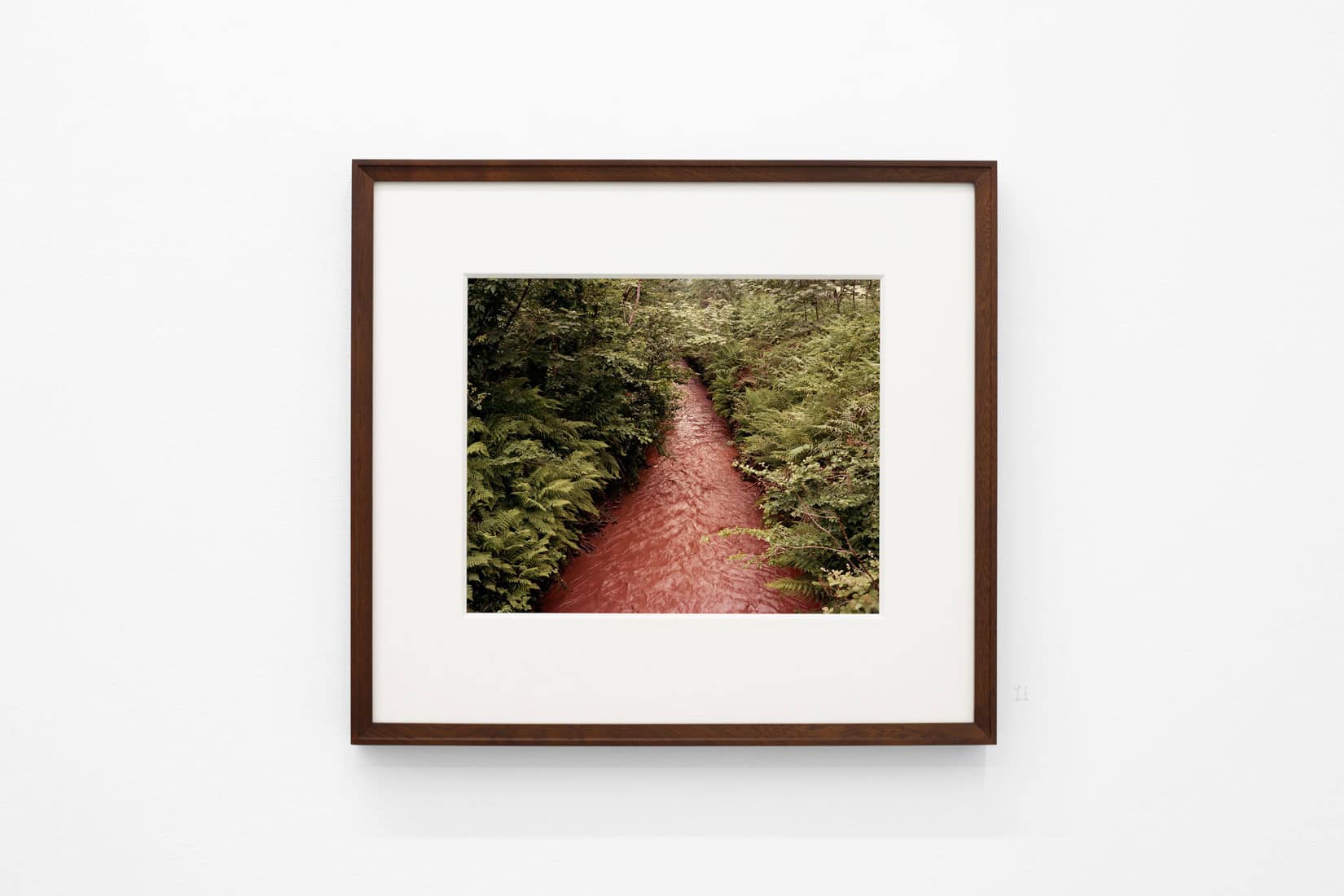
[...] And through them runs ...The thin thread of a red stream, the blood-flow ...Of Cornwall, the beautiful bal-maiden.
D M Thomas
East of Troon, in Cornwall, rises a river whose water is red. The Red River, as it is called, flows for less than ten miles before meeting the Atlantic in St Ives Bay. Between its spring and the sea, the stream crosses a valley punctuated by farms, mines and engine houses, a post-industrial landscape often overlooked in Cornwall’s travel itineraries. The tin-laden soil gives the river its distinctive red hue, making it a visual memento of the region’s industrial past and a vessel of profound symbolic resonance.
Jem Southam documented the river in his seminal series The Red River, transforming the local landscape into poetic representations of the intertwining of human industry and nature, myth and history. The Stream at Menadarva captures the river as it flows past Menadarva, an area in the parish of Camborne whose Cornish name translates as “the grave of St Derwa,” a local Christian martyr. In this riverscape, a stream of red water cuts through the centre of the image, rising from the bottom to the top of the frame. On either side, stubborn ferns and other forest plants lean towards the water, their greens set in vivid contrast against the flowing red. Southam’s photograph captures the kinetic power of the landscape, the river’s rapids bristling in juxtaposition with the curled fronds of the river’s banks.
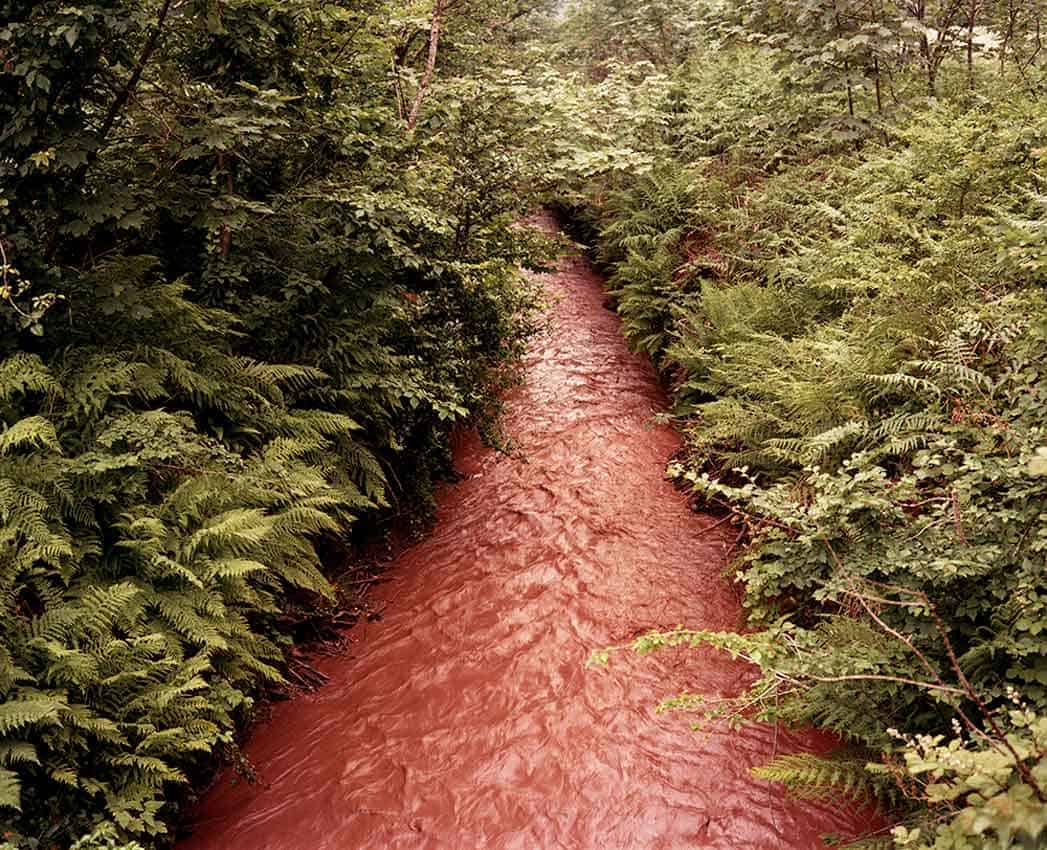
Detail of Jem Southam, The Stream at Menadarva, 1982-1994.
Southam rejects a topographic approach, adopting instead a more “fluid” method that brings him into closer proximity with the water — the point of departure for all his projects ever since. Despite the unconventional use of the camera, which excludes the sky from the frame and plunges the viewer into the depths of earth, The Stream at Menadarva remains in dialogue with traditional landscape imagery and a century-long British pastoral tradition.
Southam is interested in the landscape where he lives, repeatedly returning to the same sites to observe how the environment transforms while maintaining its recurring cycles. Far from presenting an idyllic scene, Southam’s photograph captures the essence inherent to the English countryside — a blend of nostalgia and folklore grounded in the human relationship with, and dependence on, nature.
(By Anna Suigo)