William Turnbull:Head II
1994
Bronze on york stone base
10 3/4 x 4 3/4 x 5 1/2 inches
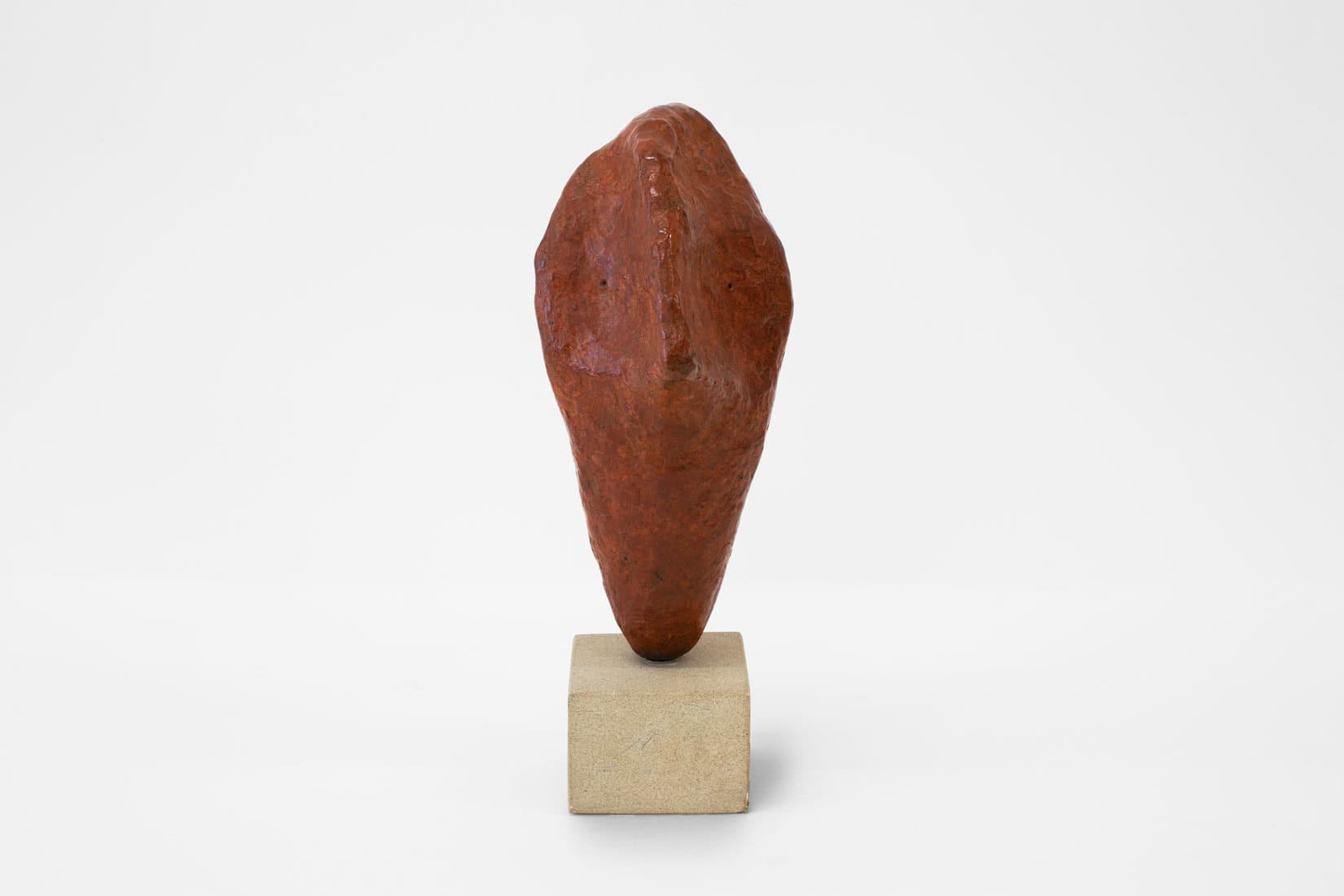
Emotions like glee, anger, or benevolence all find expression in the spiritually charged totemic sculptures of Cambodia, Japan, and Singapore, reduced down to their pictorial and sentimental essences. William Turnbull visited these countries with his wife, Kim Lee, in the 1960s: the abstract forms and abstract manifestations of religious or moral concepts which form these works generate a palpable presence, an aura that the Scottish artist felt powerfully drawn to. Turnbull spent much of the following decades infusing his works with a tenor of mystery and religious significance, while a fascination with materiality vivifies these sculpted ambiguities. ‘Head II’ is an example of this – a humanoid shape reduced down to its core elements, a totemic expression of indifference, imperviousness, and emotional simplicity.
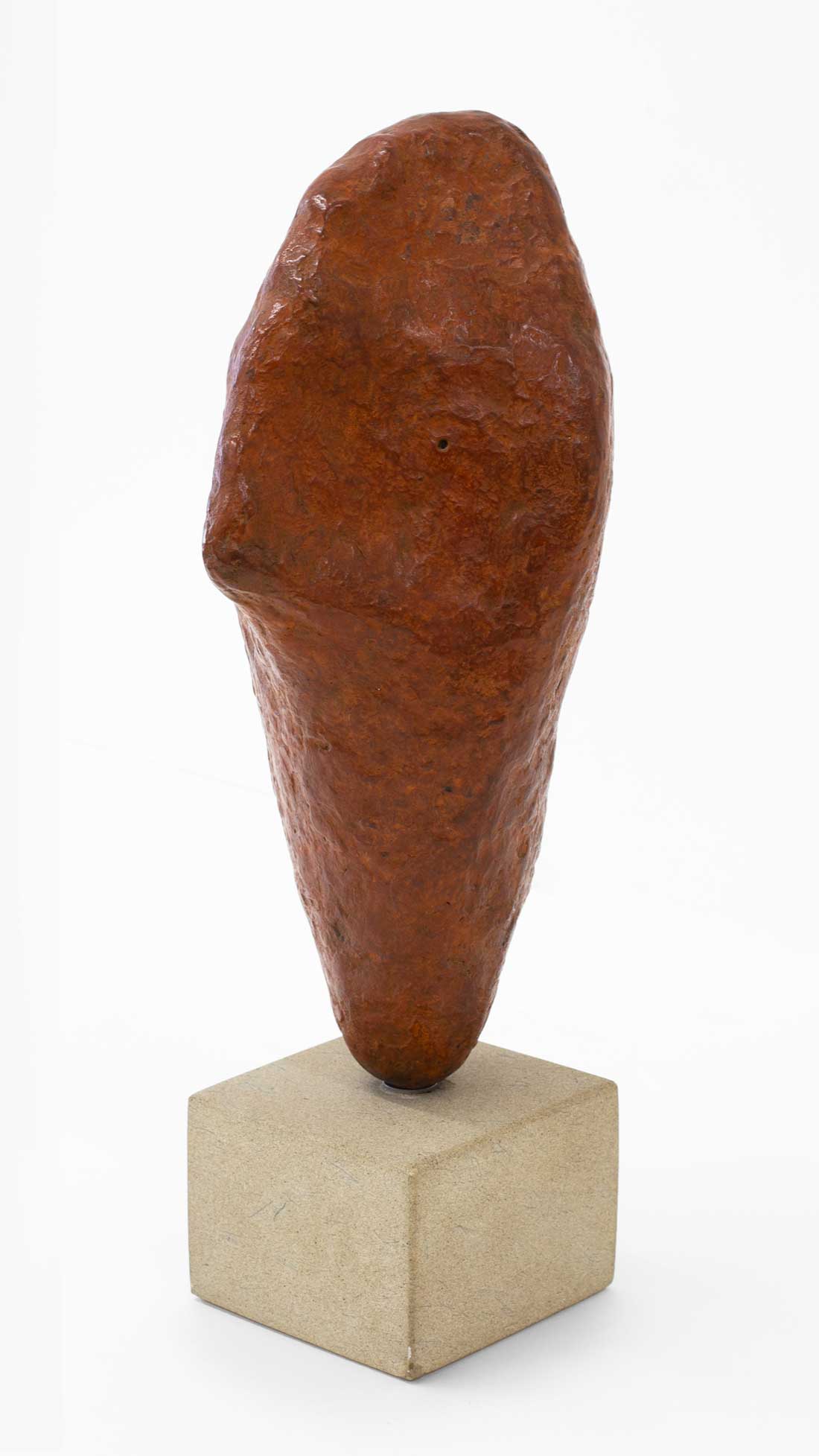
Made towards the end of his career, ‘Head II’, 1994, is a culmination of William Turnbull’s interests in form and material. Like much of the sculptor’s works, this bronze pushes an experimentation with reduction of form to its limits; an exaggeratedly elongated and misshapen head, punctuated with two tiny dots which represent eyes, sit on either side of a protuberant nose. The artist deftly creates texture with his material, which appears rough and mottled like stone, combined with a ferruginous hue of orange.
In Context
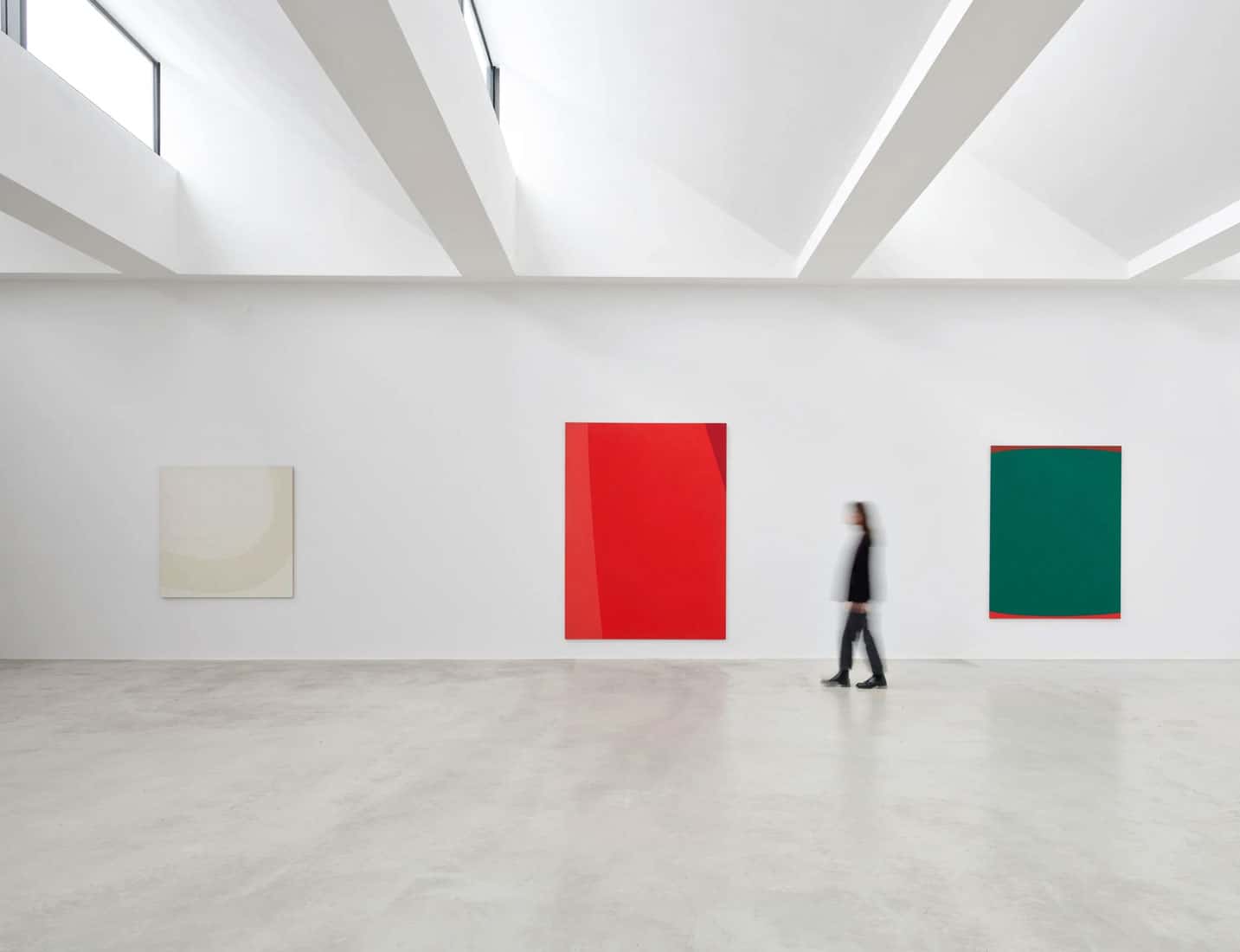
As well as sculpting, Turnbull was a trained painter. The artist was recognised during his lifetime for his colour field paintings, as pictured here. The artist tended to adopt a subtlety and lightness when working on canvas that he avoided in his heavy, textured sculptures.
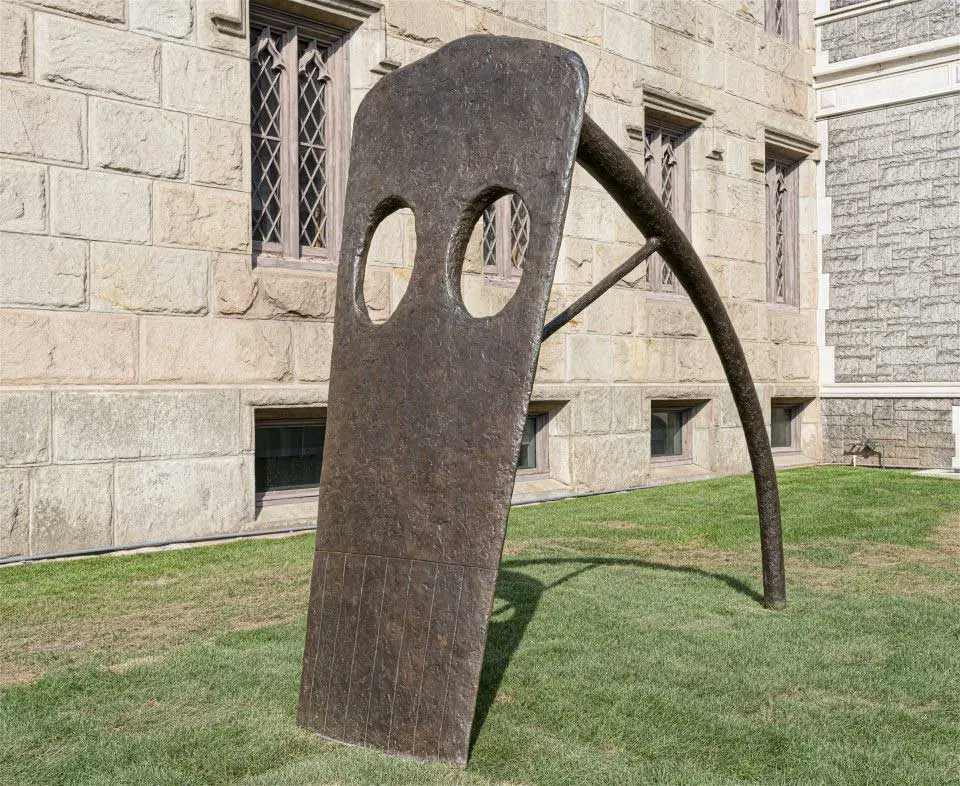
Sculptors such as Barbara Hepworth and Henry Moore were influences on Turnbull. Abstract human forms found their way into the Scottish artist’s oeuvre from the 1960s onwards, such as in this work pictured above, entitled ‘Large Horse’.
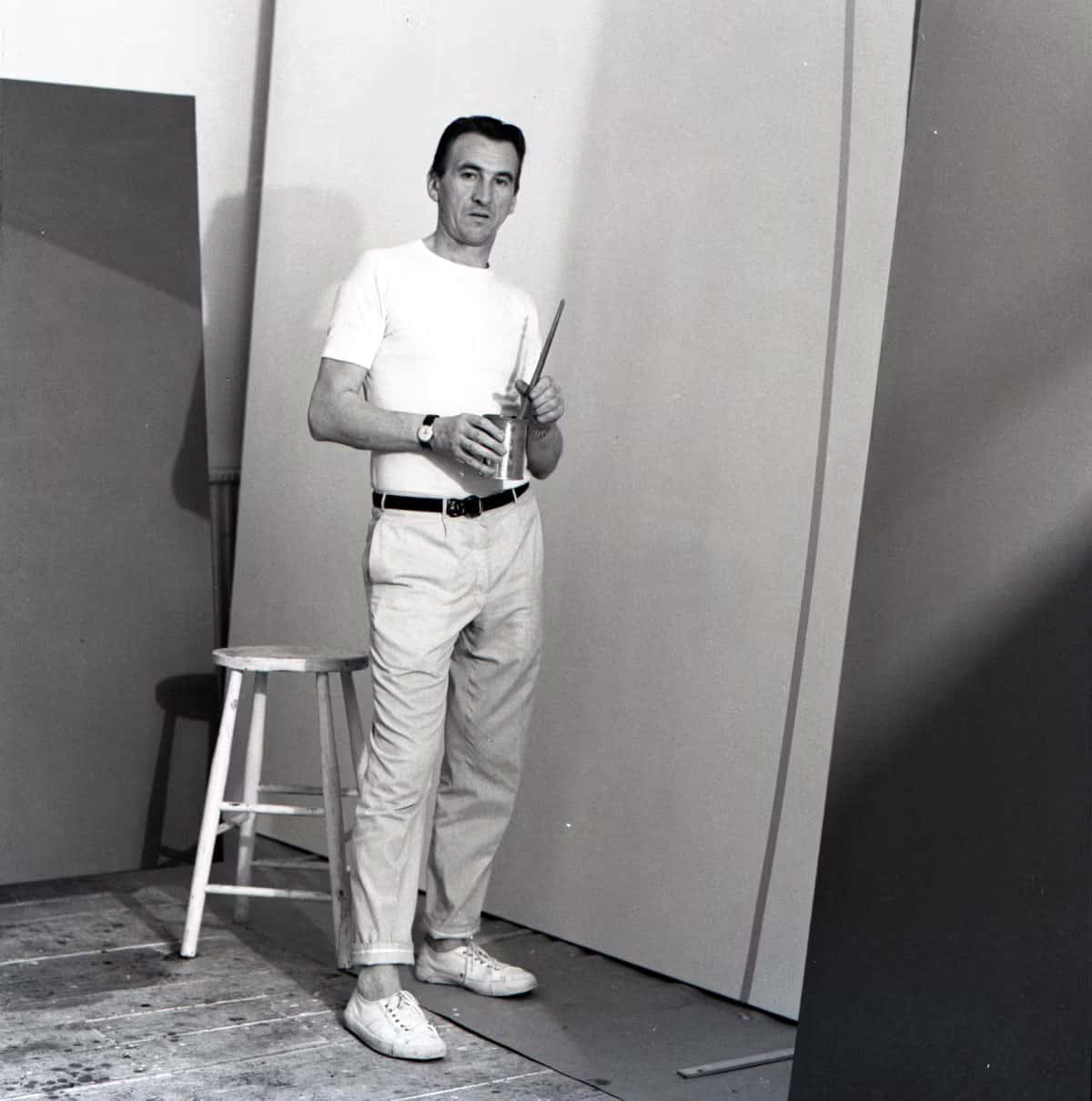
Turnbull’s career spanned nearly seven decades, garnering widespread recognition among the contemporary art scene throughout. By the time this picture was taken in 1960, he had been shown at the prestigious Hanover Gallery in London, had represented Great Britain at the Venice Biannale, and had been featured in solo and group exhibitions internationally.
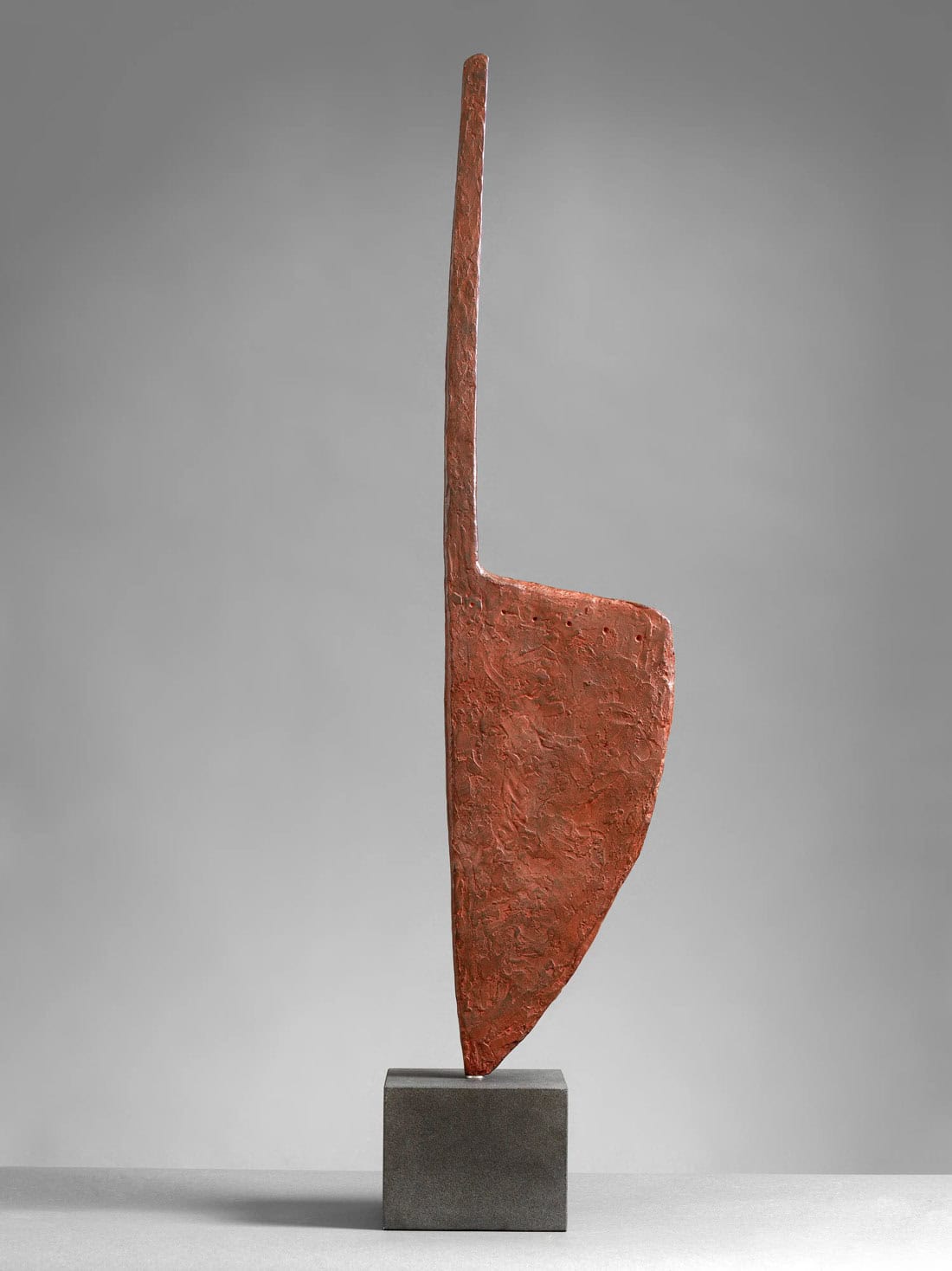
Turnbull would return to bronze towards the end of his career. Fibreglass and stainless steel were his two most notable exceptions to bronze, chosen because of their abilities to harness light. Bronze, however, suited Turnbull’s rougher style of sculptural finish, while giving his works an artificial patina. Blade Venus I, 1989, pictured above, is one such example of this.
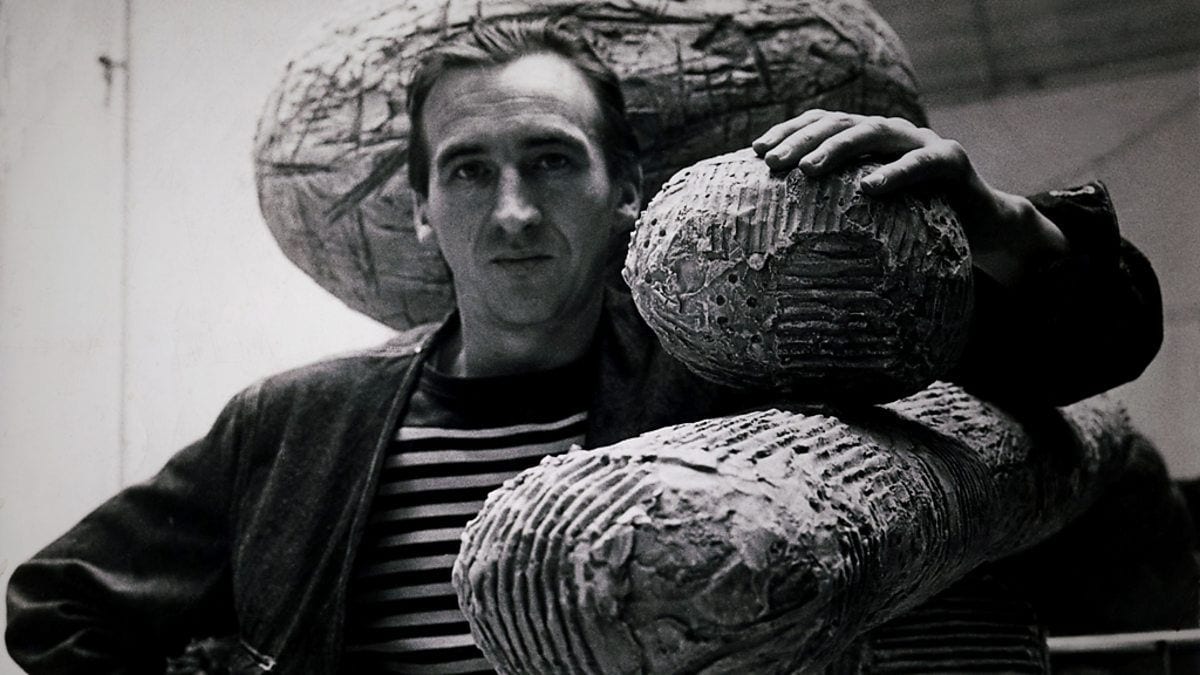
B. United Kingdom1922-2012
Biography
William Turnbull’s paintings and sculptures experimented with balance, movement, and stillness through streamlined shapes and forms. Initially working first with copper, bronze, and plaster, Turnbull began to integrate raw woods into his practice following a trip to South and Southeast Asia with his late wife, sculptor Kim Lim (1936-1997). Reimagining pre-classical sculpture and religious carvings, Turnbull’s practice brought together the industrial with natural materials.The artist’s practice brought together the industrial with natural materials, informed and influenced by art history. His work reimagined pre-classical sculpture and religious carvings and in particular, minimalism. Continually evolving, it was at a 1973 retrospective of his work at the Tate modern that saw Turnbull return to his first love: sculpting with wood, copper, and bronze with raw, tremelled textures. A lover of the historic, his works reimagined pre-classical sculpture and religious carvings for a modern art world.
Turnbull, born in 1992, studied at the Slade School of Fine Art. He became a member of the ‘Independent Group’, which included leading artistic figures of post-war Britain, such as Eduardo Paolozzi and Richard Hamilton. Turnbull was featured in numerous exhibitions across his near-70 year career, most notably showing in Aspects of British Art at the Institute of Contemporary Arts (1950), the British Pavillion at the 1952 Venice Biennale in New Aspects of British Sculpture, the touring Arts Council England exhibition Contemporary British Sculpture (1958), and retrospectives at the Serpentine Gallery, London and Tate, London. His work can be found in numerous collections such as the Art Gallery of Ontario, Canada; the Arts Council Collection, United Kingdom; the British Council, United Kingdom; the Glasgow Museum and Art Gallery, United Kingdom; the Hirshhorn Museum and Sculpture Garden by the Smithsonian Institution, United States; the Museum of Contemporary Art, Iran; the National Gallery of Art, United States, and the Tate Collection, United Kingdom, among others.