Current
25.2 – 11.3 2026
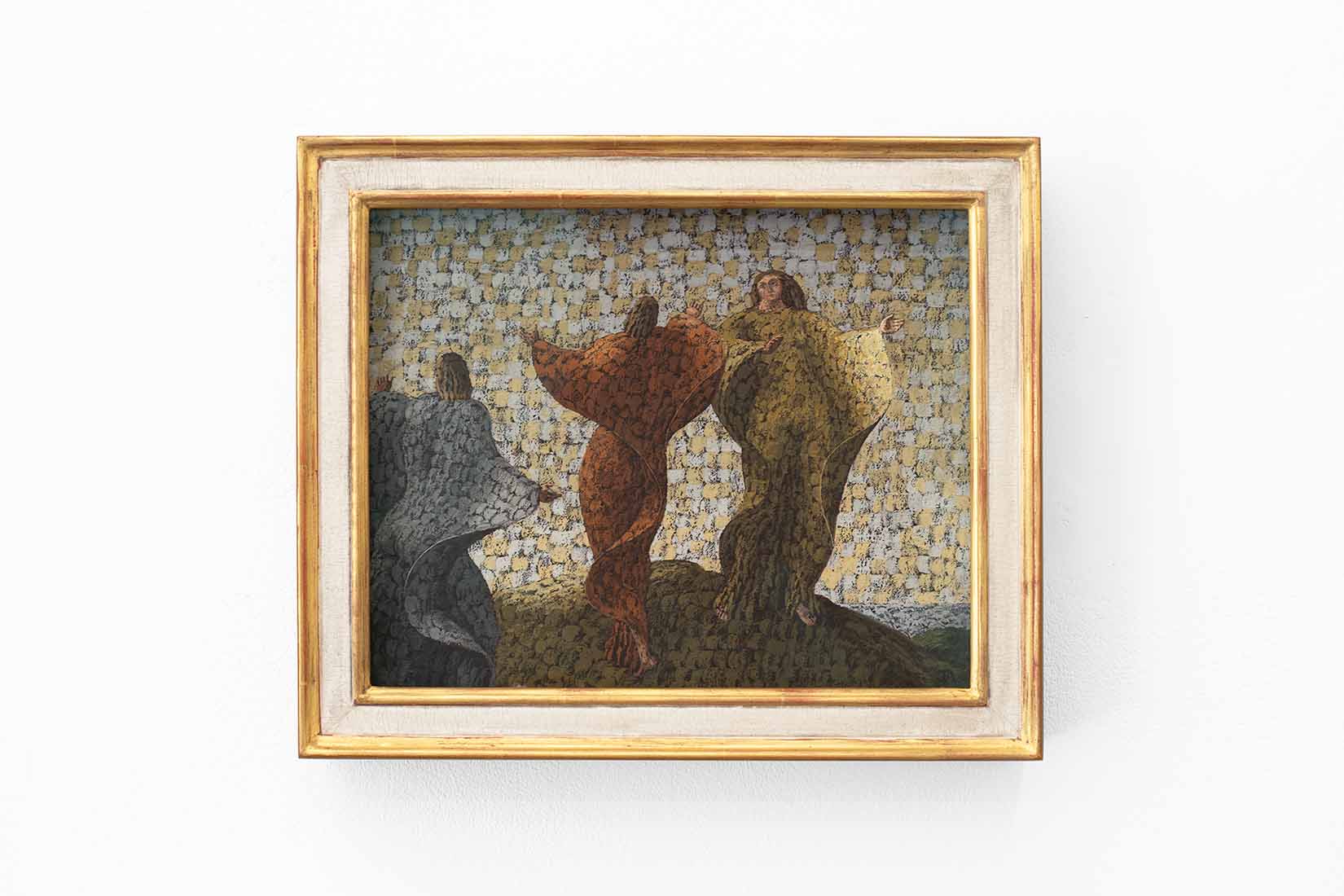
John Armstrong:Group of Figures
John Armstrong:Group of Figures
1945
Tempera on hand-made paper laid on panel
6 3/4 x 8 3/4 inches
Destruction had been the defining tenor and subject of John Armstrong’s oeuvre throughout the Second World War. While his Surrealist tendencies always remained, it was a gritty reality that the artist ultimately described. When the war ended, however, his work gained a levity and took on a symbolism that his earlier work omitted. Images of dancing figures clothed in antique drapery, treading on grass within a paired back landscape became part of the artist’s regular output. As symbolic works they invoke a message of optimism, of a prophetic view into a future in which civilisation can be reimagined.
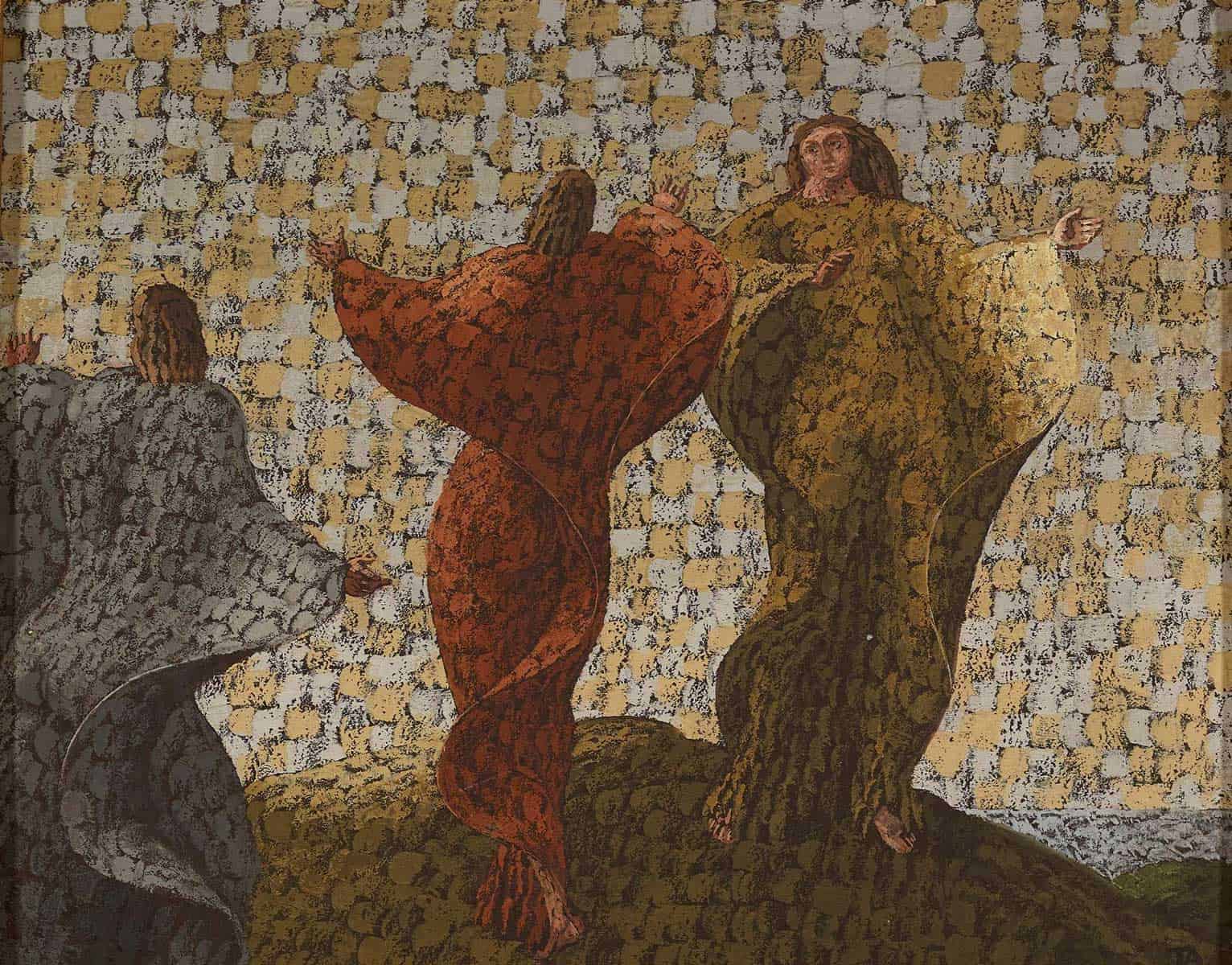
Group of Figures, 1945, encapsulates Armstrong’s rekindled interest in Classical and Renaissance imagery. The artist evokes art history partly through his material: egg-tempera, the choice medium for most artists in Fifteenth-Century Italy. Likewise, the apparel of the figures recalls the frescoes of Pompeii and their animated poses, accentuated by Armstrong’s confident use of line. His linear technique resembles the works of Sandro Botticelli, while the minimalist landscape in which his figures exist speak of Michelangelo’s rudimentary imaginations of vegetation and rock formations. In effect, this abstract space serves as a stage for the drama of his characters, who could be seen as muses or sibyls. Armstrong expresses his Surrealist sensibilities by constructing the painting with squares of colour, which make the image glitter, highlighting the surreality of the artist’s vision.
More Info
EnquireIn Context
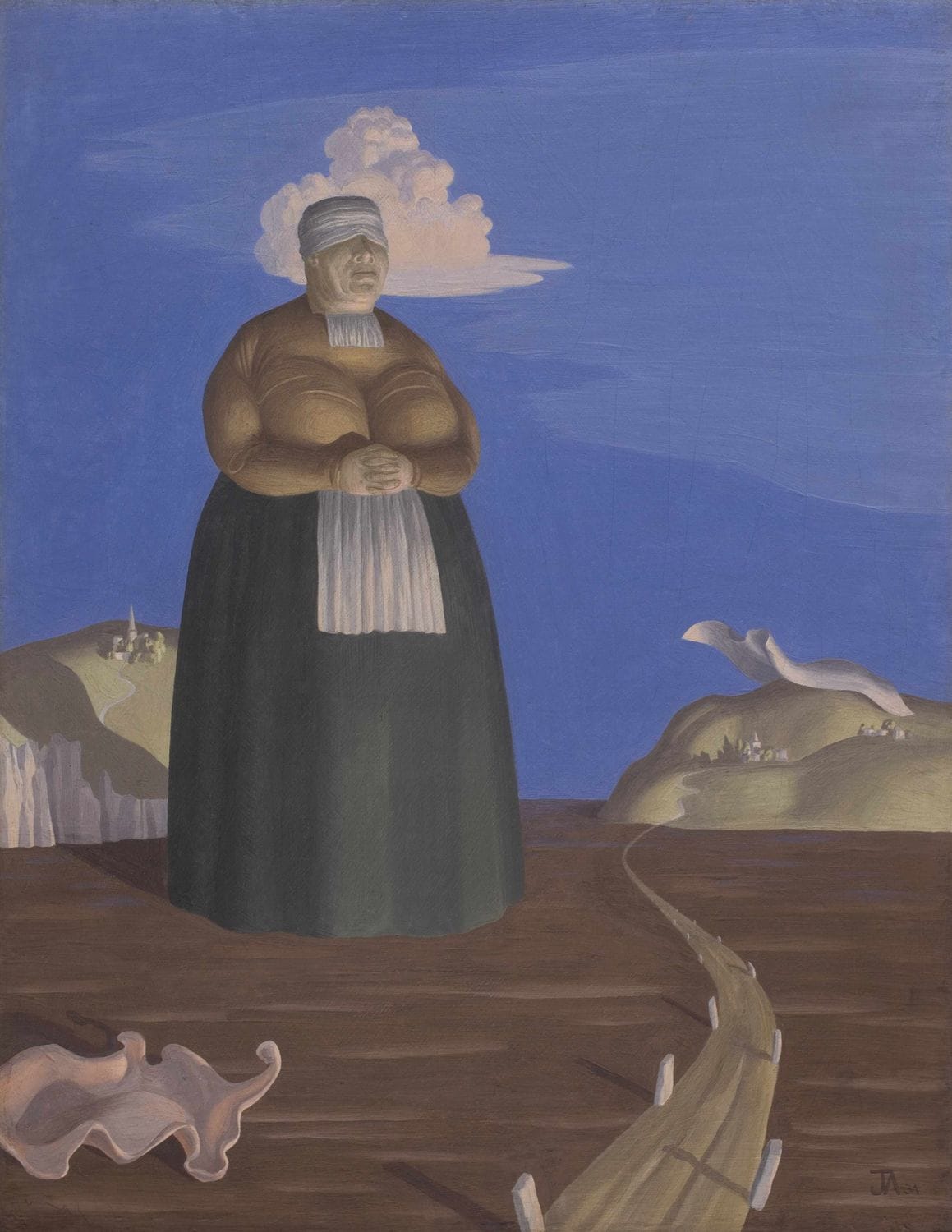
During the 1920s, John Armstrong established himself within Britain’s avant-garde movement. The artist’s first major exhibition in 1928 was with Leicester Galleries, where the works of Paul Nash, Mark Gertler, and Henry Moore were also being shown. Works like this one, ‘Encounter in the Plain’, 1938, show his willingness to subvert tradition and work within avant-garde parameters.
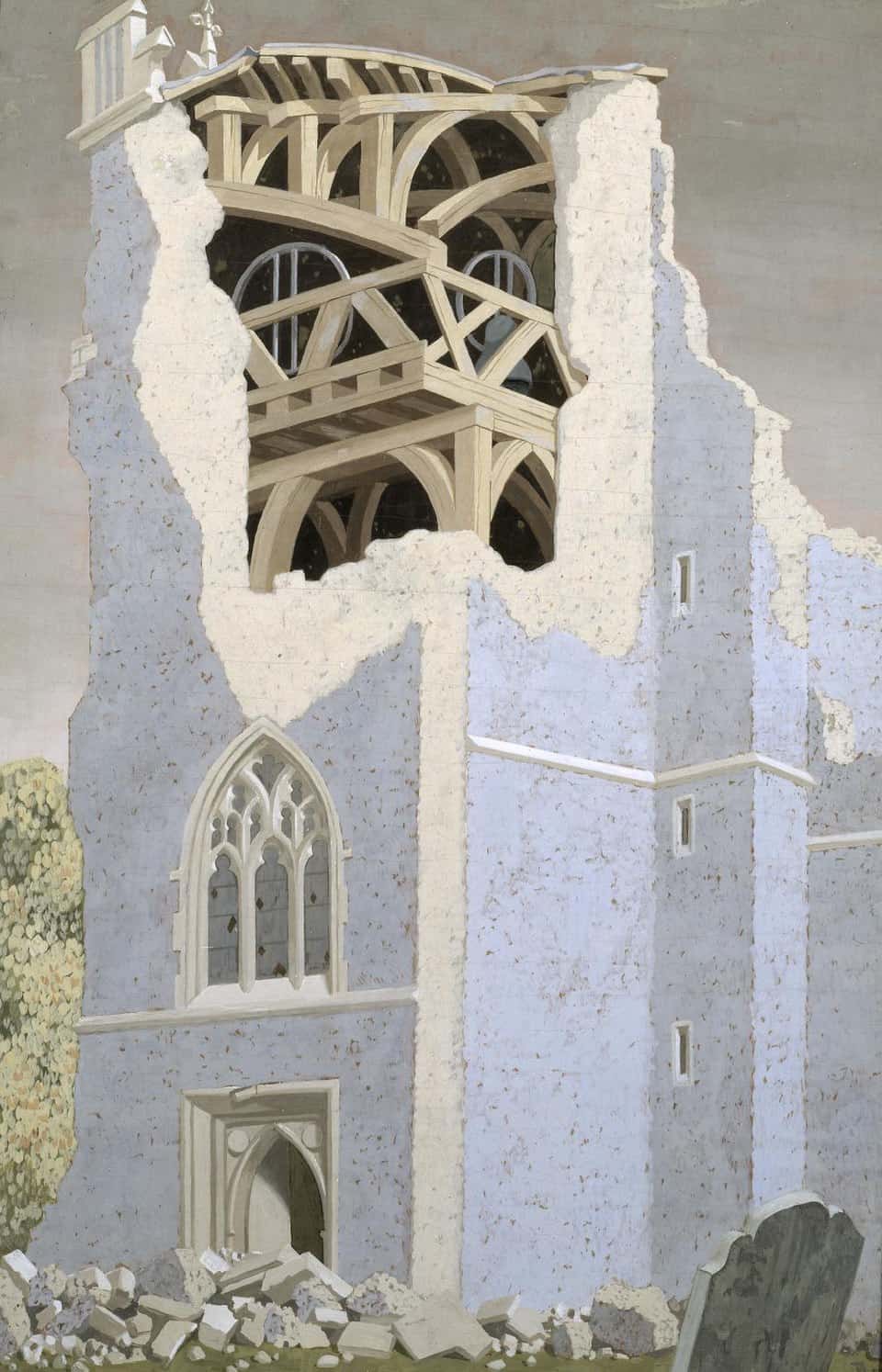
Armstrong was always acutely aware of global geopolitical climates. His studies at St John’s Wood Art School were interrupted by the outbreak of the First World War, in which he served in the Royal Field Artillery. The Second World War had a seismic impact on Armstrong’s artistic output. As an official war artist, he examined and represented the home front, as exemplified by this painting, ‘Coggleshall Church, Essex’, painted in 1940. When set against this bleak painting, Group of Figures, painted only five years later, resonates with joy over the conclusion of war, a resplendency and optimism.
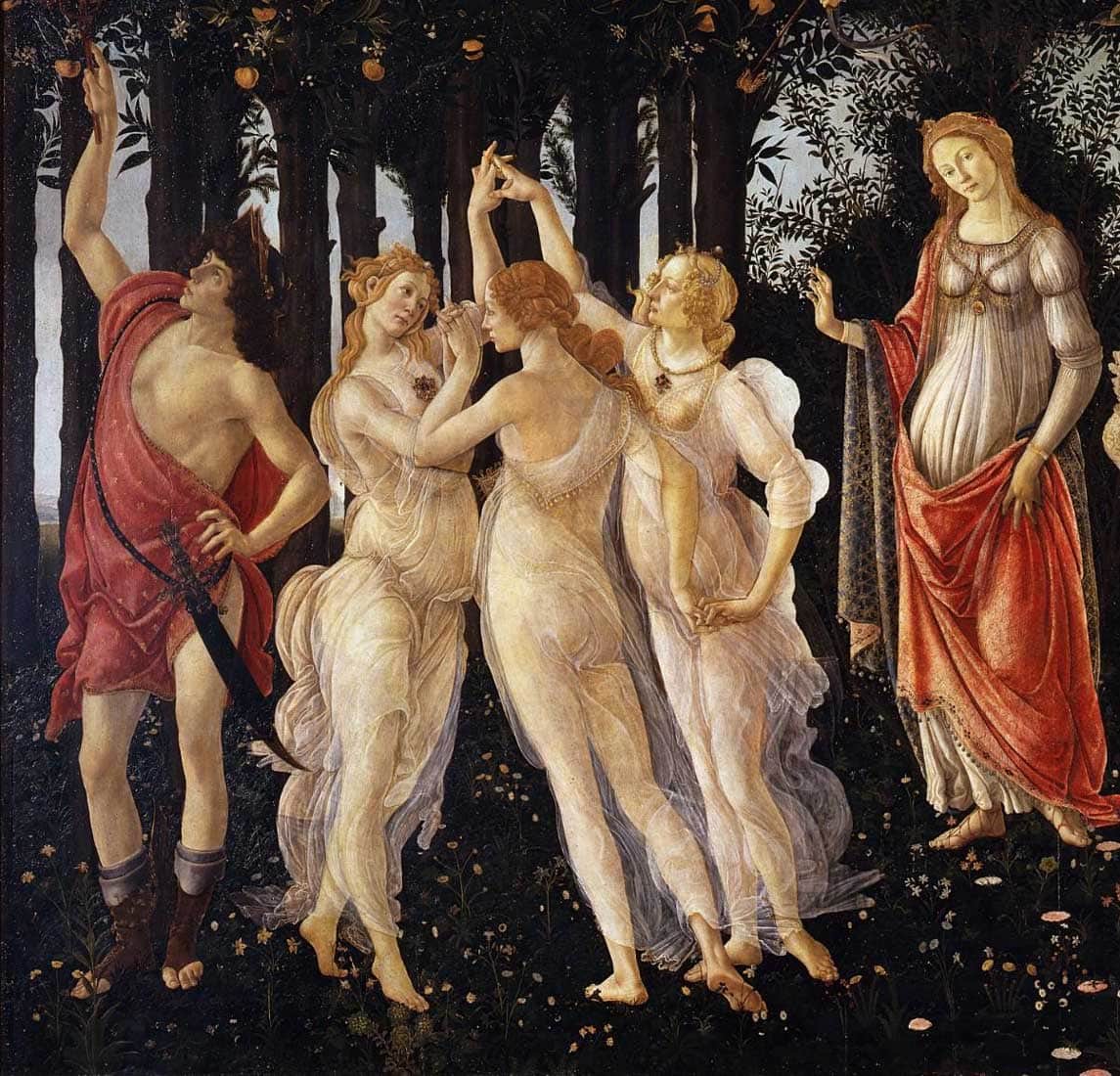
Italian Renaissance painters like Sandro Botticelli became a frequent source of inspiration for Armstrong, particularly after 1945. The dancing motion and linework in Group of Figures is reminiscent of the three graces dancing in Botticelli’s ‘Primavera’, 1478. Armstrong’s figures strike a balance between the delicately flowing vestments of Botticelli’s figures and the solidity of Michelangelo’s sibyls and prophets adorning the lunettes of the Sistine Chapel ceiling.
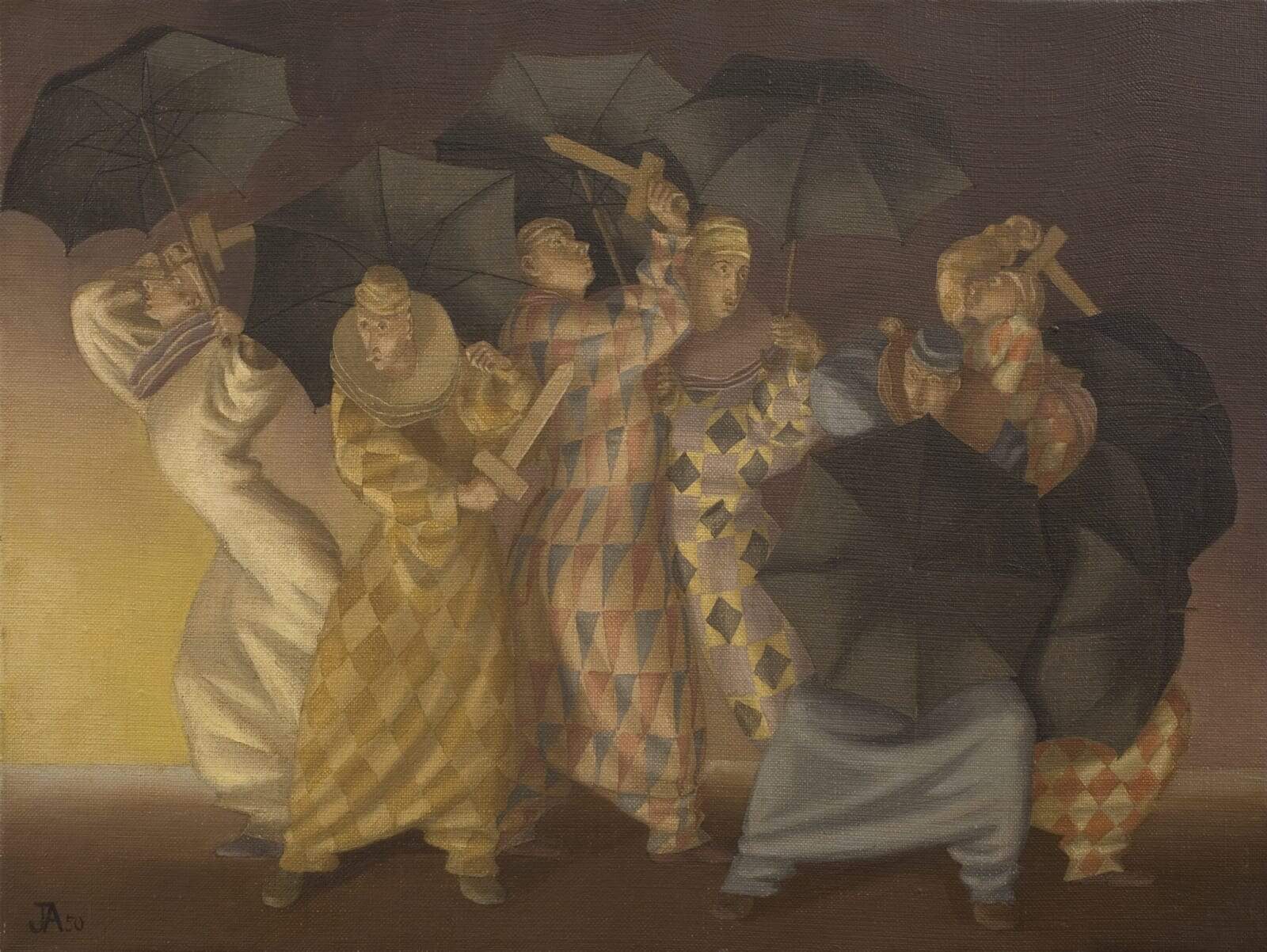
‘The Storm’, 1950, is an example of Armstrong’s later work in which he looked back at the 1940s and imagined the dangers of any future war. The works he produced in the 1950s were increasingly symbolic and won him much accreditation when it was shown at the Royal Academy in 1958. Armstrong became an elected member of the Royal Academy in 1966.
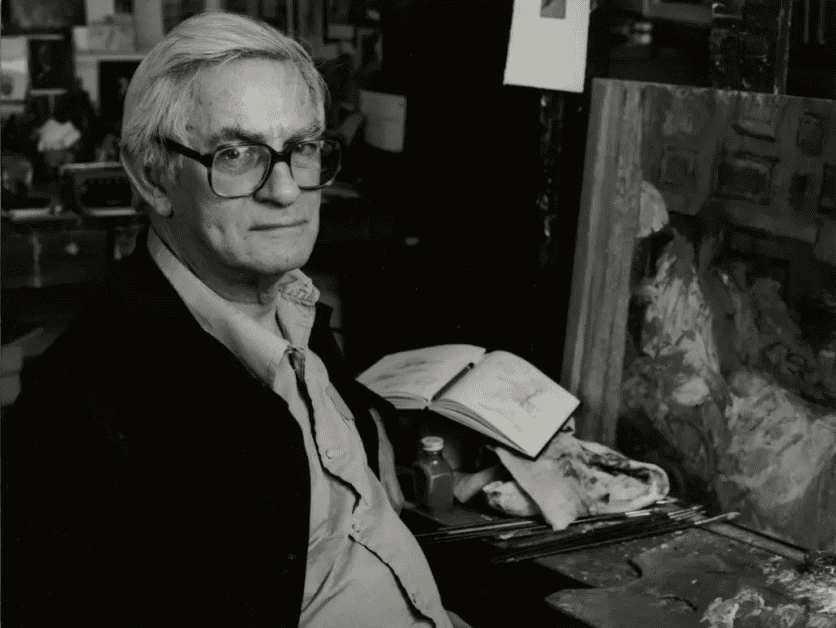
B. United Kingdom1893-1973
Biography
Most known for his Surrealist paintings, John Armstrong (1893-1973) helped to shape the British art landscape after the First World War. Working as a muralist, painter, and illustrator, his career is marked by classical legends, biblical themes, landscapes, and art historical references. His work is characterised by muted colours, left-leaning political messages, and witty symbolism, and, therefore, Armstrong is one of the few post-war period British artists whose oeuvre can be aptly described as Surrealist.
Having studied at St. John’s Wood School of Art in 1913-14, Armstrong’s career was launched at a one-man show at the Leicester Galleries in 1928, where he connected with artist group Unit One. His career brought him to patrons such as Lillian and Samuel Courtauld, the Bristol Council, and Royal Marsden Hospital. The artist was elected as an Associate member of the Royal Academy in 1966. Armstrong died in 1973.