William Turnbull
B. United Kingdom, 1922-2012
B. United Kingdom1922-2012
Biography
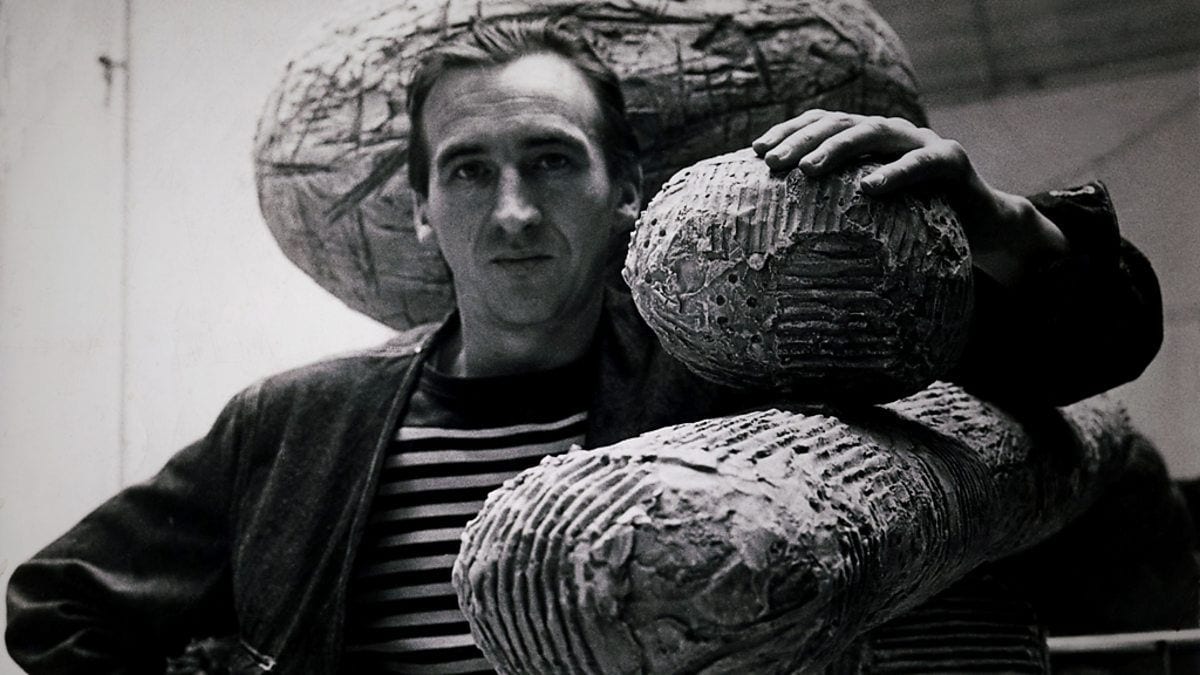
A master of many materials, William Turnbull’s paintings and sculptures experimented with balance, movement, and stillness through streamlined shapes and forms. Starting first with copper, bronze, and plaster, Turnbull began to integrate raw woods into his practice after a trip to South and Southeast Asia with his late wife, sculptor Kim Lim (years). His career and ties to numerous experimental art movements brought him around the globe, and invited him to interact with different staples and materials through sculpture and painting. His career saw his art-historically informed use of natural materials, as well as minimalist forms made with those that were industrial. Continually evolving, it was at a 1973 retrospective of his work at the Tate modern that saw Turnbull return to his first love: sculpting with wood, copper, and bronze with raw, tremelled textures. A lover of the historic, his works reimagined pre-classical sculpture and religious carvings for a modern art world.
After enrolling at the Slade School of Fine Art in 1946, William Turnbull (1922-2012) became linked to several important figureheads of the London Post-War Art Scene, such as Eduardo Paolozzi and Nigel Henderson, before becoming a key member of the rising ‘Independent Group’ affiliated with the ICA. Turnbull was featured in numerous exhibitions across his near-70 year career, most notably showing in “Aspects of British Art” at the Institute of Contemporary Arts (1950), the British Pavillion at the 1952 Venice Biennale in “New Aspects of British Sculpture”, the touring Arts Council England exhibition “Contemporary British Sculpture” (1958), and retrospectives at the Serpentine Gallery (UK) and Tate (UK). His work can be found in numerous collections such as the Art Gallery of Ontario (Canada), the Arts Council Collection (UK), the British Council (UK), the Glasgow Museum and Art Gallery (UK), the Hirshhorn Museum and Sculpture Garden by the Smithsonian Institution (USA), the Hunterian Art Gallery (UK), the Museum of Contemporary Art (Iran), the National Gallery of Art (USA), the Scottish National Gallery of Modern Art (Edinburgh), and the Tate Collection (UK), among others.
The Works
1
William Turnbull
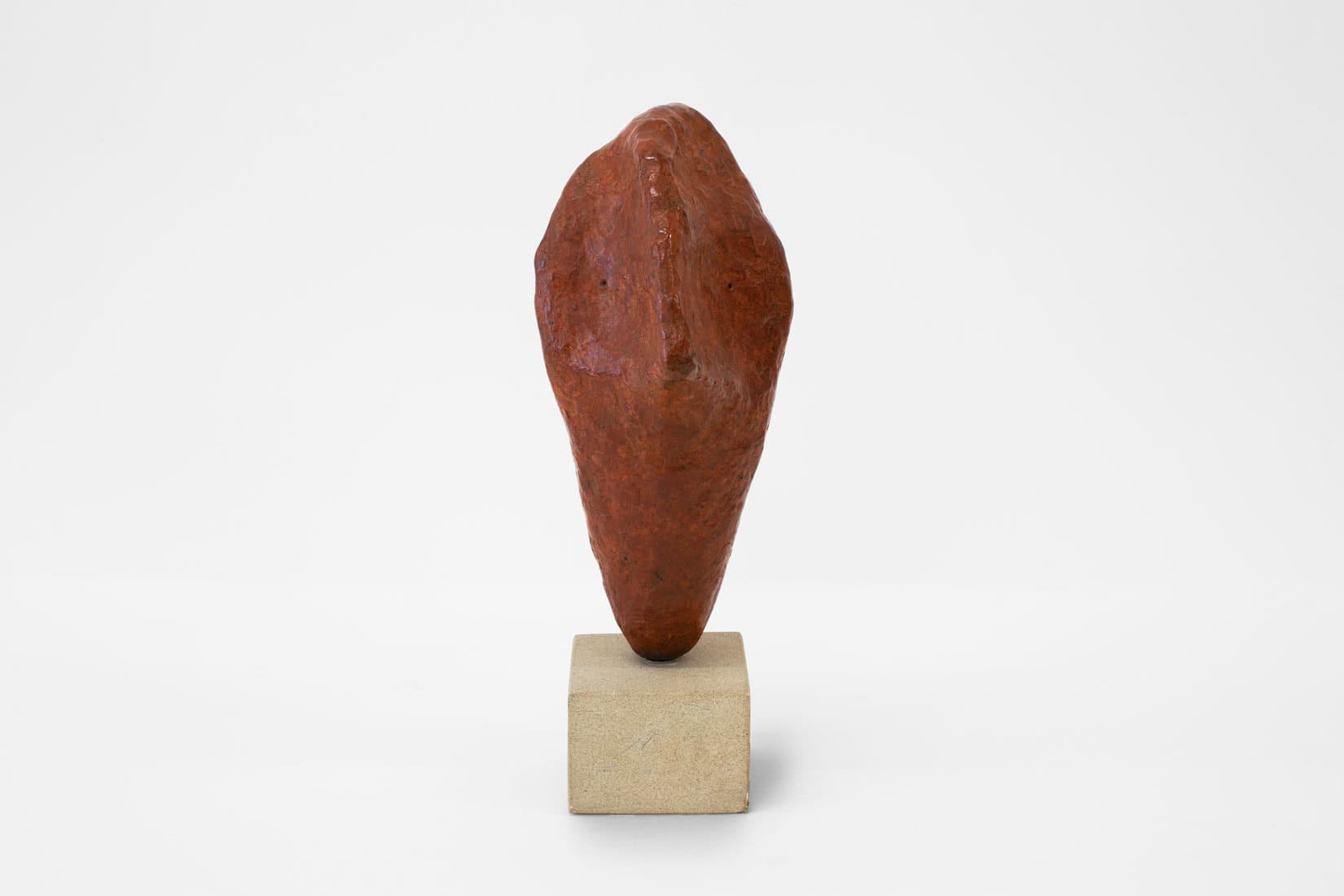
Head II
1994
Bronze on york stone base
By continuing to use this site you consent with our cookie policy. You can read more here.
Enquire
Thank you for your enquiry. We will be in touch shortly.