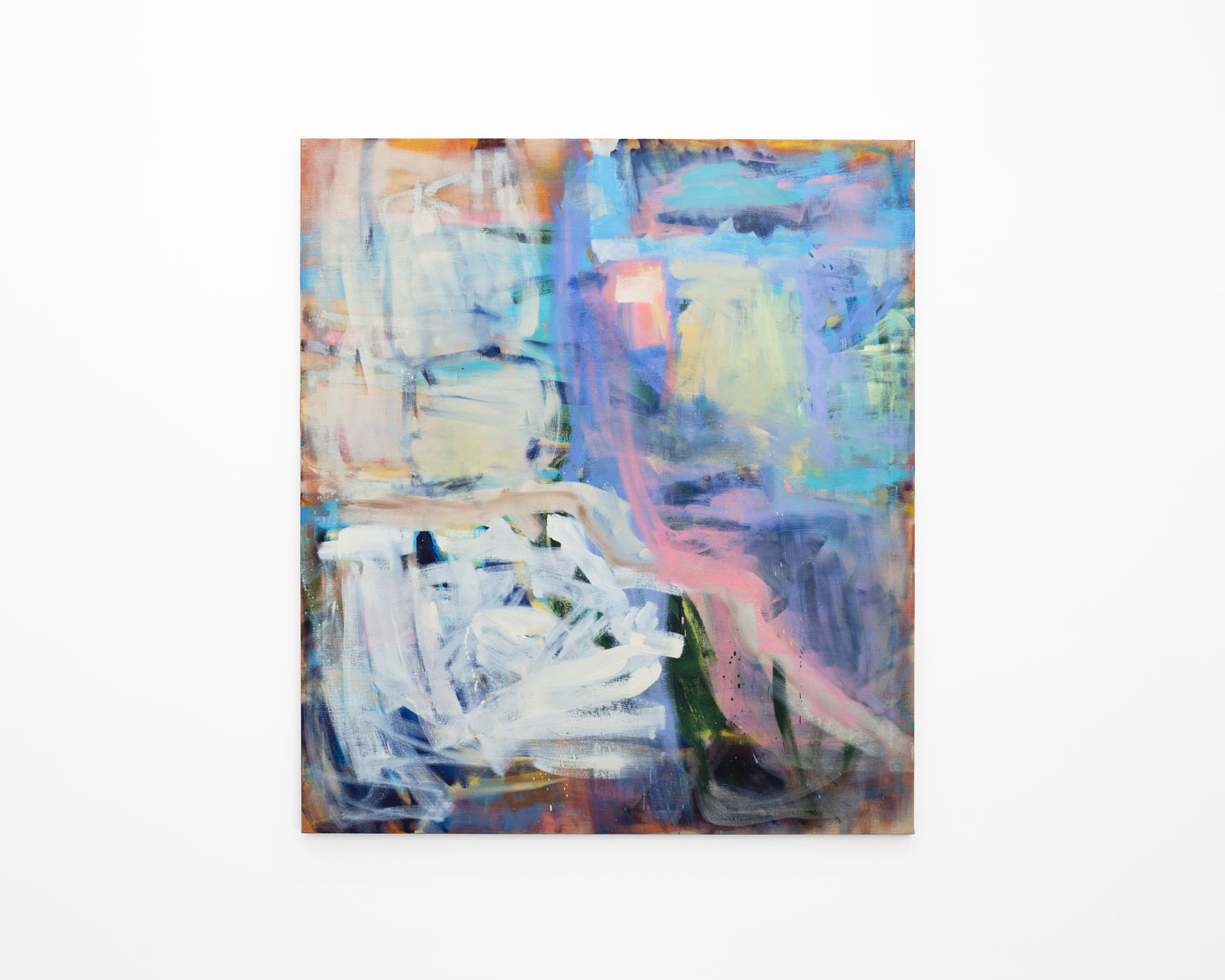
Long’s broad gestural marks, punctuated by spontaneous drips of colour, suggest a boundaryless plane and reveal a practice deeply rooted in bodily engagement.
Anna Suigo
A dense mass of vigorous marks and colour fields unfolds in Catherine Long’s A Theory of Love. Countless layers of colour, in motion, obscure and unveil each other on the pictorial surface. Rich purples, burnt oranges and dark greens emerge from the depths and interact with the bright tones of white, pink and light blue, which float in the foreground. In its imposing scale, characteristic of Long’s oeuvre, the painting asserts a strong vibrant presence.
With a background in contemporary dance, Long places the body, its movement and physicality at the centre of her artistic practice, where dance endures as a silent yet crucial presence. Added to this is a profound interest in the intrinsic power of colour and a connection to the tactile, gestural application of paint. Through her paintings, she creates a sensorial experience that extends beyond the visual, inviting engagement with other senses, imagination, and the body’s own perception.
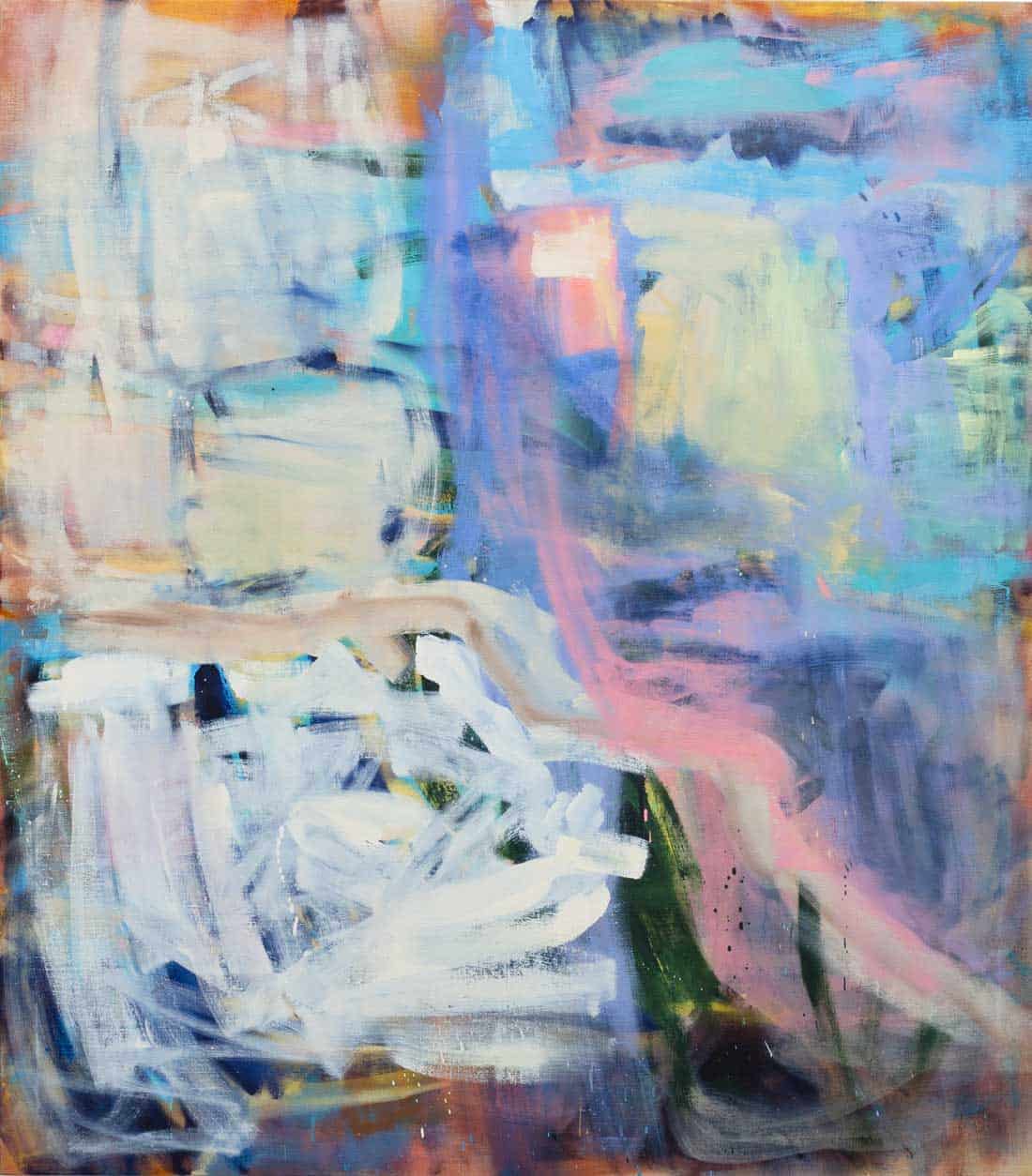
Detail of Catherine Long, A Theory of Love, 2025
Blending traditional oil techniques with oil bar, which confer a waxy texture to the painting, A Theory of Love bypasses explanatory figurative representation, instead invoking a sensorial response. Long’s broad gestural marks, punctuated by spontaneous drips of colour, suggest a boundaryless plane and reveal a practice deeply rooted in bodily engagement. In this dance of colours, gesture triumphs over definition, impulse over precision.
(By Anna Suigo)