Instead of making cathedrals out of Christ, man, or ‘'life'’, we are making it out of ourselves, out of our own feelings
Barnett Newmann1948
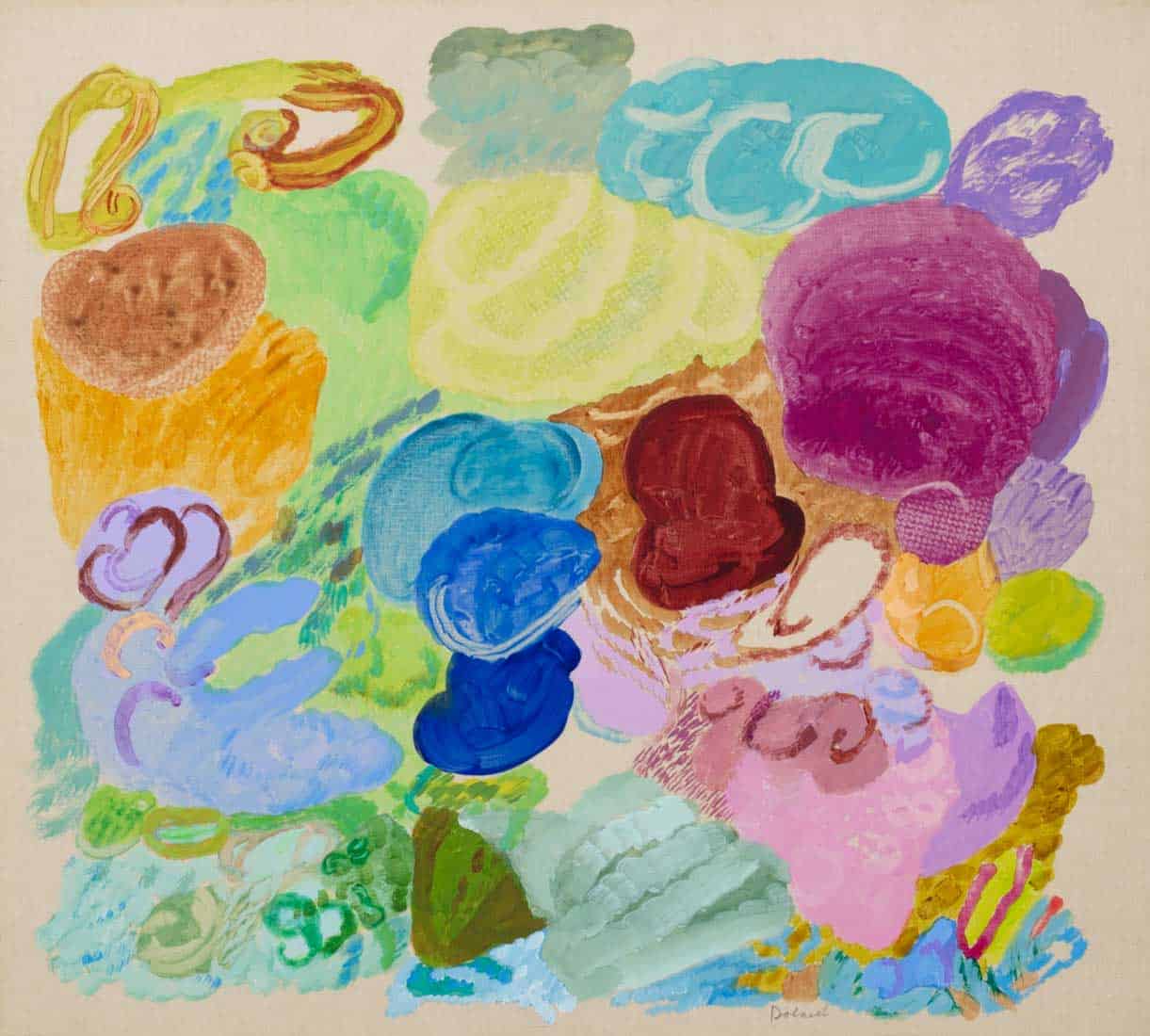
Judy Dolnick, Untitled, c. 2015
In 1946, The New Yorker critic Robert Coates coined a new term to describe “what some people call the spatter-and-daub school of painting and I, more politely, have christened Abstract Expressionism.” Initially used in reference to the work of the painter Hans Hofmann, the term “Abstract Expressionism” soon came to define a new generation of artists active in New York from the 1940s, including figures such as Jackson Pollock and Willem de Kooning, who redefined the boundaries of modern art. This variegated group of artists neither shared a common style nor a preferred subject matter; rather, they were united by a profound urgency to express themselves in new ways, responding to the seismic events that had shaken the world in the early decades of the twentieth century. Their collective identity was forged by a confluence of shared experiences: the aftermath of the Great Depression and World War II, as well as a deepening engagement with early twentieth-century European avant-gardes. These movements, once distant, had become increasingly accessible to American audiences through the influx of European intellectuals and refugees, particularly Germans fleeing Nazi persecution.
Emerging from this vibrant artistic landscape of post-war America, Chicago-born artist Judy Dolnick creates abstractions which both engage with and subtly resist Abstract Expressionist categorization, revealing the complexities and nuances of this long-established paradigm. Dolnick’s work remains deeply rooted in the foundational principles of Abstract Expressionism, while continuously evolving and maintaining a distinctive character that sets her apart from other artists of her generation. In the early 1950s, Dolnick co-founded the Wells Street Gallery in Chicago with her husband Robert Natkin and fellow artists Gerald van de Wiele and Ann Mattingly. The gallery emerged as a vital response to the scarcity of venues dedicated to Abstract Expressionist works in the city, becoming a crucial platform for artists such as Aaron Siskind and John Chamberlain. A few years later, in 1959, Dolnick moved to New York City and exhibited at the Poindexter Gallery alongside Willem de Kooning, Richard Diebenkorn, and Franz Kline, positioning herself at the forefront of the dynamic developments of Abstract Expressionism.
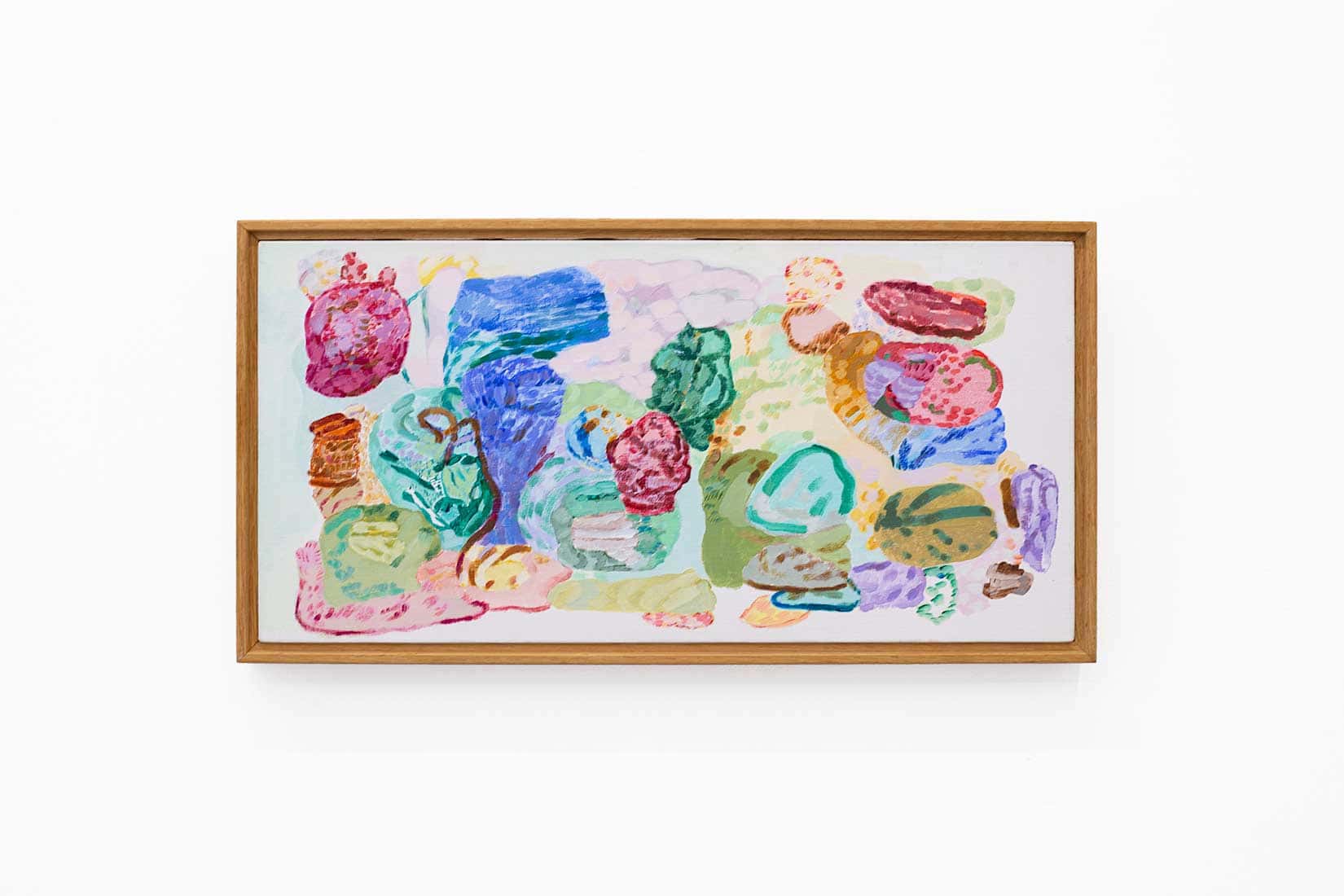
Judy Dolnick, Untitled, c. 1996
In the 1960s, the artistic climate in New York had evolved from the previous decades. While the resonance of the first Abstract Expressionists remained strong, shaping the course of art well into the future, the new generation of artists inheriting its mantle naturally charted unexplored paths. Although unconcerned with conforming to a specific school of movement, these artists remained committed to art as a deeply personal form of expression, while two primary trajectories in the evolution of Abstract Expressionism emerged. One group of artists pushed the boundaries of action painting, placing the physicality of the body and its movement at the heart of the artistic creation. In parallel, colour field painters, building on the seminal work of Mark Rothko, embraced vast and uniform swathes of colour as a primary vehicle of expression.
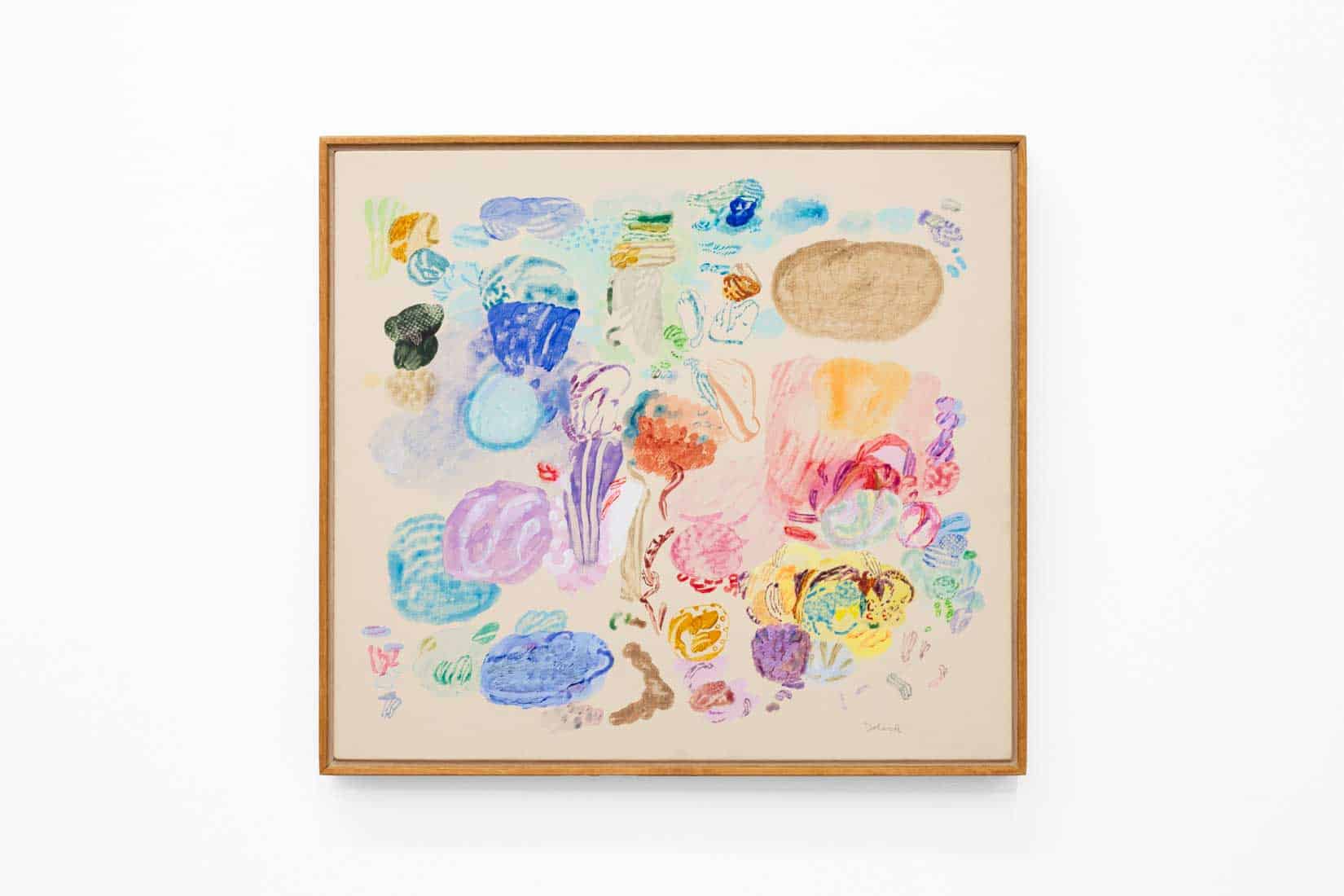
Within this evolving landscape, Dolnick’s oeuvre neither aligns with the gestural, violent brushwork of action painters nor with the more methodical and monumental approach of colour field artists. At once, rhythm and gesture form the foundation of Dolnick’s practice, and her approach to colour, both as subject and as means of expression, is restless. While exploring the physicality of mark-making, with brushstrokes that range from hardly visible to forceful, she delves into the pictorial space, using vivid, varied hues to create a delicate, dreamy atmosphere. Some works are denser, layering bold colours, while others take on a more gestural expression, with lines and dots alternating in a rhythmic, almost musical pattern. At times, the earthy canvas itself becomes an active participant in the composition. In these endless possibilities for expression, movement is a constant presence, manifesting as subtle oscillations that give both her canvases and works on paper a self-contained energy. Within these spaces, elements of varying densities and shapes fluctuate at their own pace, clashing and interacting while inhabiting a magical space together.
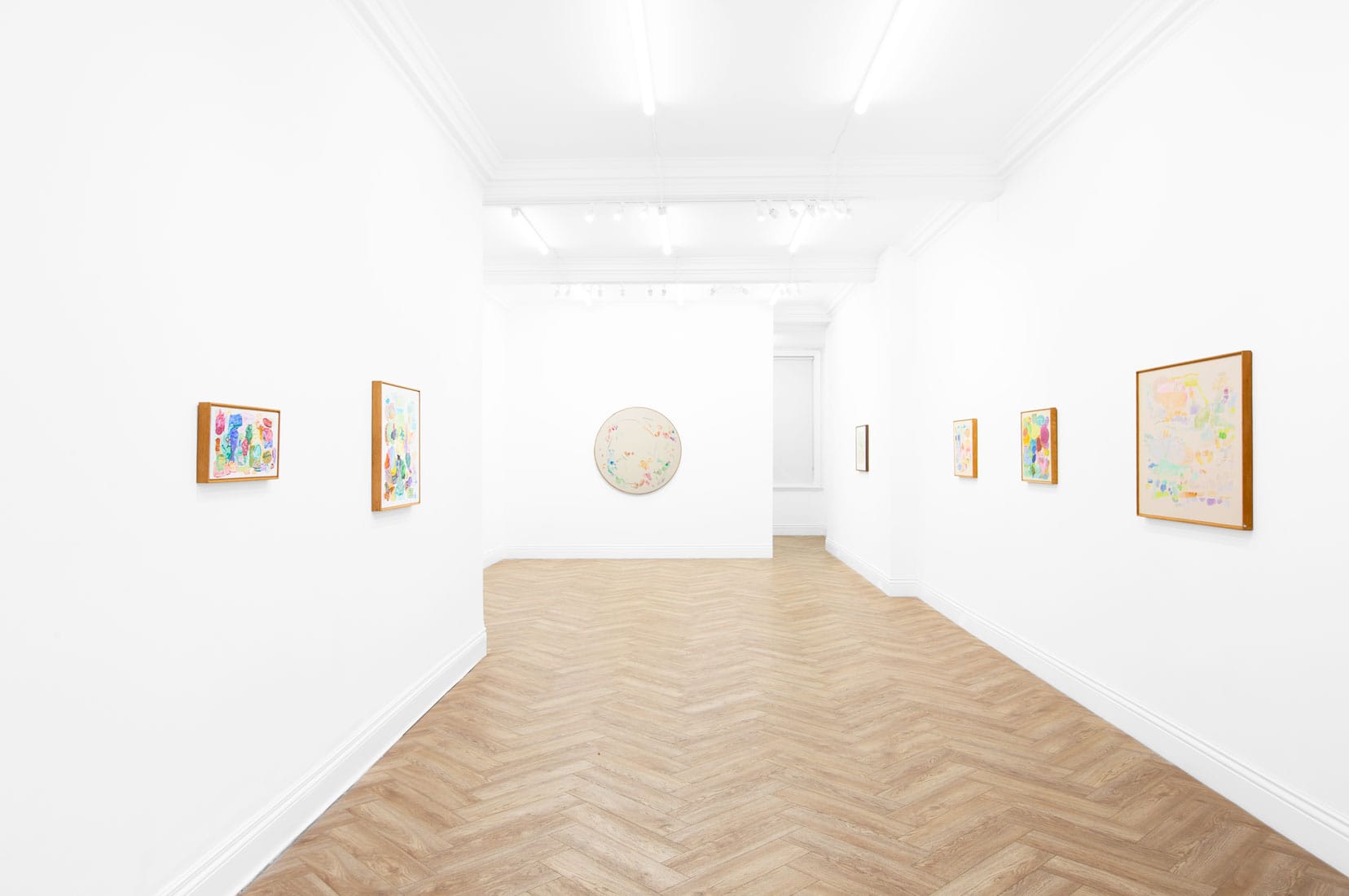
Judy Dolnick, Abstractions, 2025
Dolnick’s paintings orchestrate a dynamic dialectic, the freedom of colour confronts the discipline of gesture creating a perfect alchemy of spontaneity and rigour. Profoundly influenced by the early generations of Abstract Expressionists, Dolnick’s oeuvre stands as a testament to the enduring resonance of this artistic current while expressing herself through a distinctive voice, one that uniquely intertwines gesture and colour
(By Anna Suigo)