Closed
24.4 – 30.5 2026
William Wegman:Video Works, 1970-77
3–5 Swallow Street
William Wegman:Video Works, 1970-77
24.4 – 30.5.2026
Closed
Hours
Monday to Friday, 10:00am – 5:30pm
Saturday, 1:30pm – 5:30pm
Gallery
3–5 Swallow Street
London
W1B 4DE
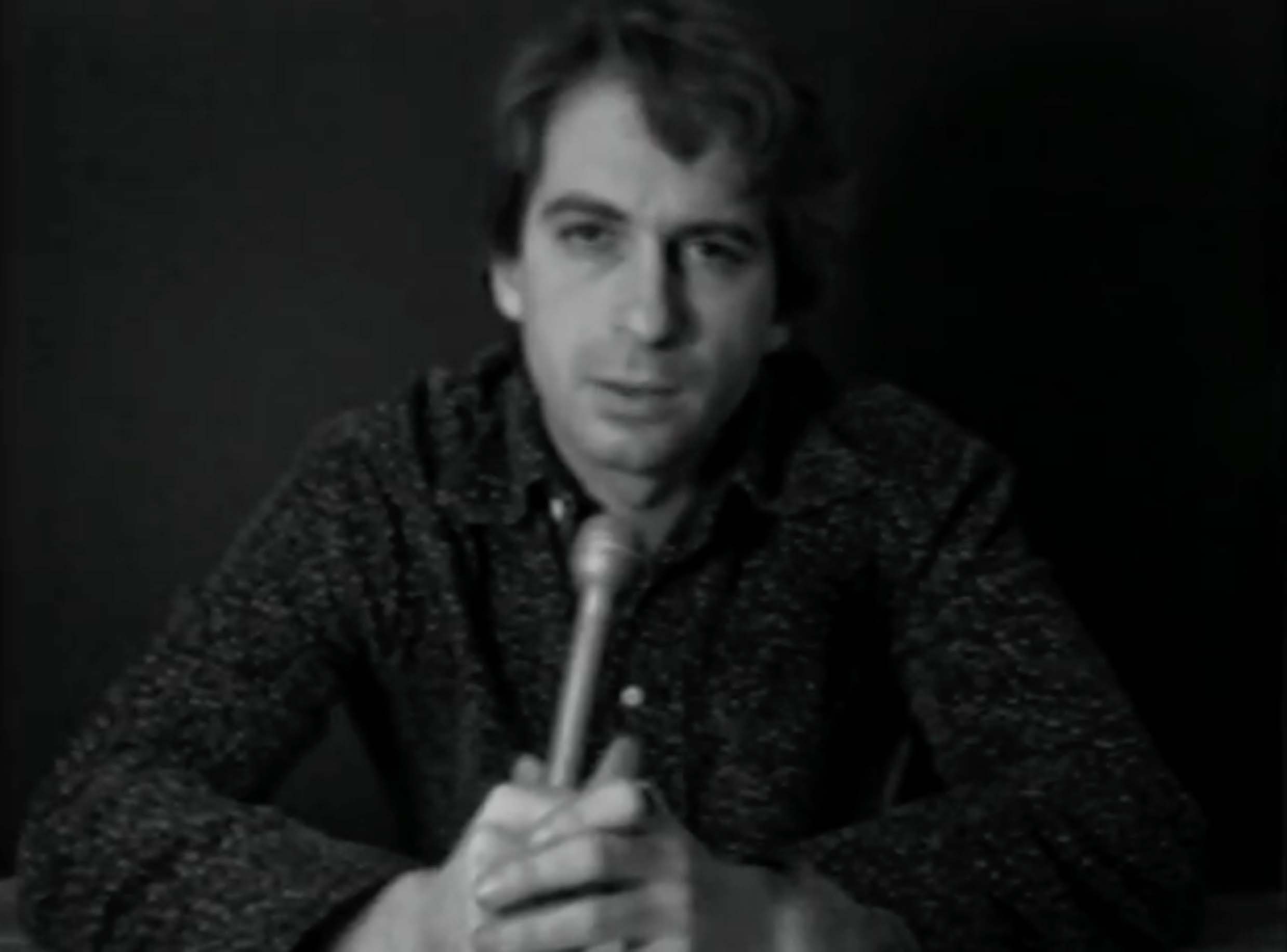
William Wegman. Newscast (1974)
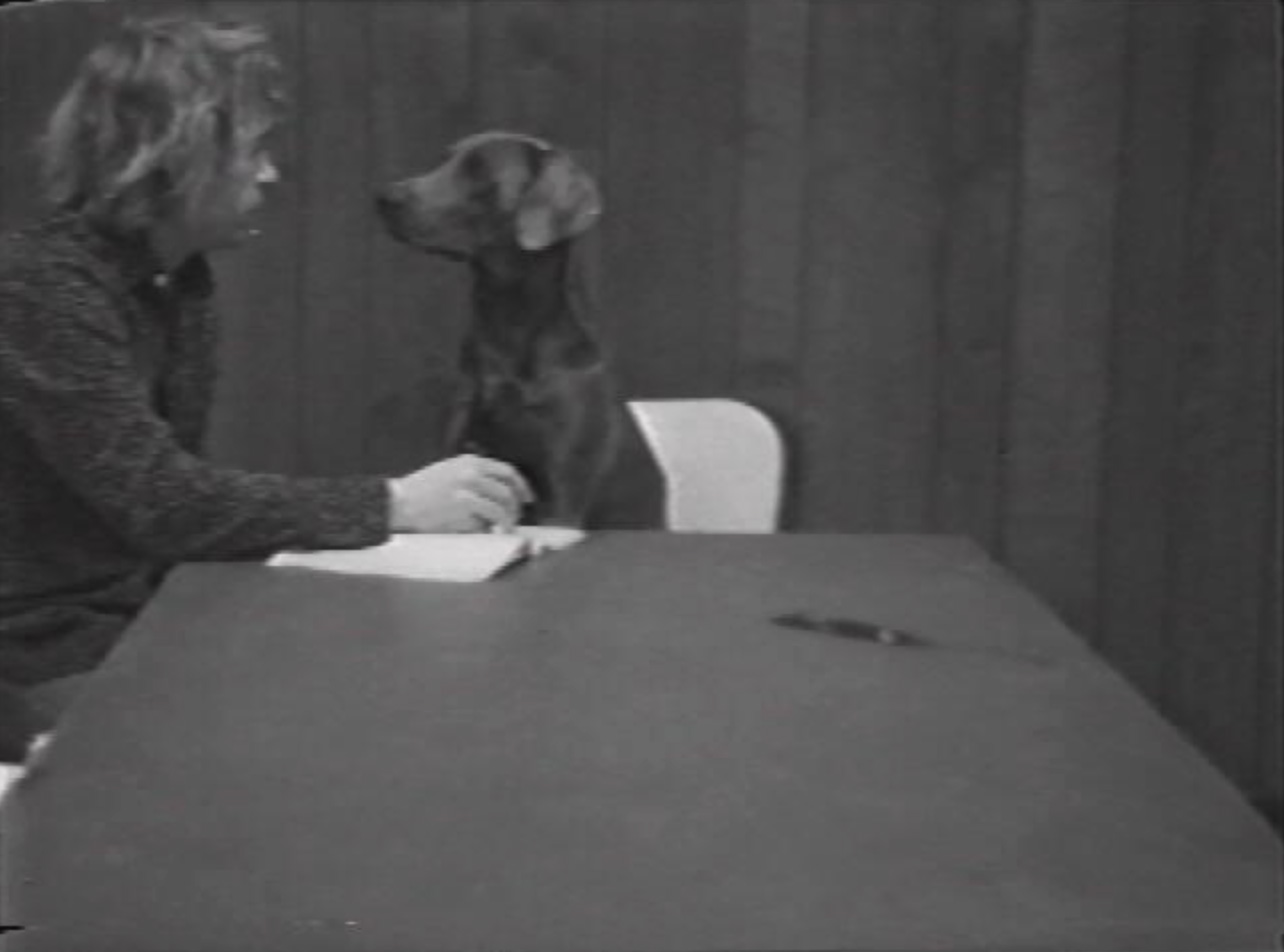
William Wegman. Spelling Lesson (1973-74)
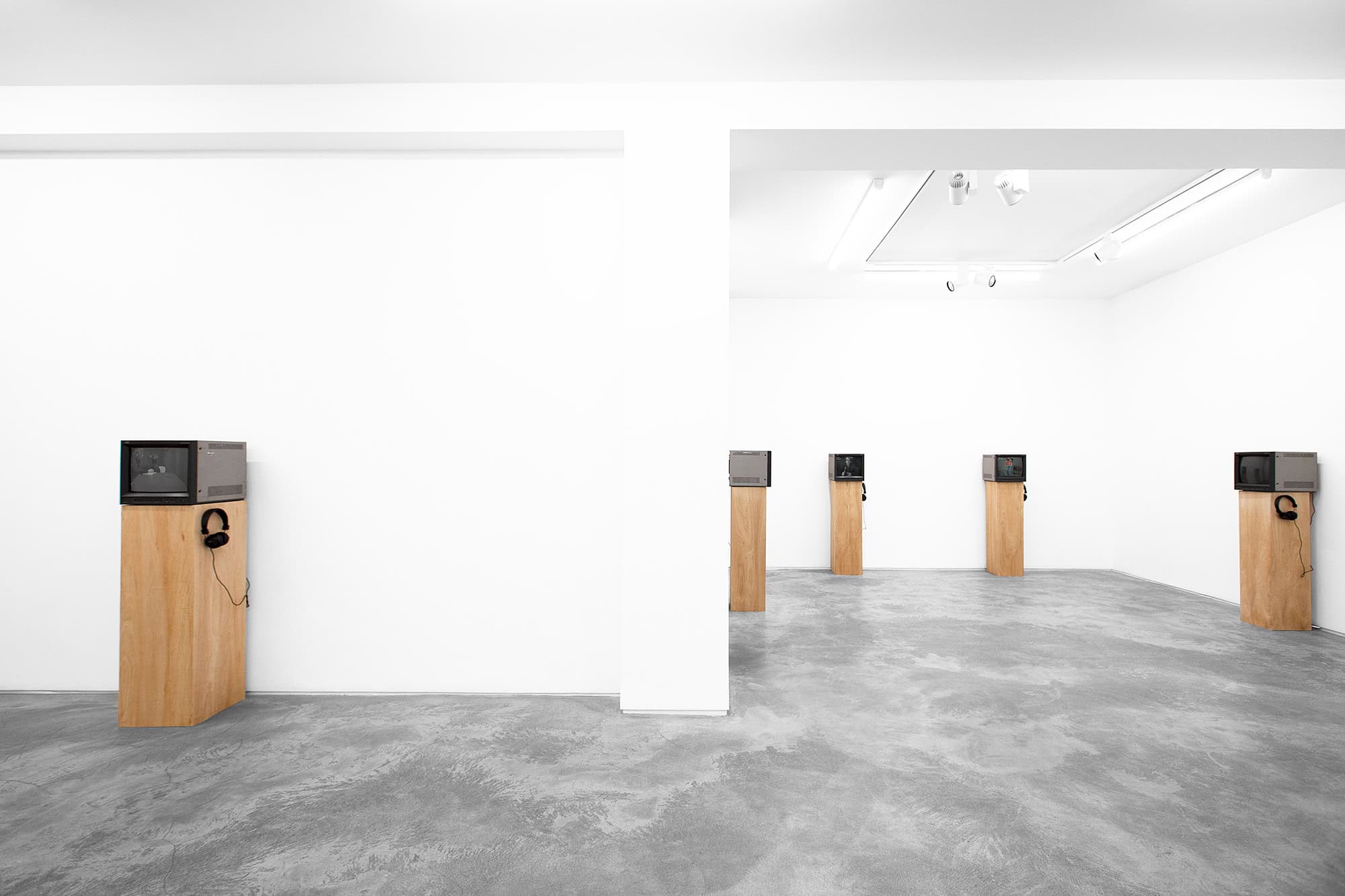
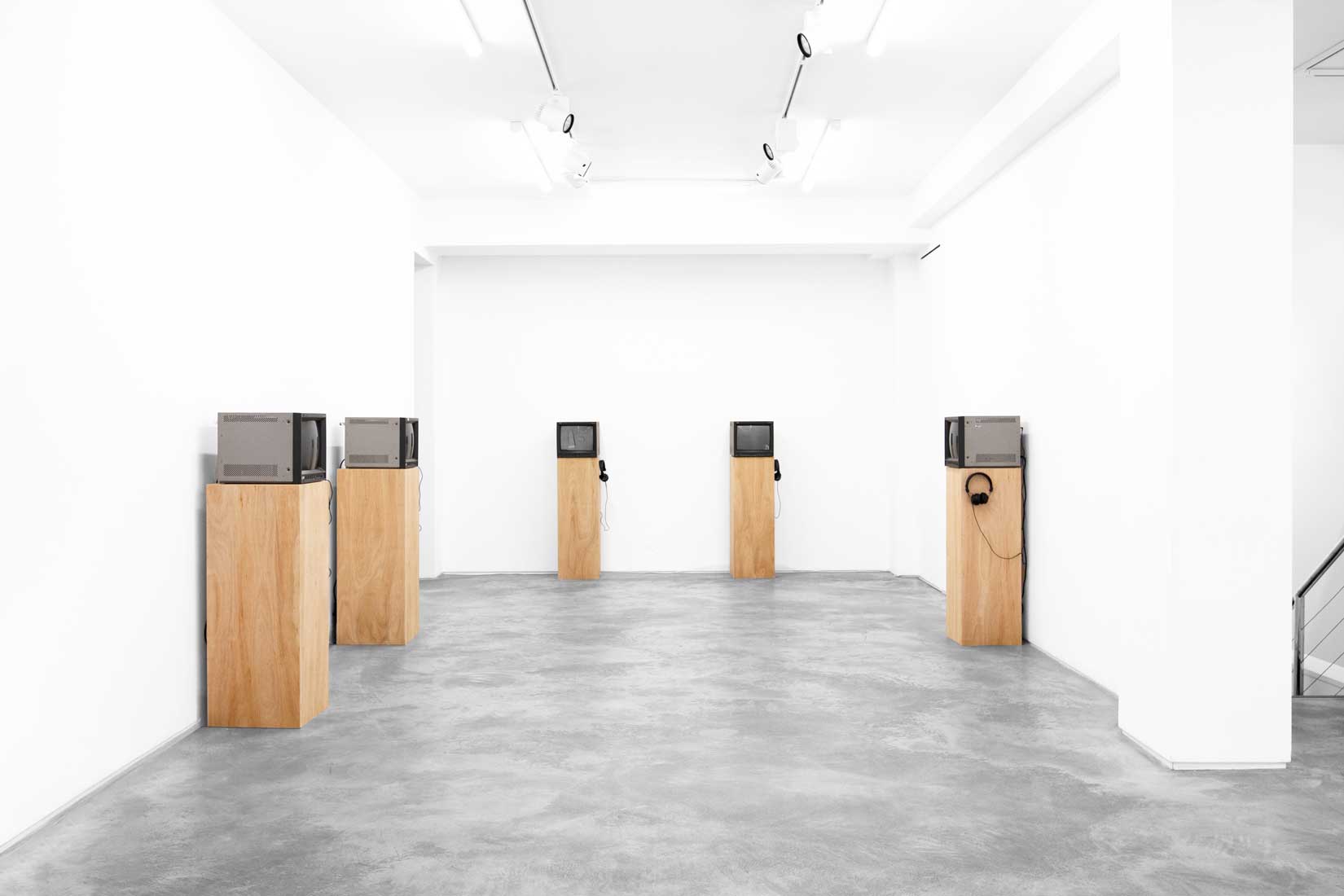
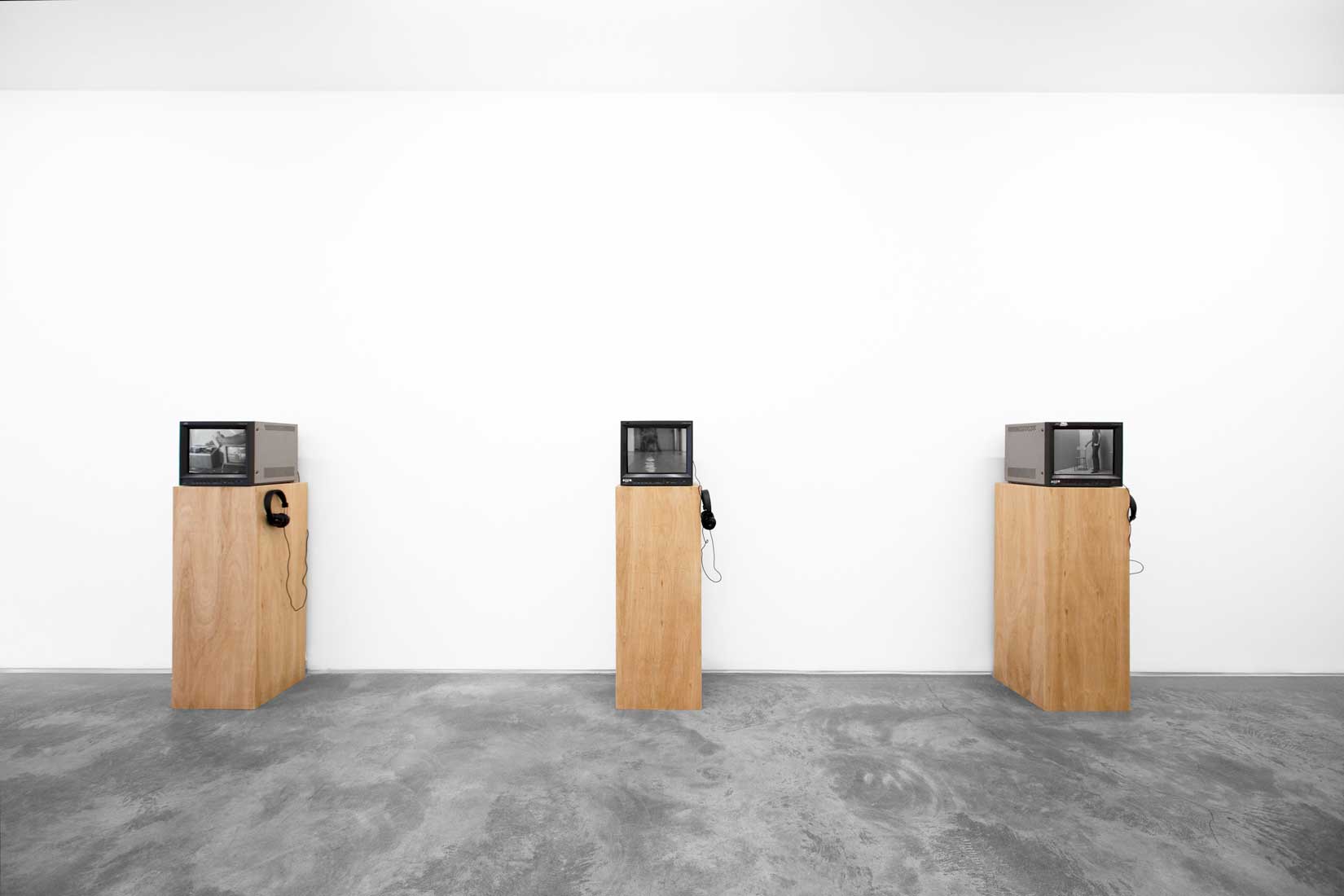
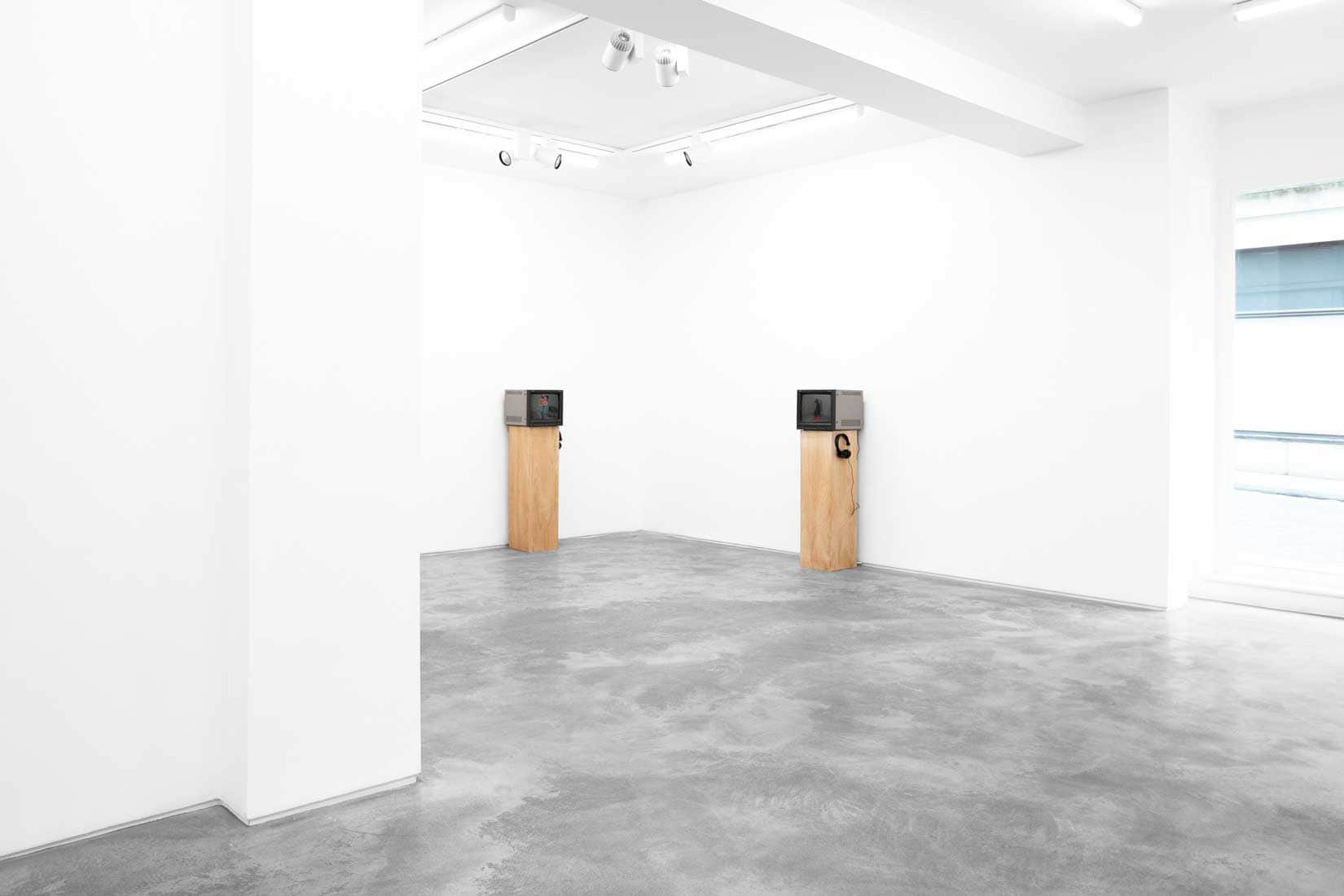
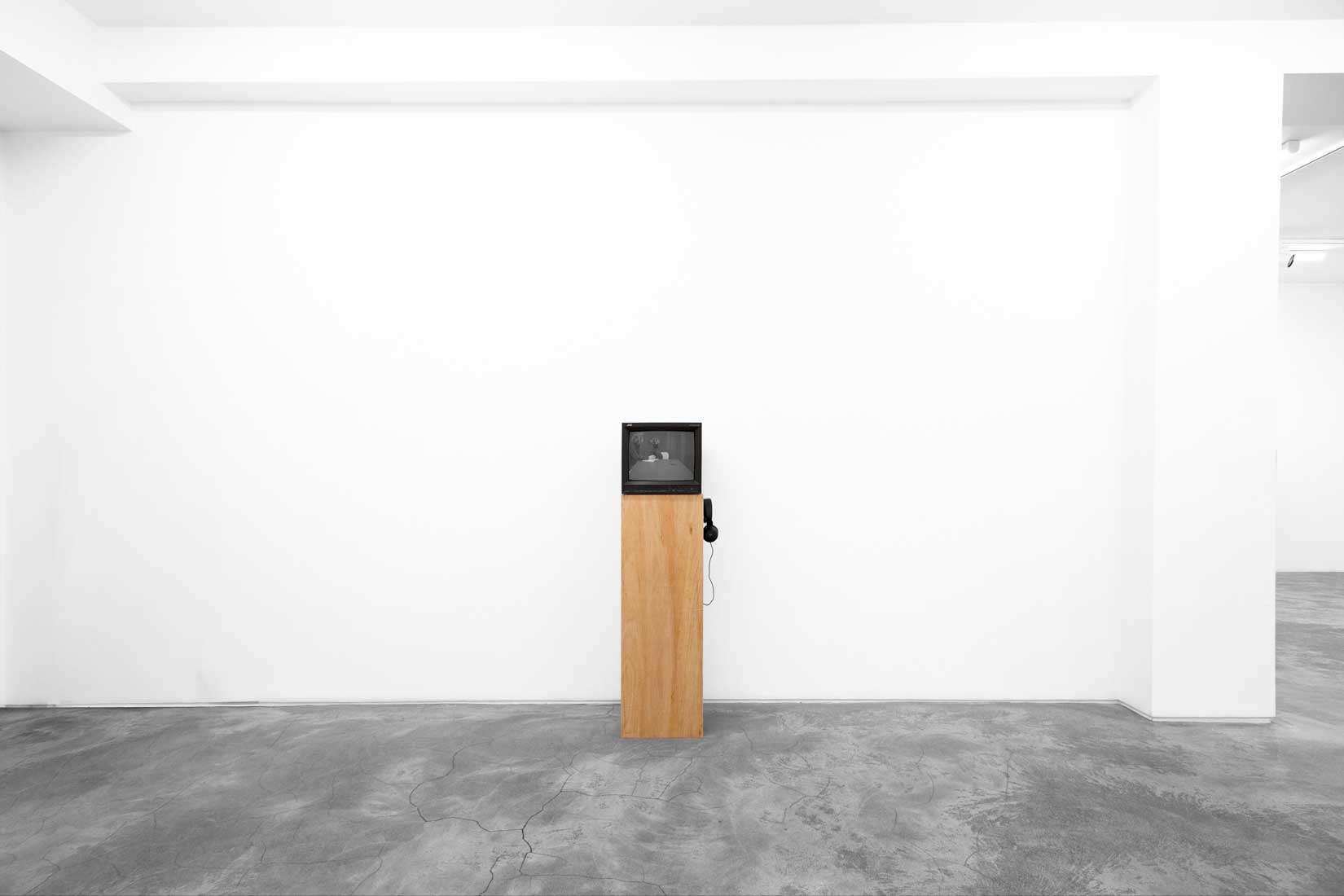
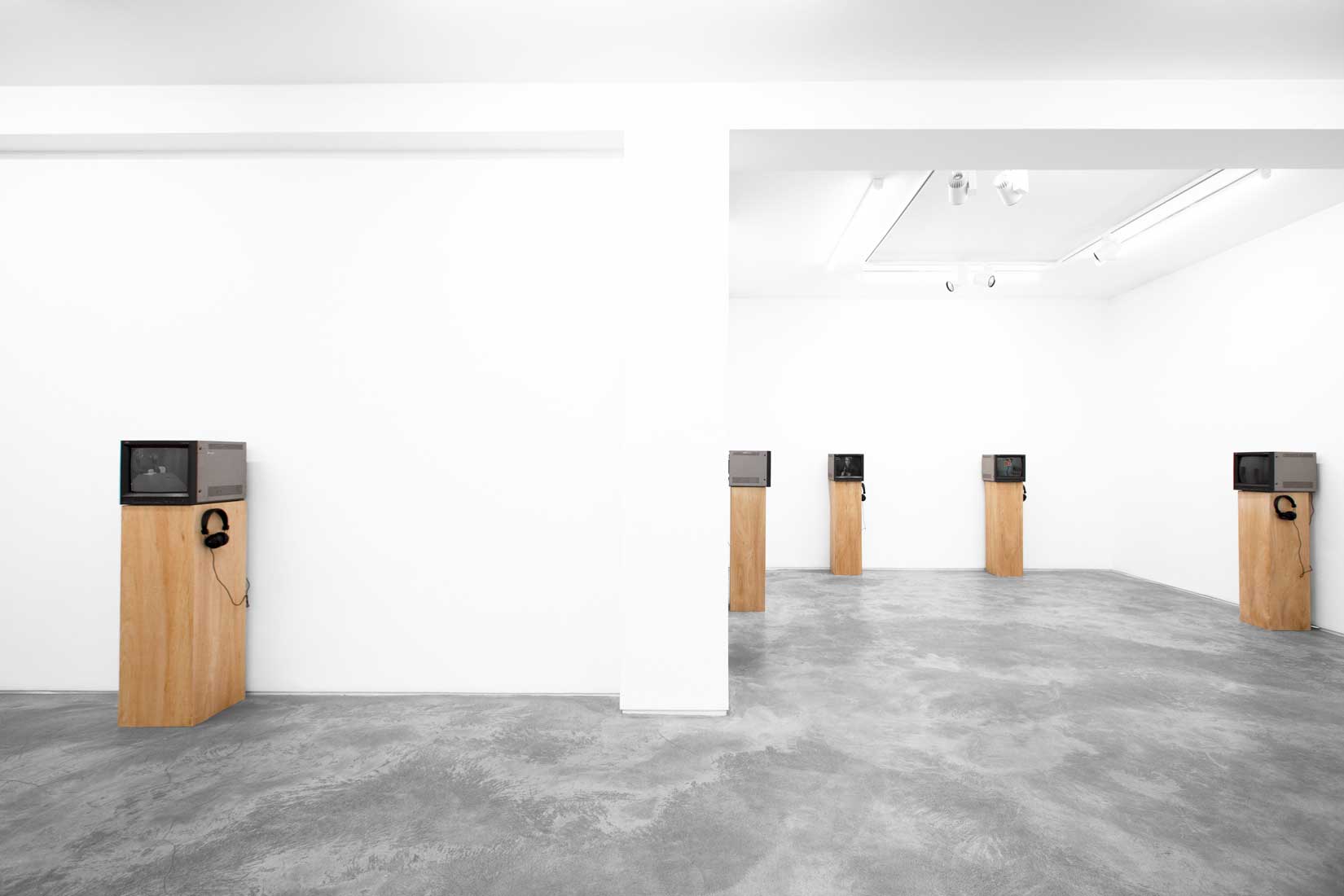
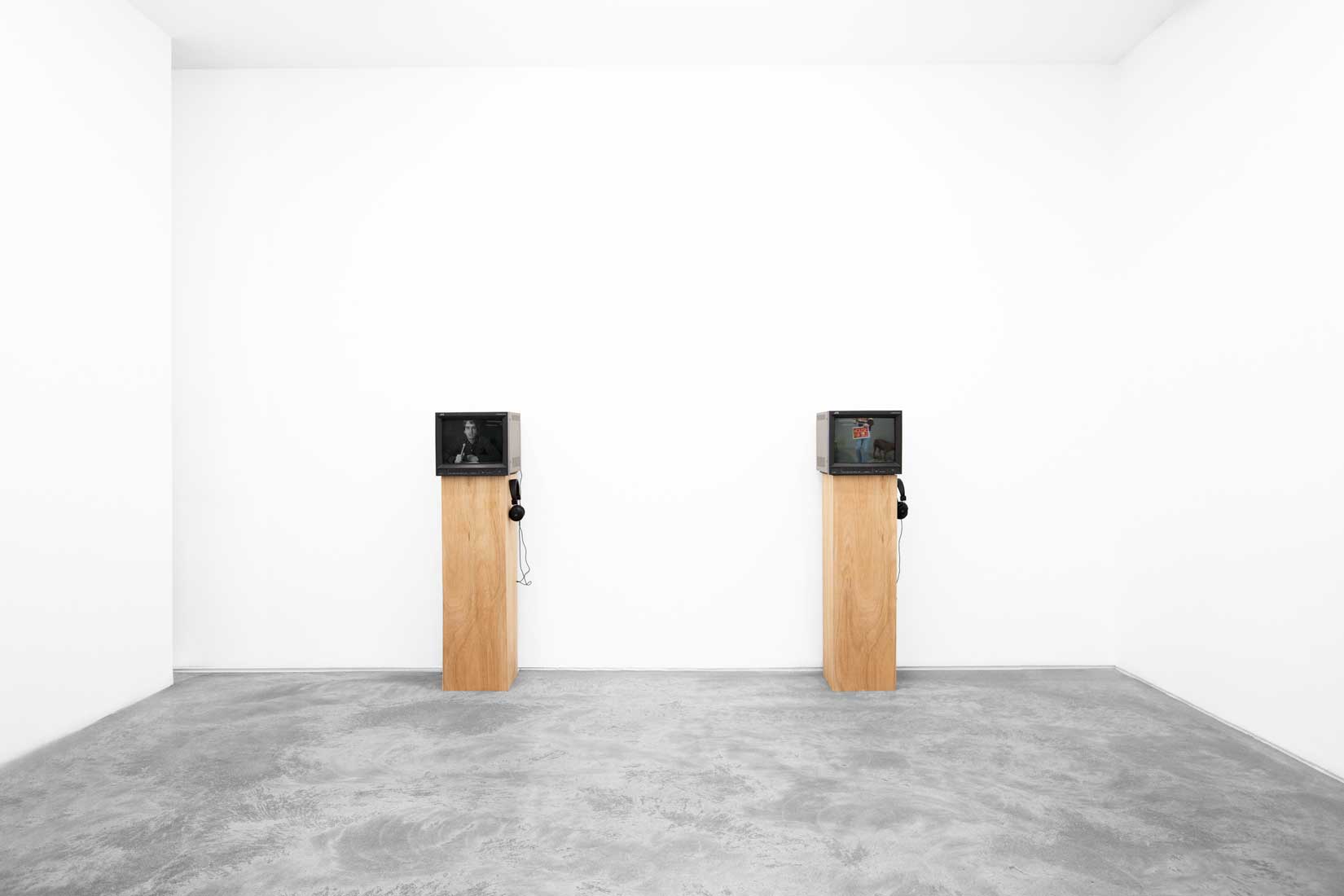
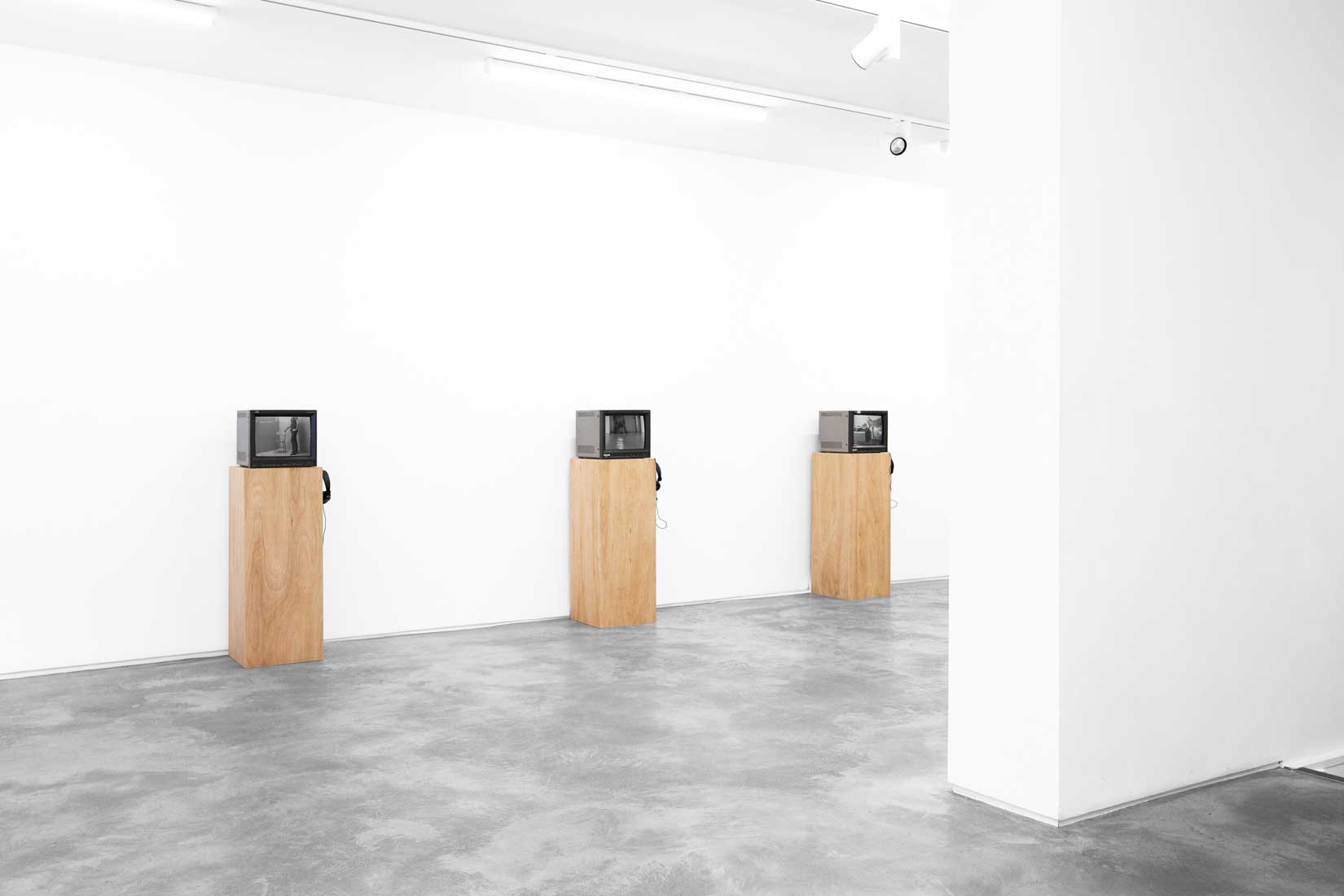
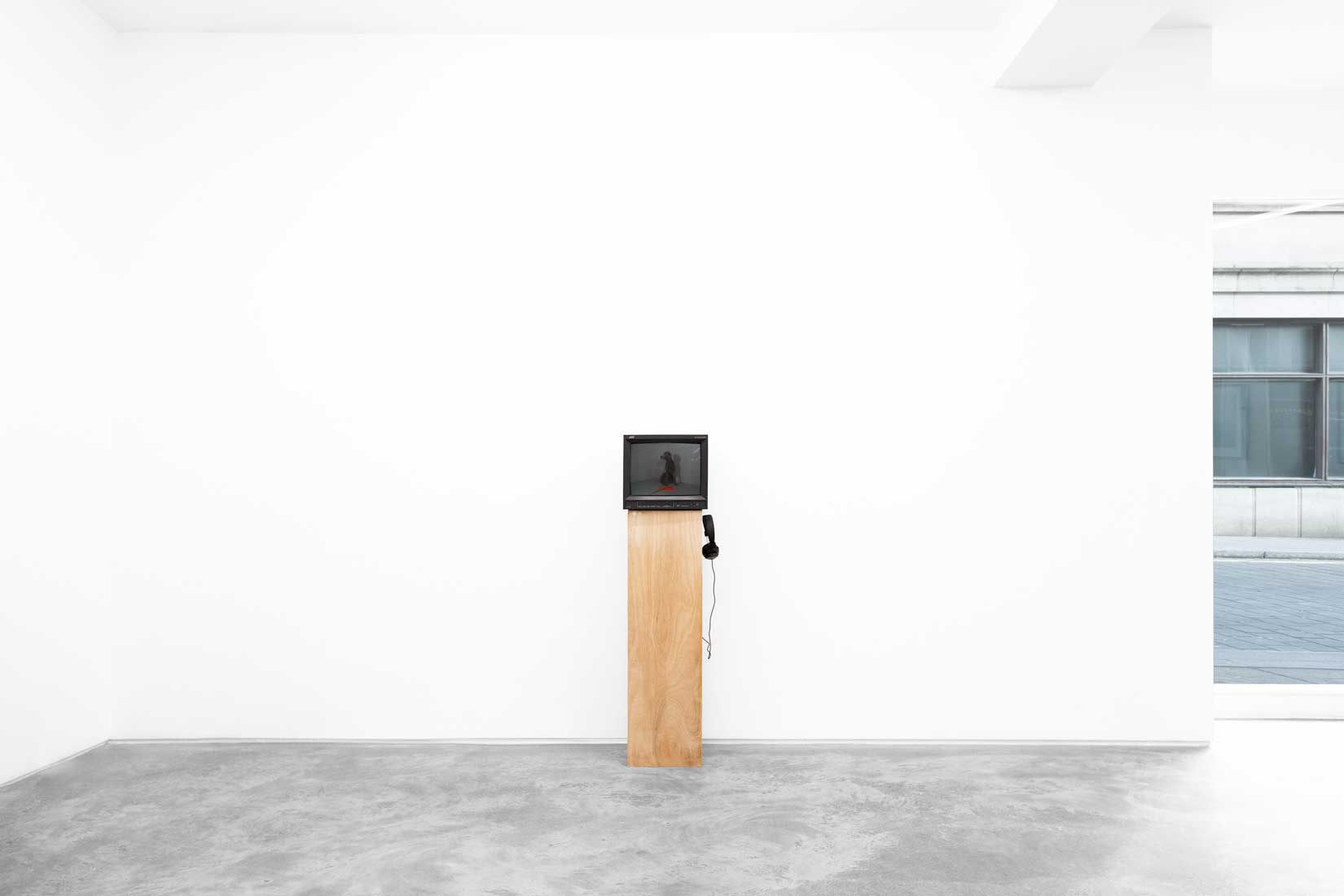
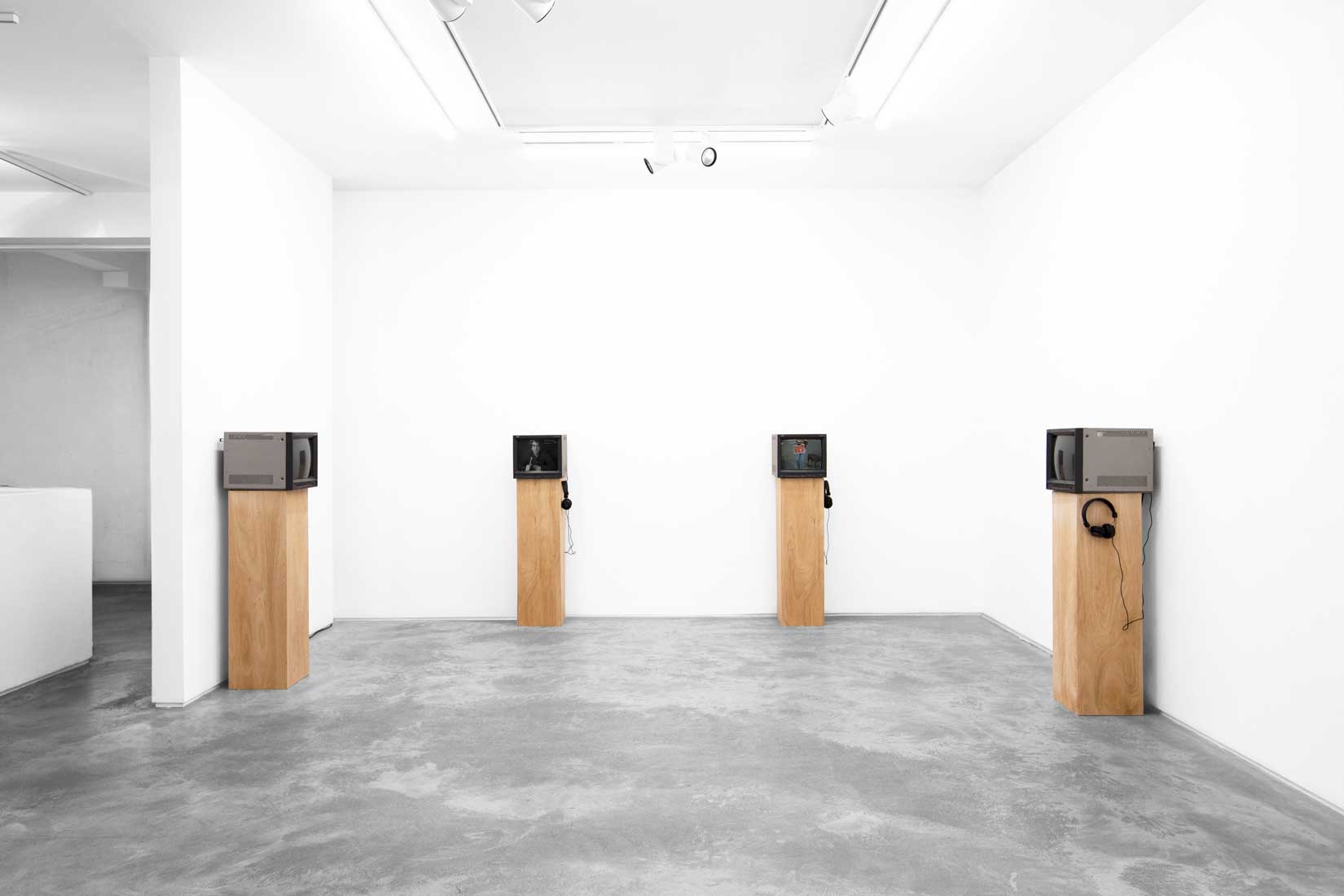
Huxley-Parlour are delighted to announce Video Works, 1970-77, a new exhibition of early video works by American artist William Wegman. Presenting ten film works made in the 1970s, the exhibition explores the artist’s continued interest in language, word play, visual puns, comedy, and storytelling. The exhibition also includes some of the first examples of his collaborations with his dog Man Ray.
William Wegman. Spelling Lesson (1973-74)
After moving to Los Angeles in 1970, Wegman’s work emerged within the context of Conceptualism as the movement formulated on the West Coast. Developing in response to the codified exploration of text and image that defined the movement’s East Coast practices, West Coast Conceptualism evolved a distinct visual language and approach. Central to the movement’s exploration was a grounding in absurdity, the vernacular, and humour. The artist has said of his video works: ‘when I first started working, I was really striving for clarity. What I liked about my videos was that my mother would like them, my neighbor would like them, anybody would like them. Whereas with other works of mine, you’d perhaps have to know something, be schooled in something. The videos just seemed to break through.’ Works on view propose irreverent considerations of the double-entendre, while others reveal Wegman’s engagement with established media, playfully critiquing the tone and commercialism of broadcasting, with deadpan deliveries of sales pitches and telemarketing.
The Exhibition
9
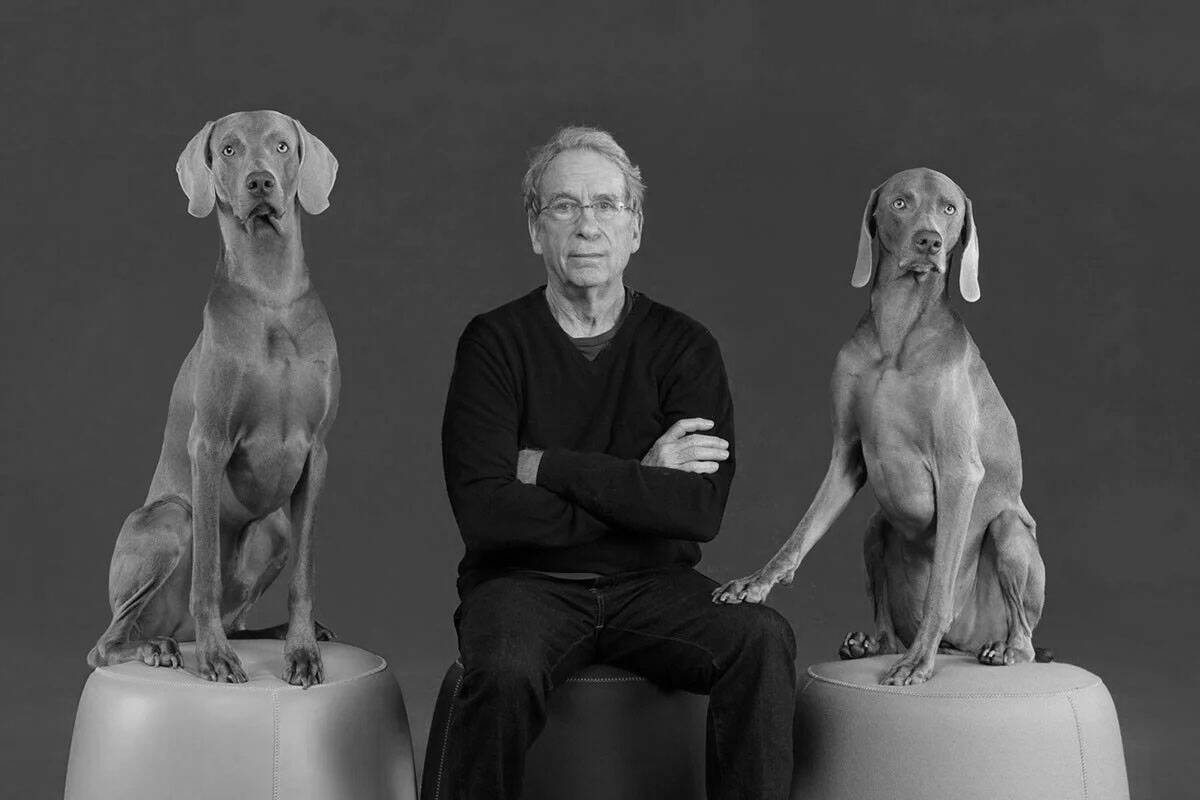
B. United States1943
Biography
William Wegman is best known for his ongoing artistic collaborations with his Weimaraners. His early practice centred on black-and-white photography and moving image, employing subtle visual puns and humour to explore language, gesture, and perception. His first Weimaraner, Man Ray, became a central figure in these photographs and video works. An early exponent of conceptual art, Wegman’s first works were performance-based. These included throwing radios from a roof and floating Styrofoam letters along the Milwaukee River. In 1969, his work was included in Harald Szeemann’s influential exhibition Live in Your Head: When Attitudes Become Form in Bern, shown alongside artists such as Joseph Beuys, Richard Serra, and Bruce Nauman. Wegman initially began making photographs and films as a means of documenting these ephemeral performances, though the camera quickly became central to his practice. In 1987, he returned to photographing dogs using a 20×24 inch Polaroid camera, continuing to work extensively with the Polaroid format from 1979 until 2007.
William Wegman was born in Massachusetts in 1943. He received a BFA from the Massachusetts College of Art, Boston, and an MFA in painting from the University of Illinois, Urbana-Champaign in 1967. He has been awarded two Guggenheim Fellowships and two National Endowment for the Arts grants, and his work has been exhibited internationally. Early recognition came with his inclusion in When Attitudes Become Form and Documenta V, followed by a major retrospective organised by the Kunstmuseum Lucerne in 1990, which travelled to institutions including the Centre Pompidou, Paris, and The Whitney Museum of American Art, New York. More recent exhibitions include Before/On/After: William Wegman and California Conceptualism at The Metropolitan Museum of Art, New York (2018); Being Human, the central exhibition at Rencontres de la Photographie, Arles (2018), which toured to Christchurch Art Gallery Te Puna o Waiwhetu, New Zealand; Museo d’Arte della Svizzera Italiana, Lugano; and Fotomuseum Den Haag, The Hague (2019); and Favorite Models at Fosun Foundation, Shanghai (2024). In 2025, his work was included in The Photography of William Wegman: Experimentation and Representation at The Rockwell Museum, Corning, New York; Time Travelers: Photographs from the Gayle Greenhill Collection at the Museum of Modern Art (MoMA), New York; and A Journey in America at Fleiss-Vallois, New York. Wegman lives and works in New York and Maine.