Closed
6.5 – 26.5 2026
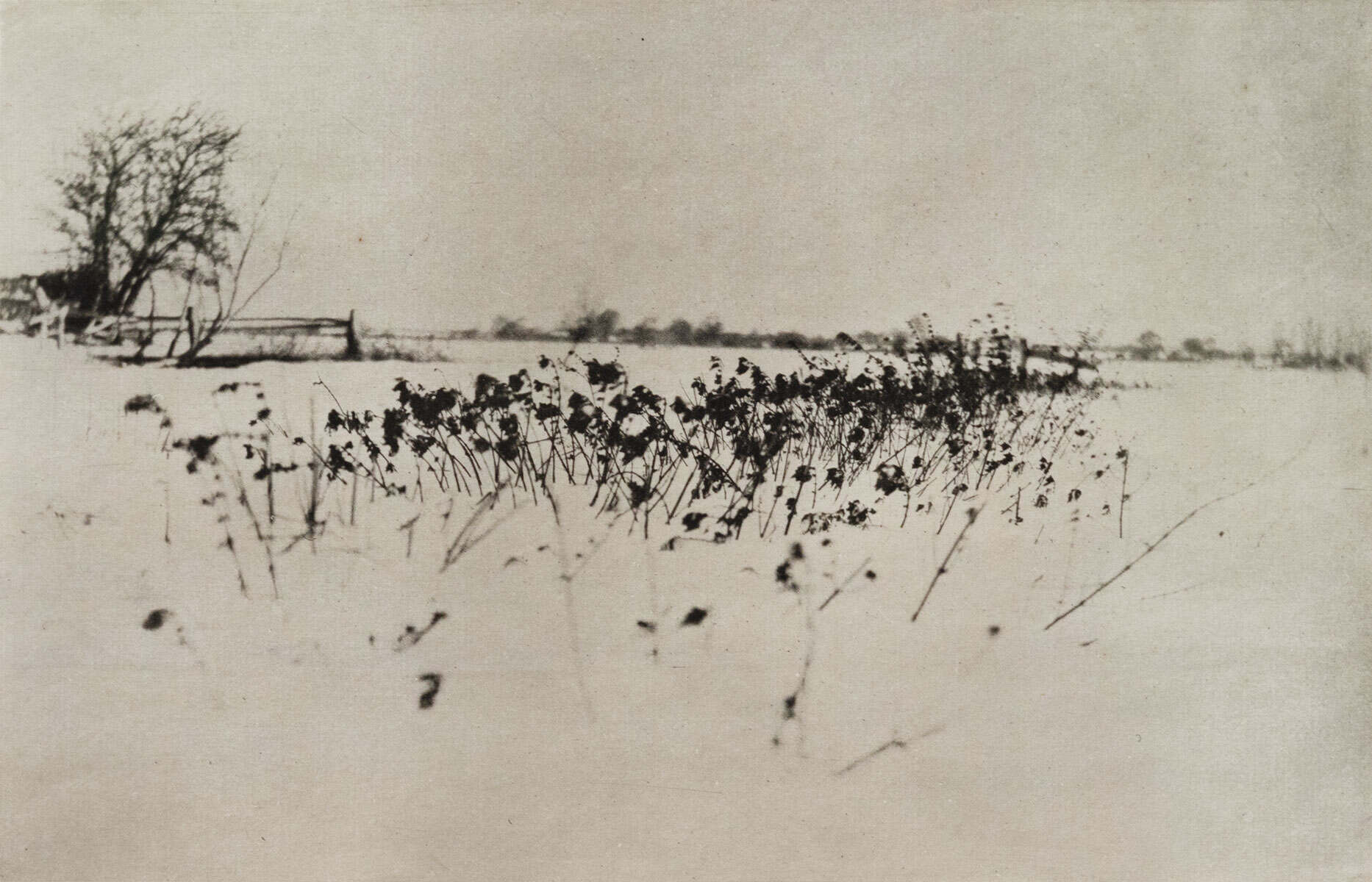
Peter Henry Emerson:The Snow Garden
Peter Henry Emerson:The Snow Garden
1895
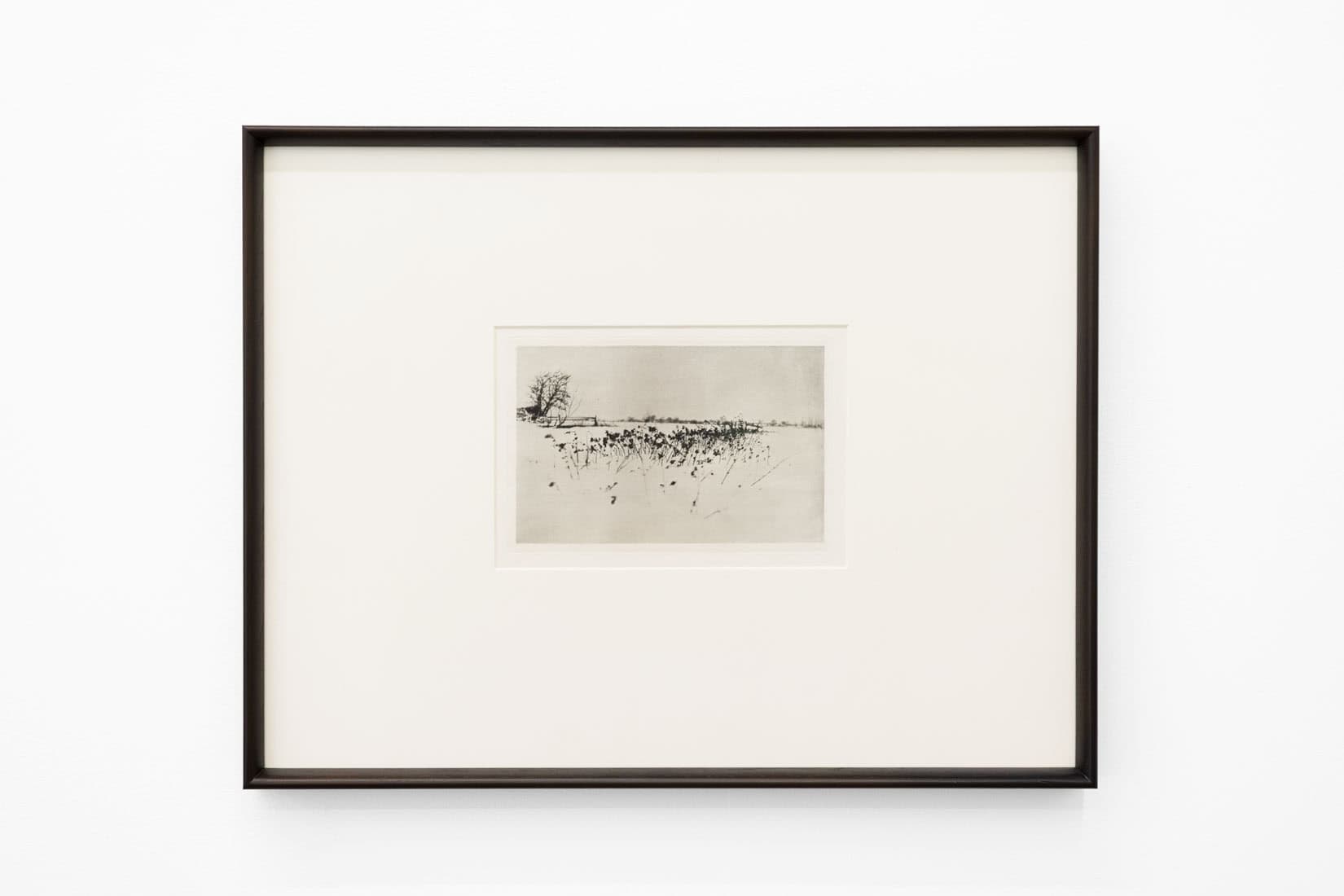
Photogravure on paper, printed c. 1895
7 x 10 1/2 inches
Price on request
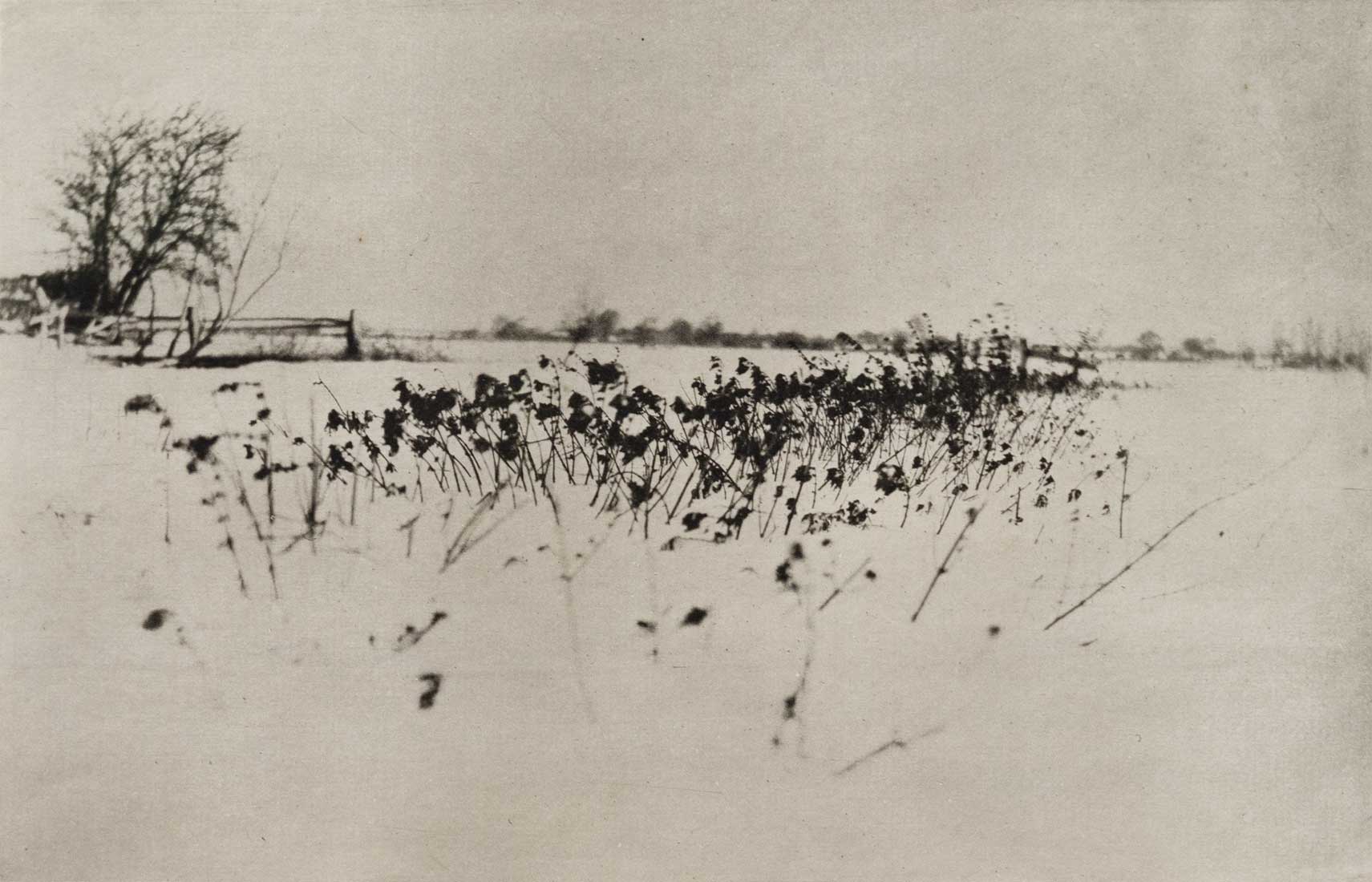
Naturalism was, as an art movement, dedicated to the representation of the world as it truly appears. Painters such as John Constable and George Clausen were major proponents of the style as a pastoral genre in the early nineteenth century, and some photographers assumed Naturalism soon after the medium’s invention, Peter Henry Emerson numbered among them. Emerson believed the world in all its given exteriority was beautiful enough to represent realistically, without overt romanticism. This group evolved into the Pictorialists and later the Photo-Secessionists.
Materially, the effect of Naturalism on Emerson’s photography took the form of sharp but localised focus, leaving some areas blurred in imitation of human vision. The artist avoided the use of high contrast or much manipulation of the image, allowing the referent to appear in their truest visual form. The Snow Garden, Marsh Leaves, 1895, presents Emerson’s deft creation of space and depth through focus, his commitment to the accurate rendition of tones and sight. However, the ultimate result is an image that borders on surreal, the kind of dream-like qualities that later characterised the photographs of the Pictorialists, all of whom were indebted to Emerson and his ilk.
In Context
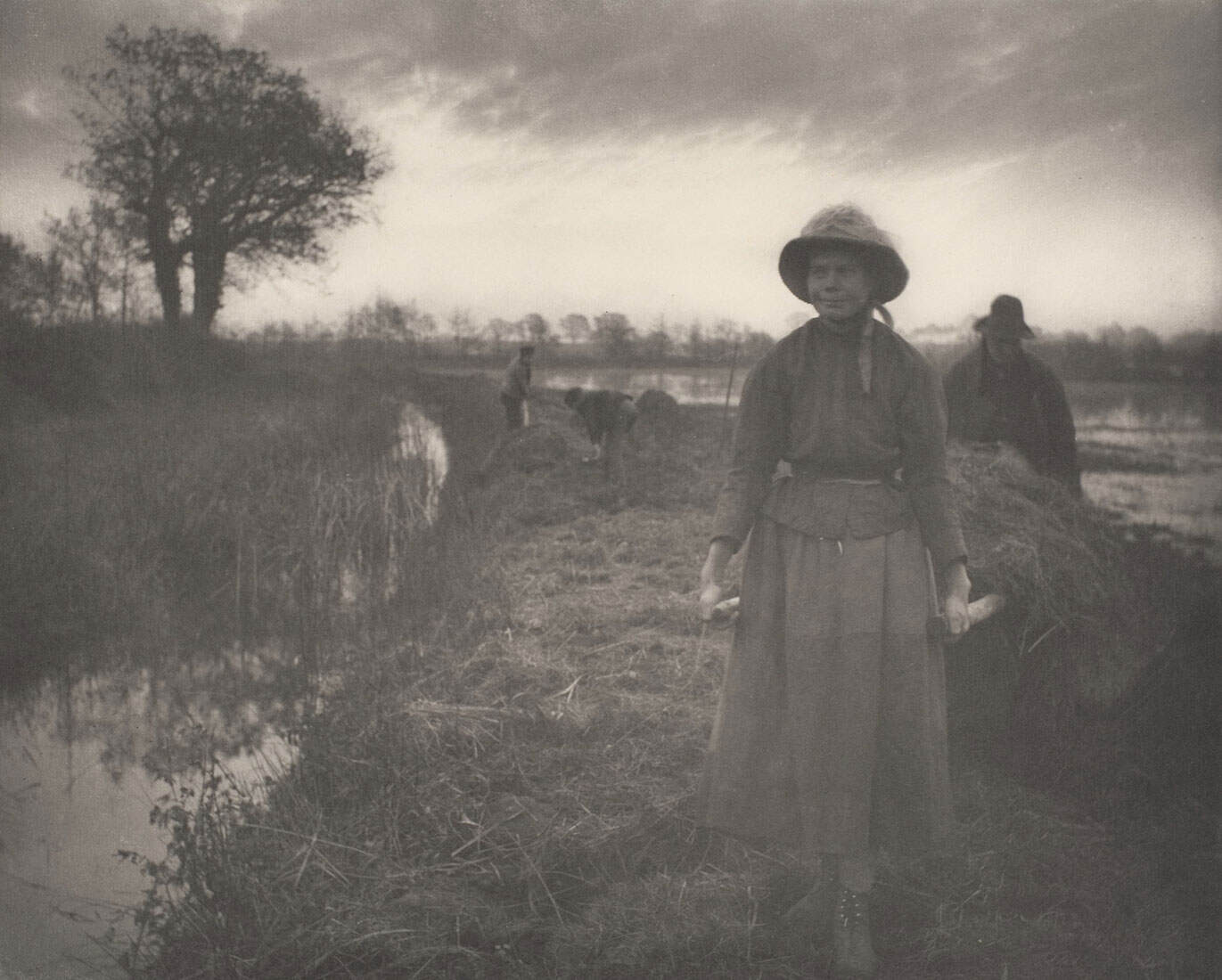
Emerson worked contemporaneously with figures such as author and poet Thomas Hardy, whose Realist pastoral work reframed and revalorised rural English life, especially the lives of working class individuals. This late Victorian sentiment finds its way into many of Emerson’s photographs, such as this one, ‘Poling the Marsh Hay’, 1886. While the photographer remains committed to the accurate representation of the woman, her work and her environment, she exudes a strength and nobility, much like the working class characters of Hardy’s novels.
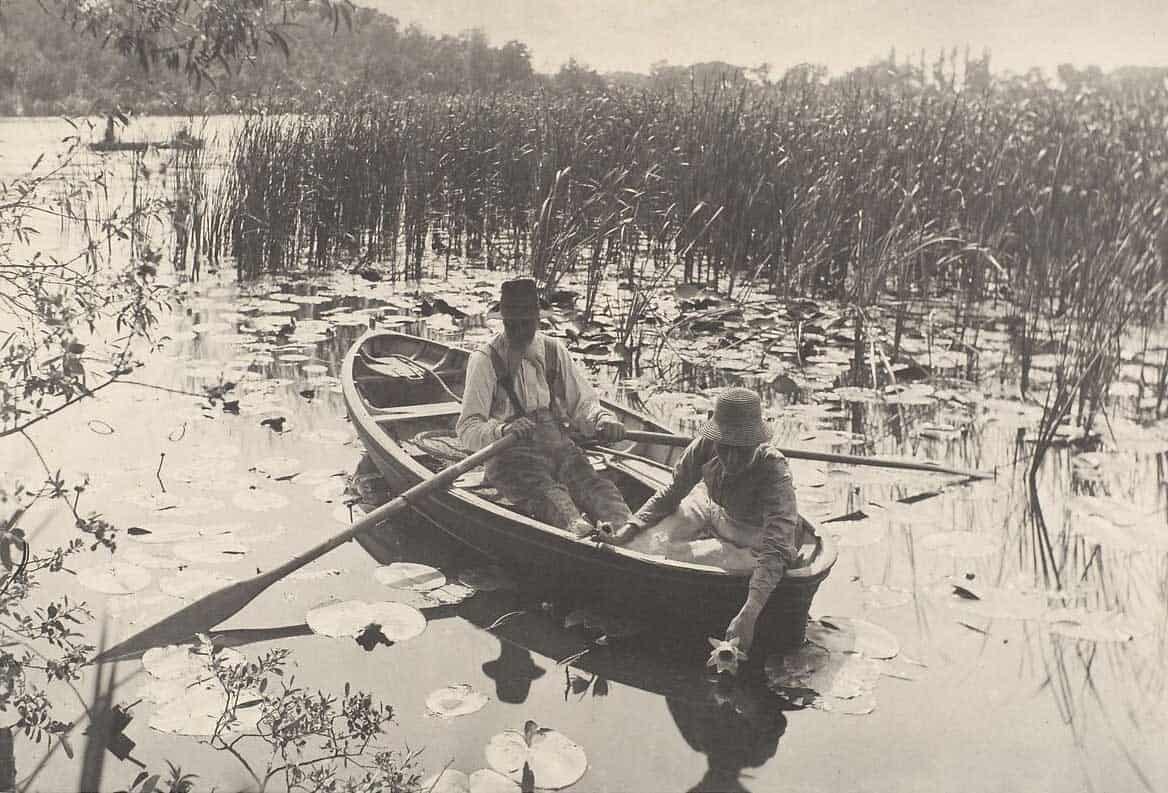
Before Emerson began experimenting with focus, he committed himself to cultivating a traditional practice of photographing in which images, like ‘Gathering Water Lillies’, 1886, were rendered in sharp, accurate focus. The Impressionist pursuit of a painterly imitation of true vision here manifests itself in this definite, refined form of image making.
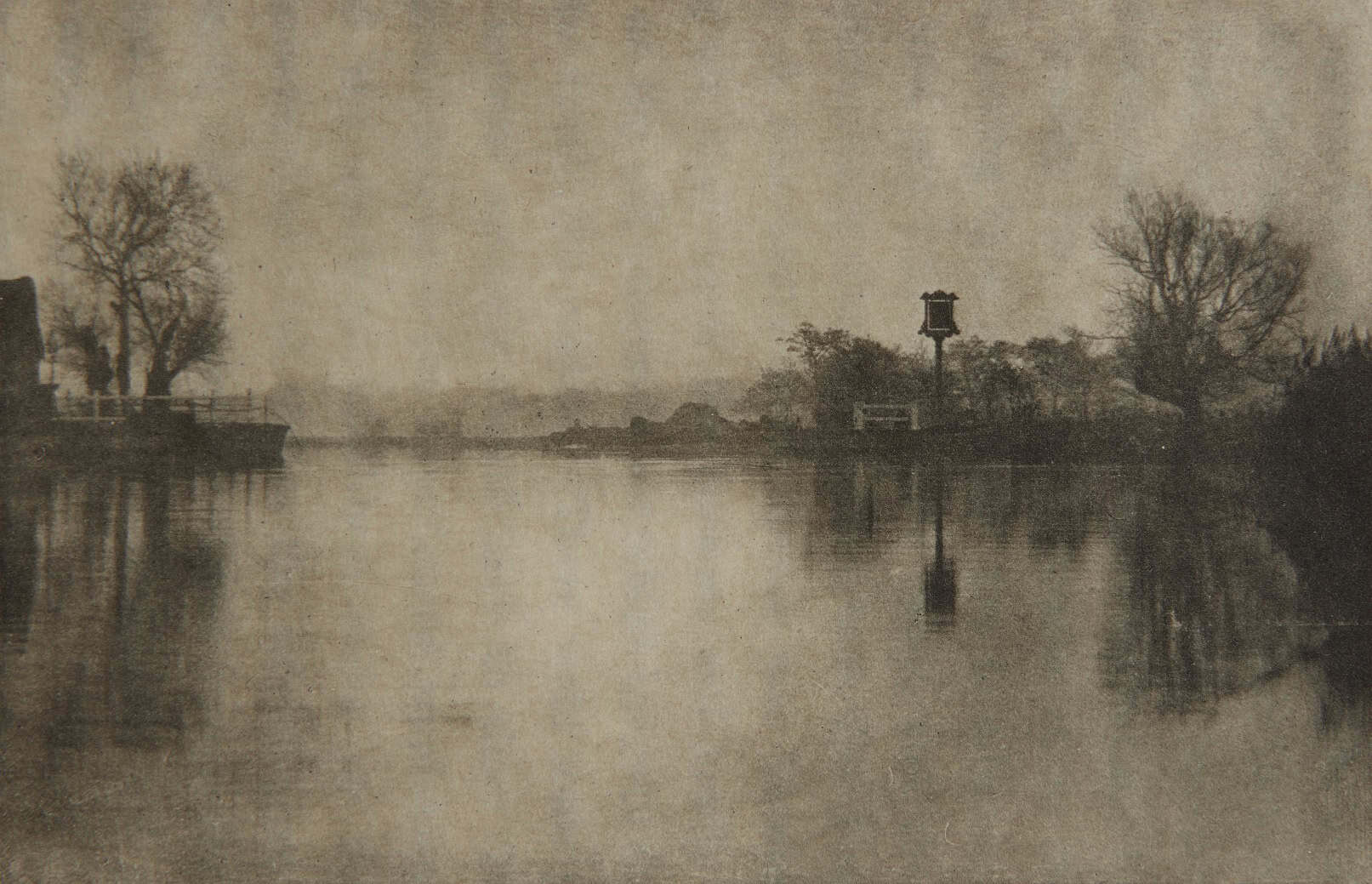
Later on in his career as a photographer, Emerson drifted towards what would become Pictorialism. Focus became a flexible device, and manipulation of the image in order to recreate natural vision became a more common practice. Many of the images from ‘Marsh Leaves’, like the one above, present this new technique.
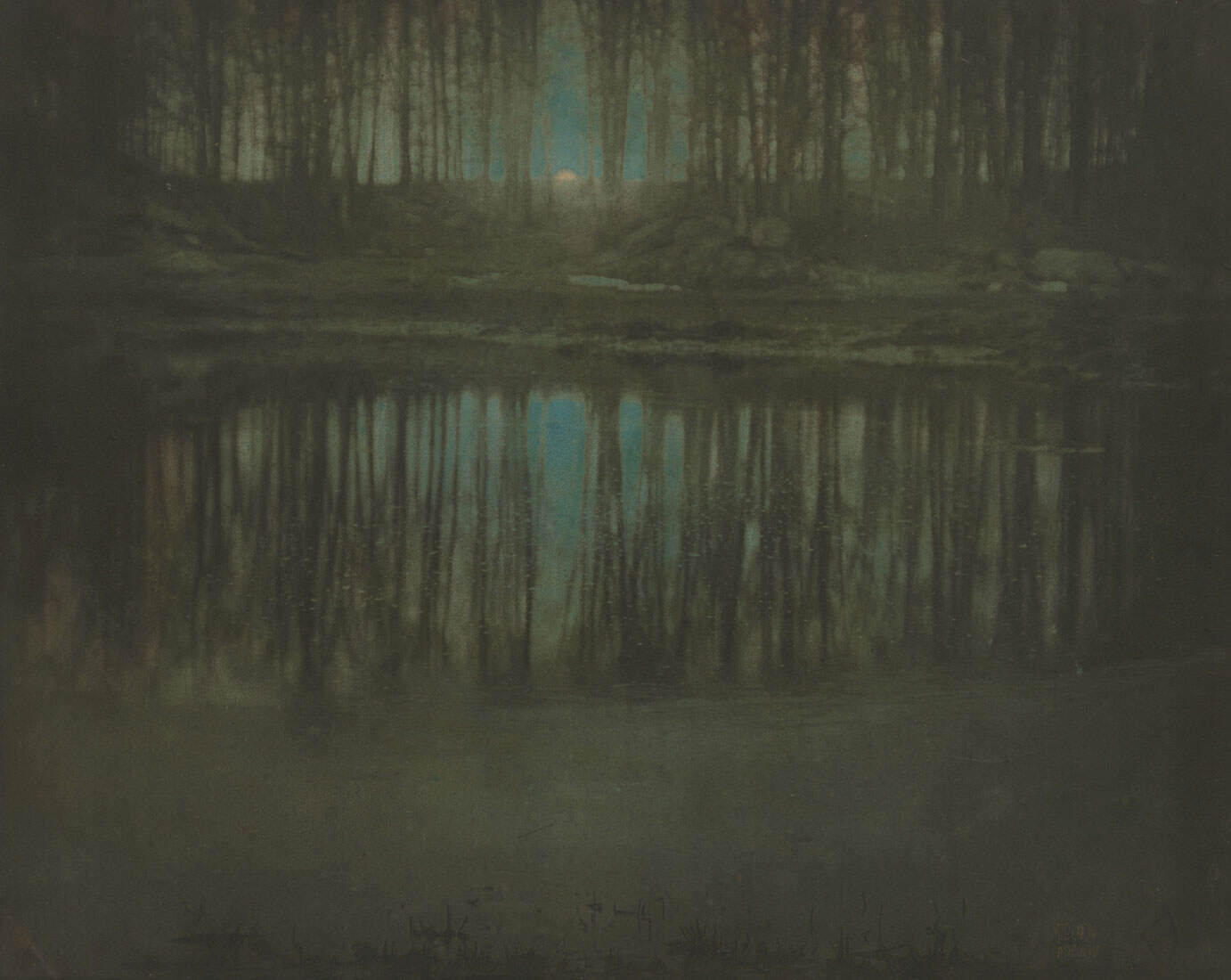
Following Emerson and his generation of photographers were the Pictorialists. This group of artists were instrumental in the elevating of photography as a medium to be viewed as an art work in its own right. These photographers often intended to reproduce the qualities of painting and particular charcoal works, allowing their images to sink into soft focus, reminiscent of Impressionist paintings. ‘Moonrise’, 1904, created by Edward Steichen, exemplifies the central tenets of Pictorialism.
B. Cuba1856-1936
Biography
Peter Henry Emerson is known for his late nineteenth century photographs of English rural life. Responding to French Naturalist painting, Emerson initially elected to photograph the countryside in sharp focus to accurately represent his referents. Later on, the photographer turned to soft focus images, recreating, as he thought, the natural focusing patterns of human eyes. Photographs such as The Snow Garden are examples of this new exploration with focus and softness. This work was created in the East Anglian fens as part of his project Marsh Leaves, one of Emerson’s most substantial bodies of work.
Emerson was born in 1856 on his father’s plantation in Cuba. He immigrated to the United Kingdom in 1869 and later began to study Medicine at King’s College London, before switching to Clare College Cambridge. In the early 1880s, he took up photography to photograph birds, leading on to a long term interest in the medium. From 1886 he made frequent trips to the Norfolk Broads, where he created a series of sharp-focus photographs entitled Life and Landscape on the Norfolk Broads. In the 1890s, he produced two series of more soft-focus images depicting similar subjects, the final photographic projects of his career: On English Lagoons (1893), and Marsh Leaves (1895). He died in 1936.