In spite of the fact that Callahan has worked with a wide range of techniques and equipment and has pushed his favorite motifs in several countries his work is informed by a rare integrity, a coherence created by the intensity and logic of his search for pictorial clarity.
John Szarkowski
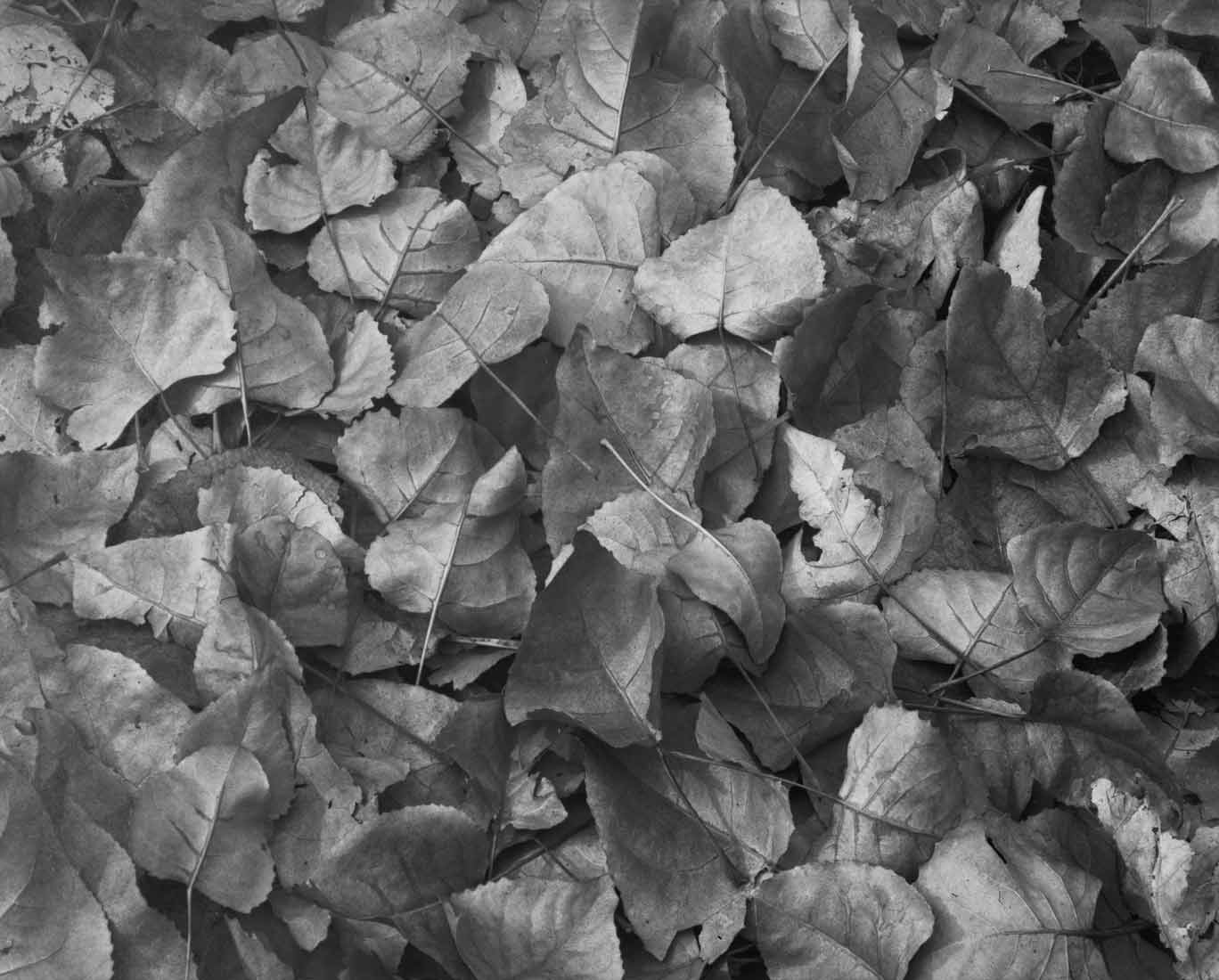
An assemblage of leaves curl over each other, criss-crossed and overlapping, dynamic within the stagnant borders of a photograph. Each individual, subtly contrasting one another in muted tones of grey, seems to vie for attention, their gently twisting forms traced by slender stems. Intricate shadows highlight their thinness, and indeed their frailty, the mundane composition revealing something new about the materiality of a ubiquitous form. The photograph prompts us to dwell in a moment of prolonged observation – each crinkled edge, mottled membrane and delicate crack assuming a monumentality as we pause to inspect them.
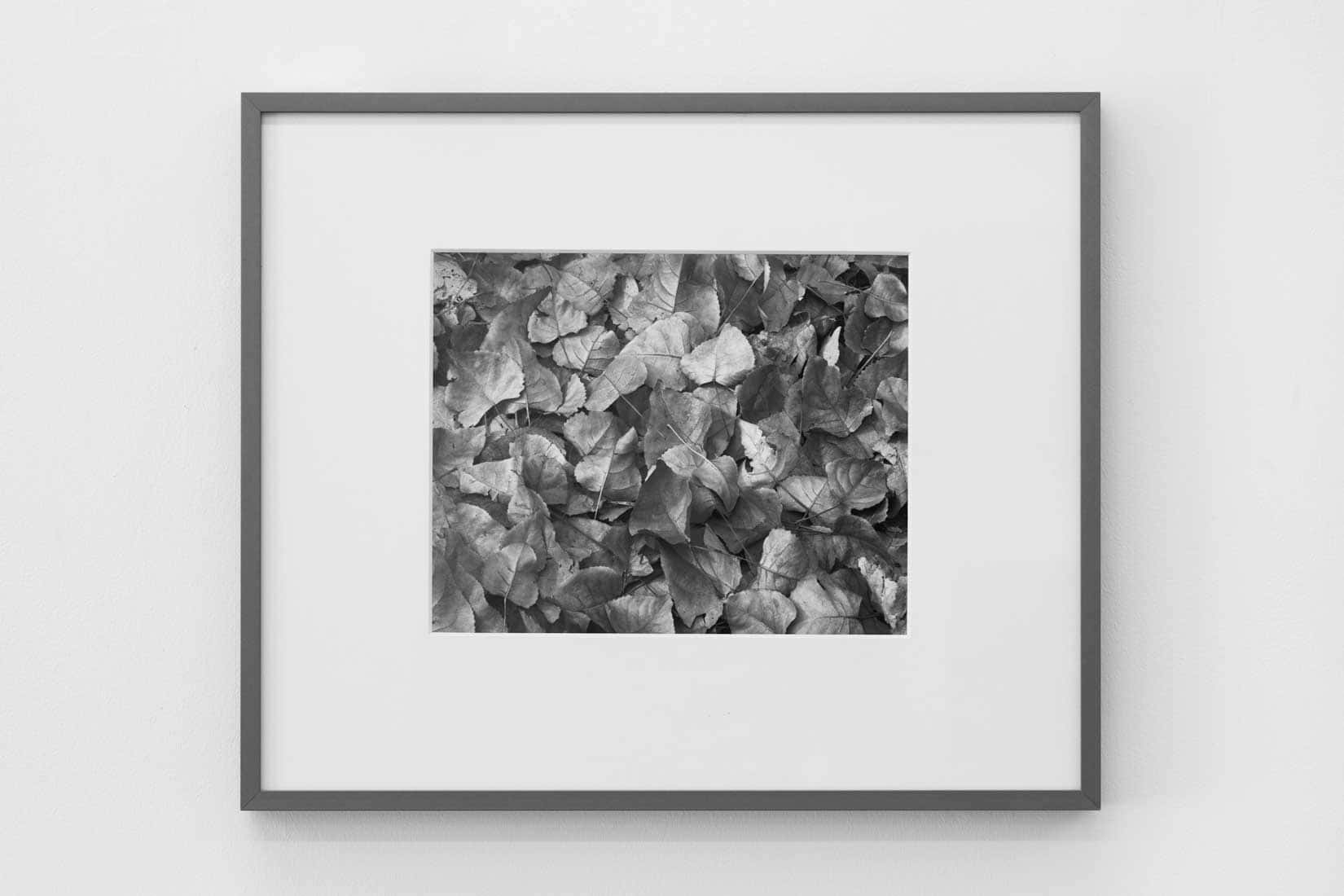
Moments of deep shadow interrupt the otherwise soft dappled light, revealing the corrugated edges of foliage. Their soft leathery textures are made prominent by the omission of colour, their stems smooth, tubular and certain against the variability of the blades. The repeated forms – some obtuse and round, others jagged and sharp – enlarged by the camera’s lens invite us into an intimate landscape, a moment of solace. These reflective environments demonstrate Callahan’s ability to use photography to give shape to his inner experience, excited by the capability of the camera and its techniques. Using extreme contrast, reduction of form, and multiple exposures to capture intricate details, his photographs are both formalised yet deeply evocative. Callahan was said to be “terrifically naive”, receiving no formal education in photography – however this naivety granted him flexibility, reconciling the experimentation of European modernism with an American adoration for the natural world.
Described as “the regular guy, the reticent Midwesterner”, Callahan often gave significance to the overlooked. Leaves on the ground, weeds in the snow, reflections on water – Callahan imbued these simple moments, nature, and urban settings with significance. His work, deeply personal, strayed from the popular social photography of the 1930s, rejecting narrative and descriptive realism in favour of a formal abstraction. Leaves, requiring a constant negotiation between specific details and pure form itself, feels an apt metaphor for Callahan’s reflective way of working, often returning to subjects with a changed perspective
(By Emily Naughton)