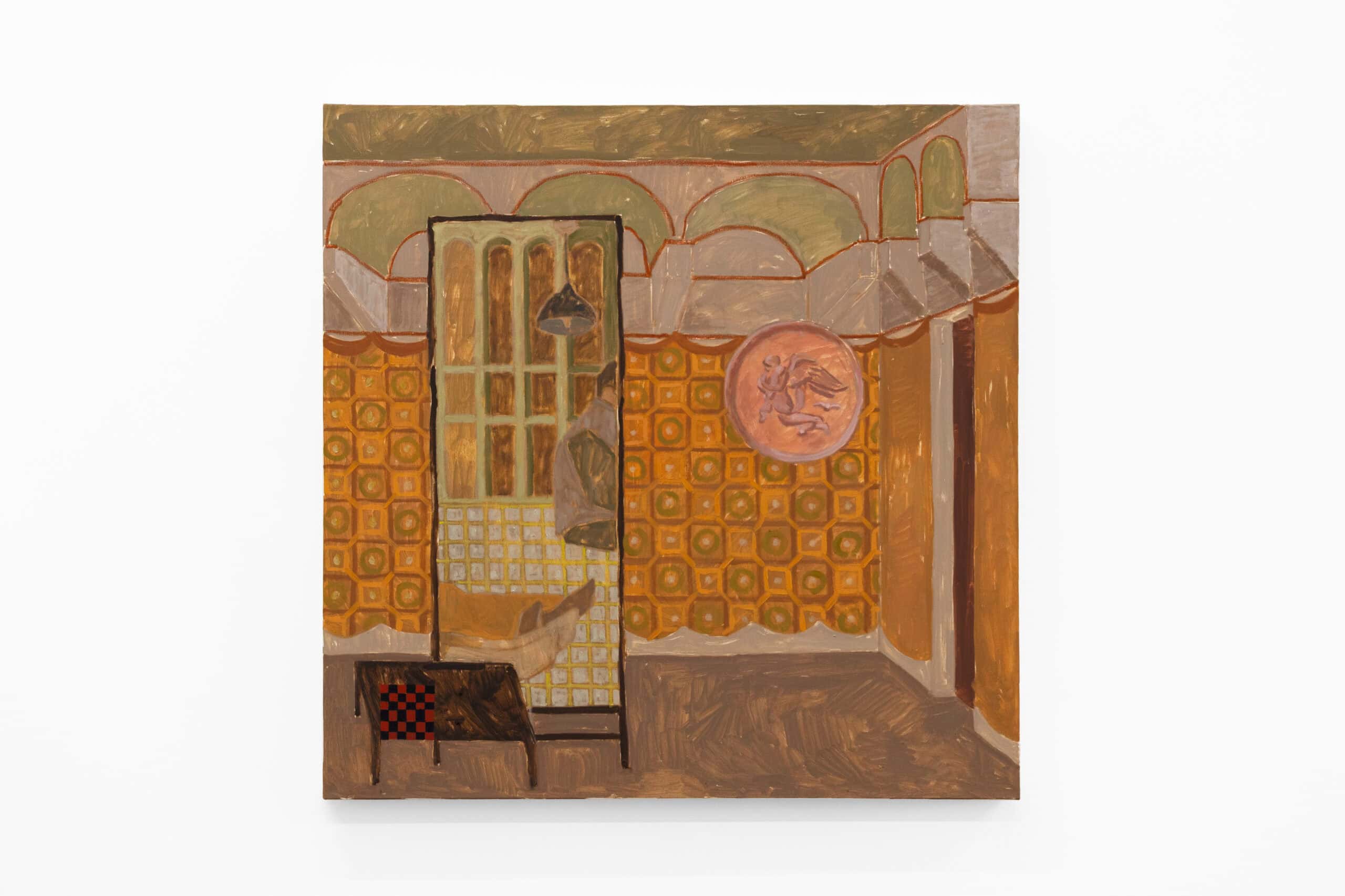
My paintings are an exploration of the interplay of pattern, flat color, and naturalistic representation, with the aim of creating a space that sits between realism and abstraction
Kayoon Anderson
A set of discrete vernacular objects are set amongst a domestic interior – a table and checkerboard sit before a folding screen, a medallion hangs suspended in a subtle surrealism. The simple forms which comprise each element brings harmony to the composition, blurring the boundary between artefact and architecture. Inspired by Munbangdo still-lifes and medieval painting, Kayoon Anderson’s imagined spaces create ad-hoc compositions which oscillate between abstraction and naturalism. Munbangdo still-lifes, a genre arising in late eighteenth century Joseon Korea emerged from a period of political and socioeconomic prosperity, illustrating the appeal of new and foreign objects from neighbouring China and Japan. Similarly, Anderson’s paintings display a fascination for cultural artefacts, combining elements from her own mixed heritage in order to create a unique diasporic sensibility. Her spaces, painted from personal photographs and memories, merge these disparate influences in a dreamlike collage.
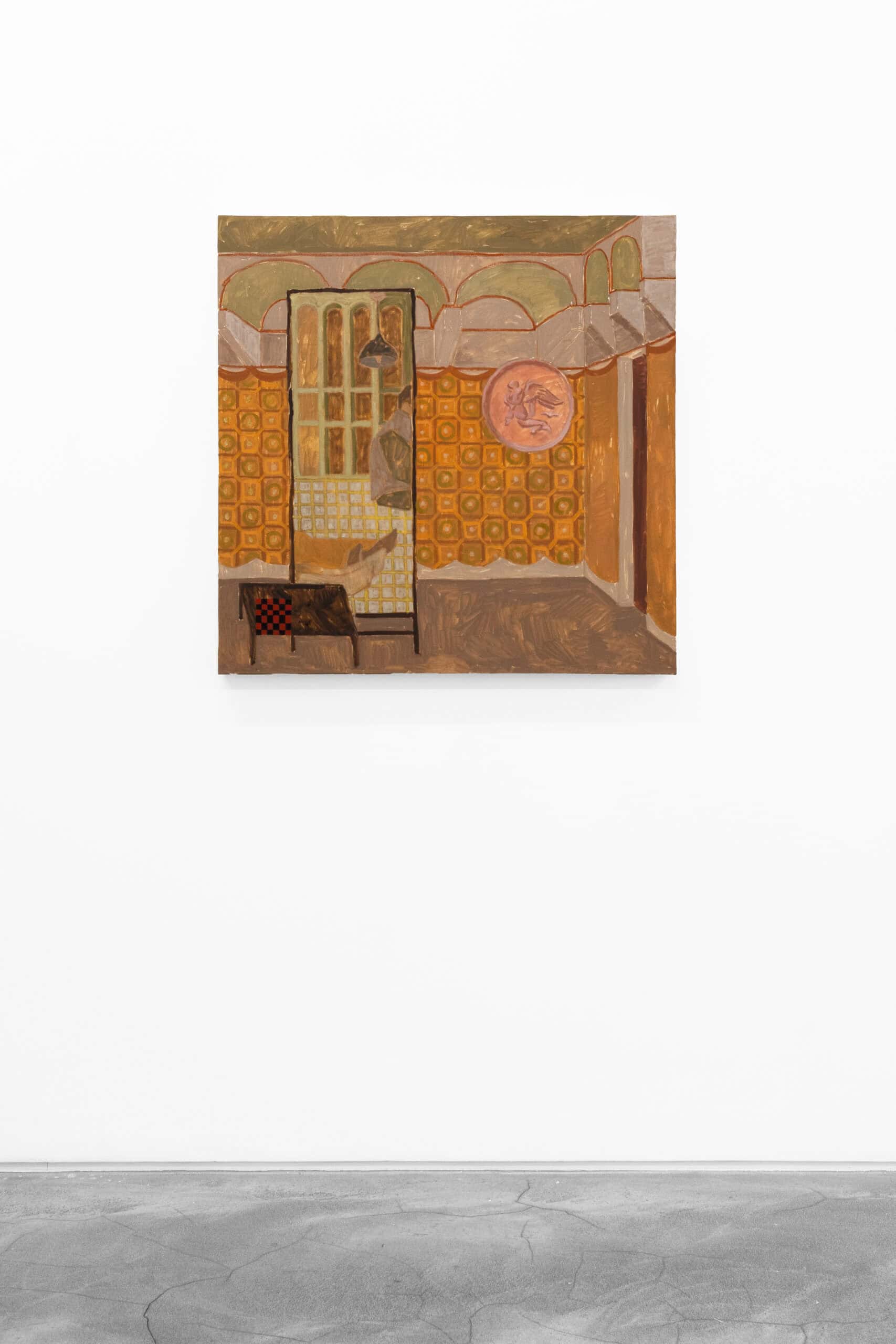
Kayoon Anderson, Folding Screen, 2026
A series of arches punctuate the upper edges of the walls, reminiscent of medieval European monastic architecture. Their edges, traced in terracotta hues, echo the scalloped skirting below, the boundary between construction and ornamentation blurred. A sequence of tiled patterns unfolds throughout the scene – a checkerboard sits alert, upright, defying the perspective of the table it sits upon. Its simple grid is repeated in the tiled floor depicted on the folding screen, pale grey tiles separated by yellow grout, disturbing the rhythm of the alternating squares and soft green circles that define the wall. Bronze light diffuses through thin arched windows behind an anonymous figure, his curved back turned away from our view. The screen, one of Anderson’s own works, is a homage to the influence personal experience has to her work, bringing a sense of containment and interiority to the composition. Playfully self-referential, the screen shows Anderson’s tendency to blur body and space, the form of figures themselves a spatial condition, inseparable from the materiality of their environments.
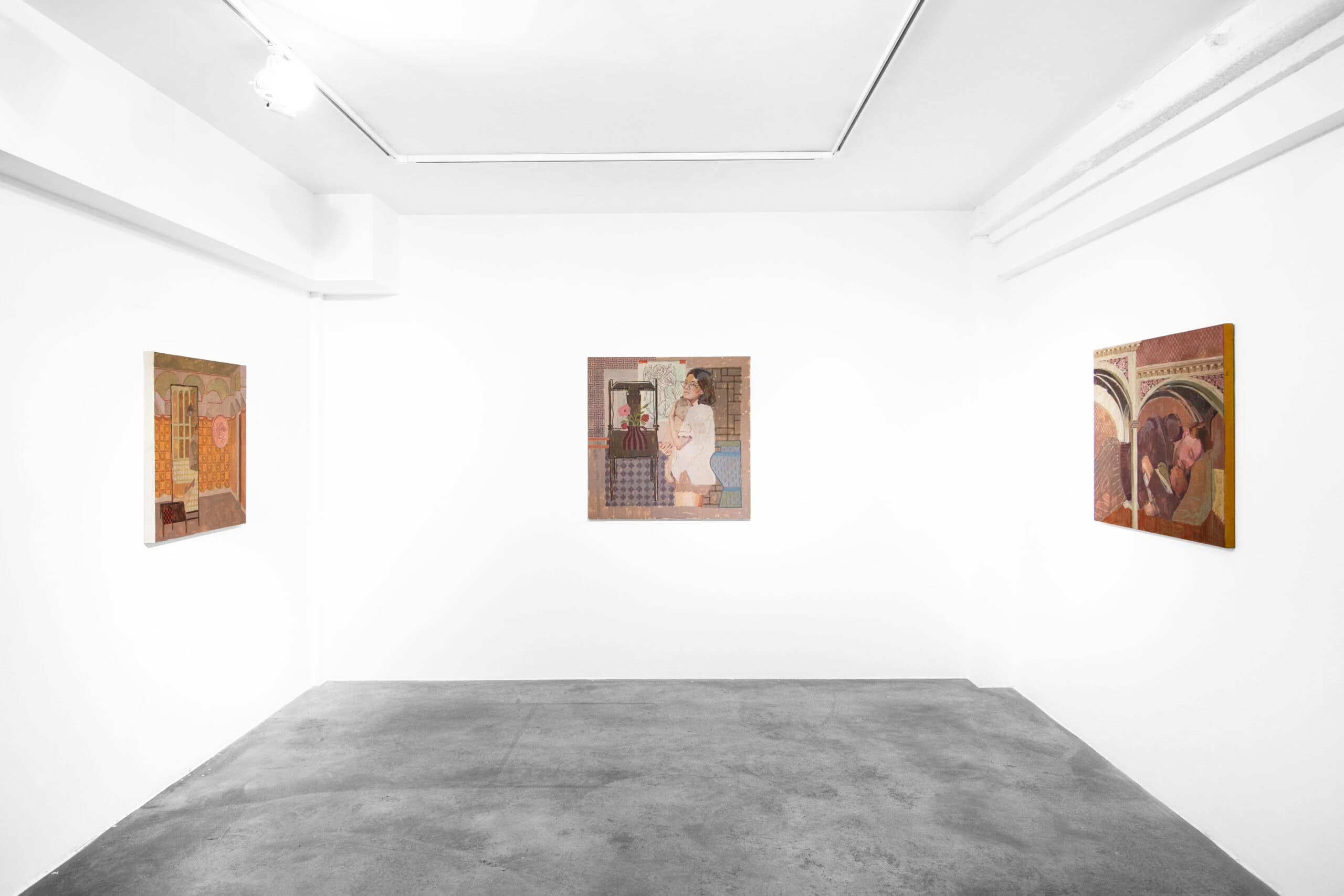
Kayoon Anderson, The Rooms We Grow, 2026
The terracotta medallion, shadows cast in a dusty purple, depicts an allegorical winged figure, a female personification of Night. Holding an infant in each arm and with a small owl at her feet, she represents sleep and restfulness. Employing an audacious symbolism common within the Munbangdo still-lifes, Anderson’s carefully composed works imbue objects with significance – estranged from their contexts, these artefacts find a new meaning in these imagined architectures. The tension between these carefully designed compositions and an organic application of paint allows her works to display varying degrees of realism – here, observation becomes akin to recalling a memory. Immersed in Anderson’s diasporic landscapes, we find ourselves in an atmosphere of quiet contemplation, reflecting upon family, identity, and the spaces we call home
(By Emily Naughton)