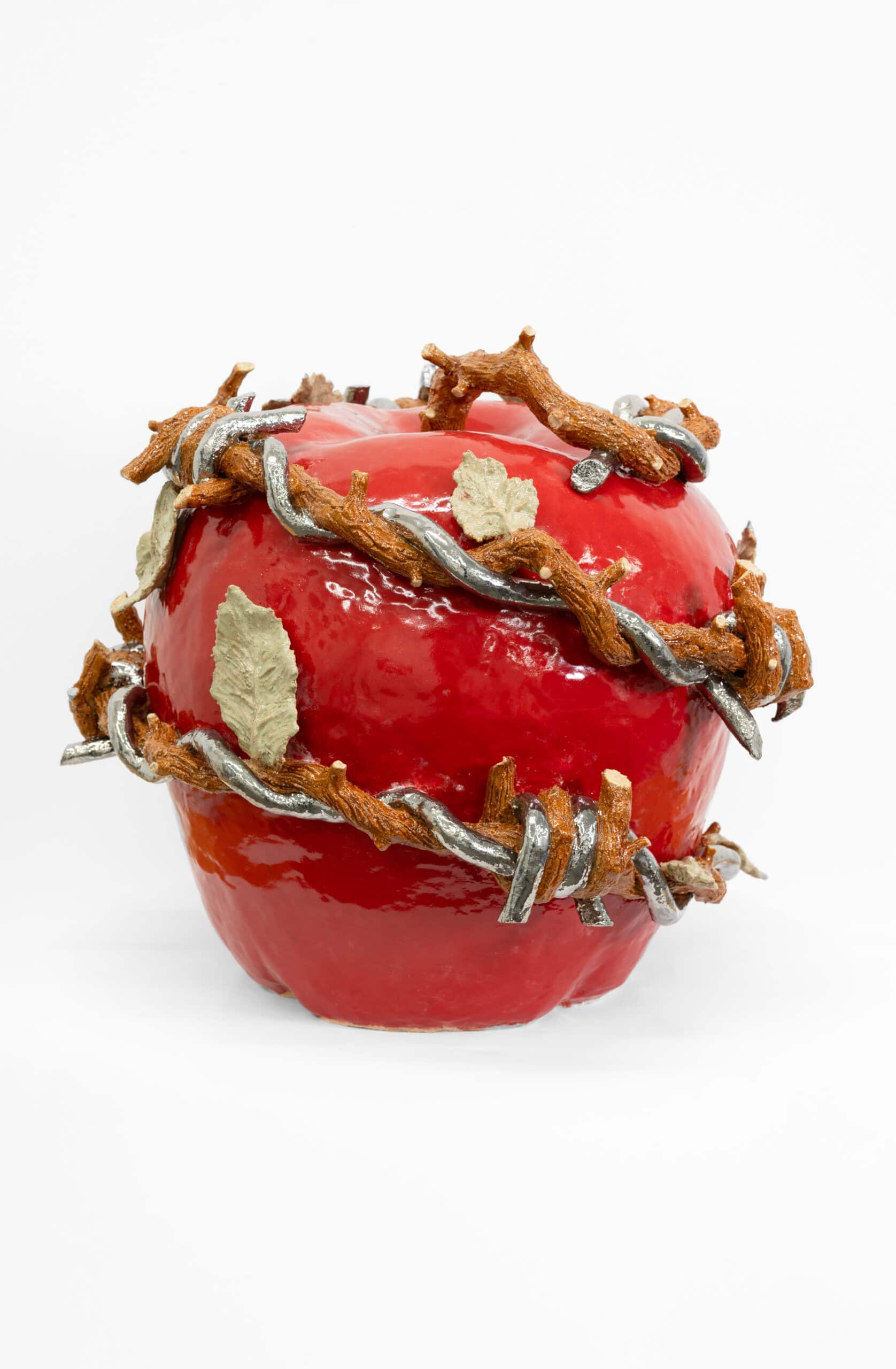
Lindsey Lou Howard, Natural Preservative, 2024
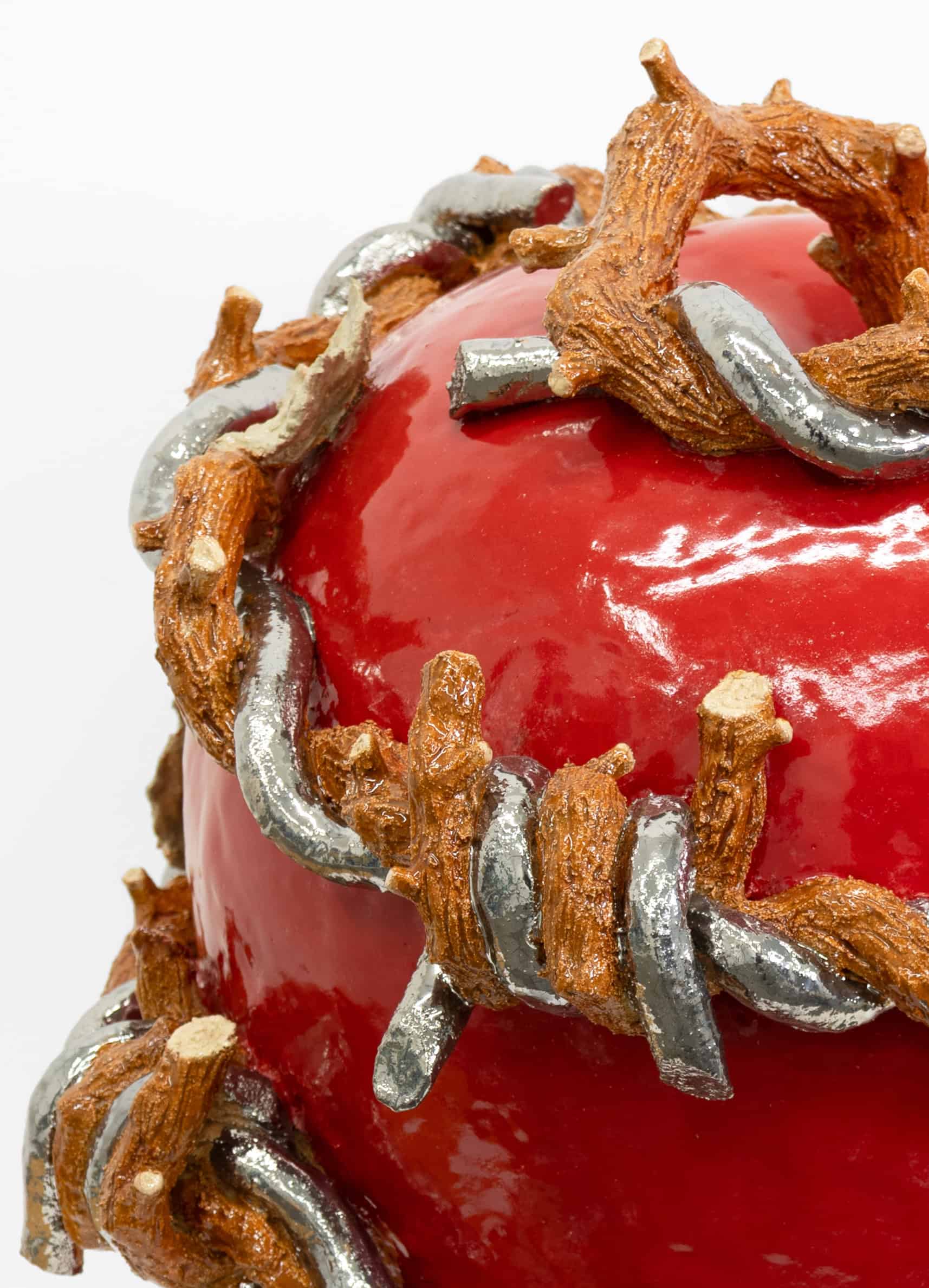
Squat and stoic, an apple sits bound by its own stem – emerging from the top and joined by barbed wire, they juxtapose its tantalising form. Coated in a ruby red glaze, glassy and mirrorlike, it’s the kind of perfect apple one might see on television, brought for a teacher’s desk. The glaze stops just short of the base of the sculpture, enough to reveal its materiality, the natural tint of clay peering through. Lindsey Lou Howard’s use of clay in her ceramic practice parallels the processes of cooking, both inherently tactile acts, often in order to criticise the industrial food complex and its commercialisation. In Natural Preservative, this commentary is made manifest through the apple’s artificial quality, evoking satire through the use of vibrant colours, glossy textures and its imposing scale.
The apple’s stem snakes along its sides, lacing fingers with a sleek barbed wire, creating an air of unease. Though texturally diverse, the barbed wire smooth and metallic, the stem scratchy, they read as counterparts. Often the stem, sprouting small branches along its length like thorns, adopts the form of the barbed wire. Delicate leaves in earthen tones of sage spring from the bark and bear flecks of the red glaze, sharing a crystalline quality with the stem as their textured surfaces meet the light, as if coated in sugar. The juxtaposition between the voluptuous form of the apple and its threatening appendages recalls contrasting symbolisms associated with the apple. Ubiquitous within visual culture, the apple recalls biblical references, fairytales, and associated with modern technology and consumerism, its sculptural form becomes a narrative device for exploring themes of desire, temptation and guilt. Howard often relies on vernacular forms and popular references, inviting viewers to assign their own meaning to the work – the apple allowing for multiple interpretations.
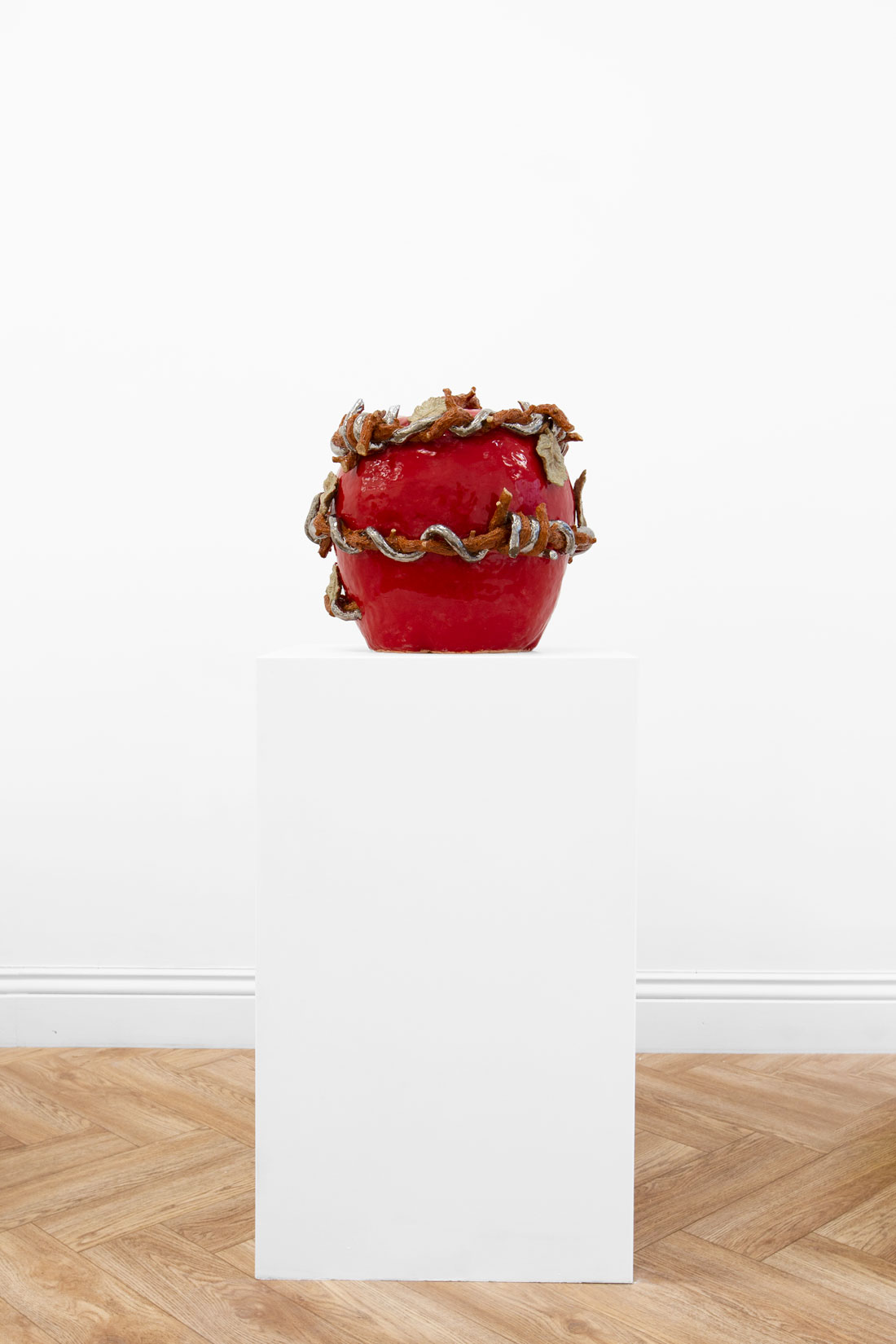
Thus Natural Preservative, through its tongue-in-cheek references, may be read as a double-entendre. Encased by both wire and stem, natural and man-made objects, we may interpret its thorny exterior as a hostile warning against indulging in temptation, or perhaps a play upon the commodification of food and increasingly synthetic preservation processes
(By Emily Naughton)