We are entering a world where there won't be one but two realities, just like we have two eyes or hear bass and treble tones. There will be two realities: the actual, and the virtual. Thus there is no simulation, but substitution. Reality has become symmetrical.
Paul Virillio1994
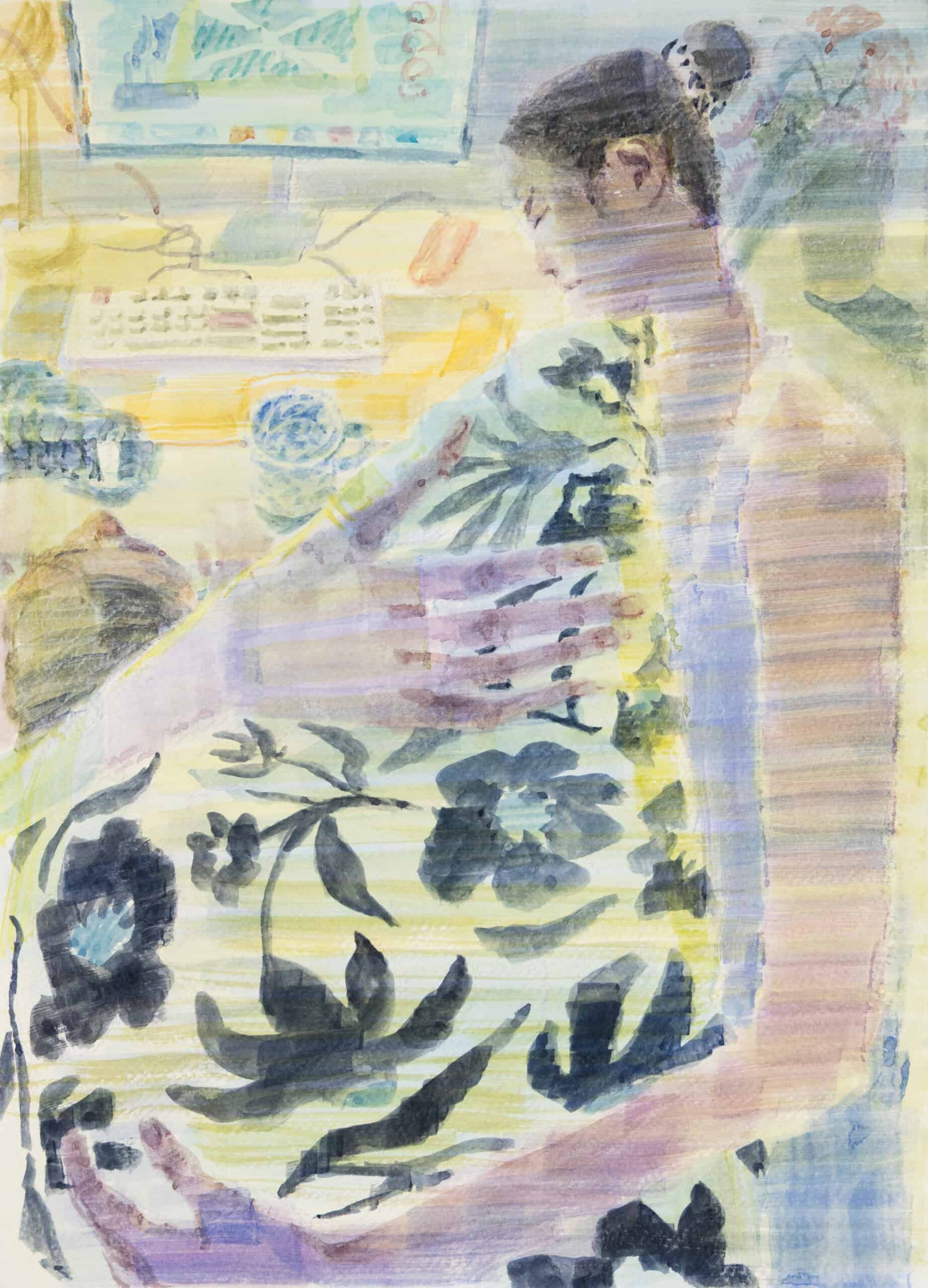
Yoora Lee, Floral Pillow, 2025
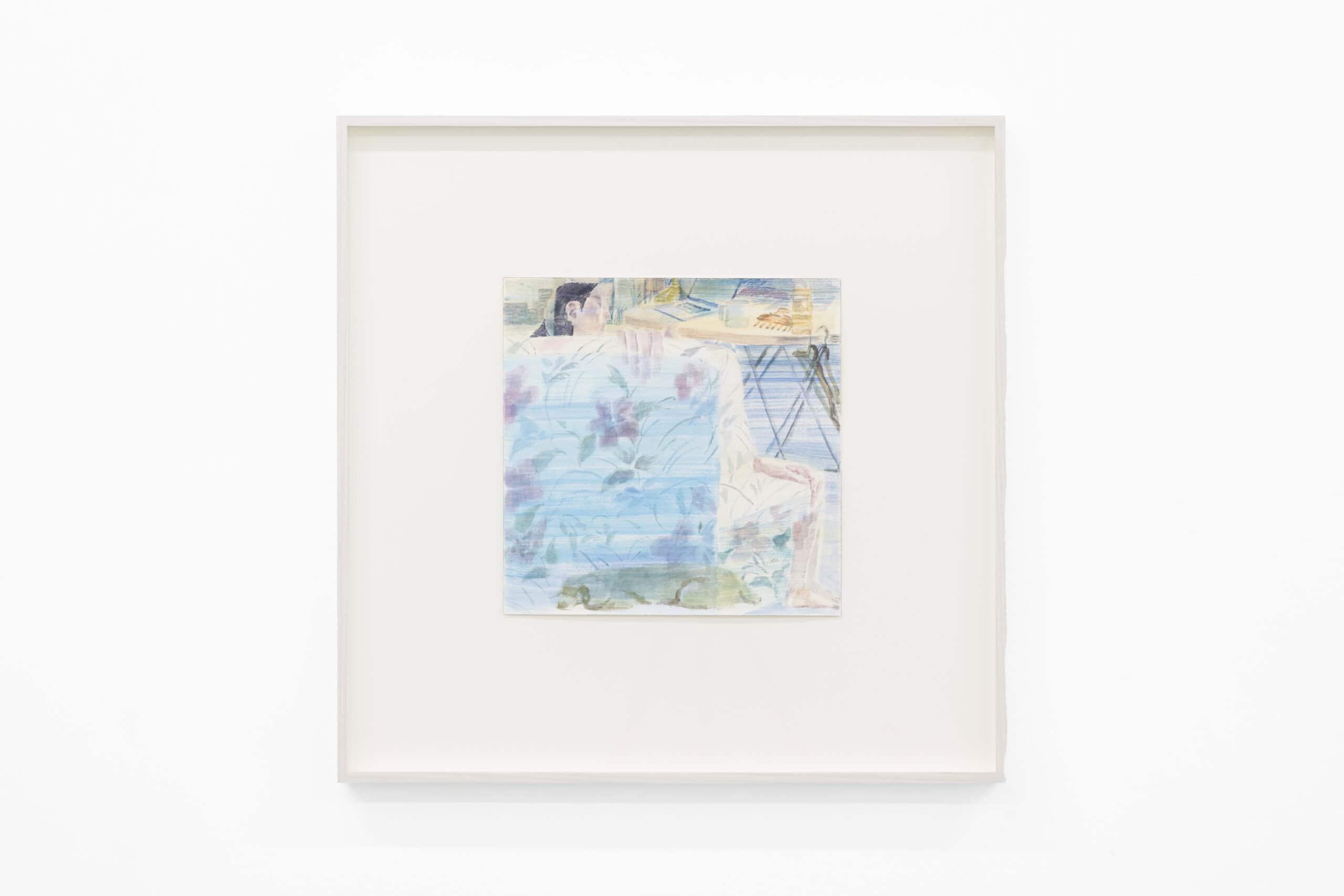
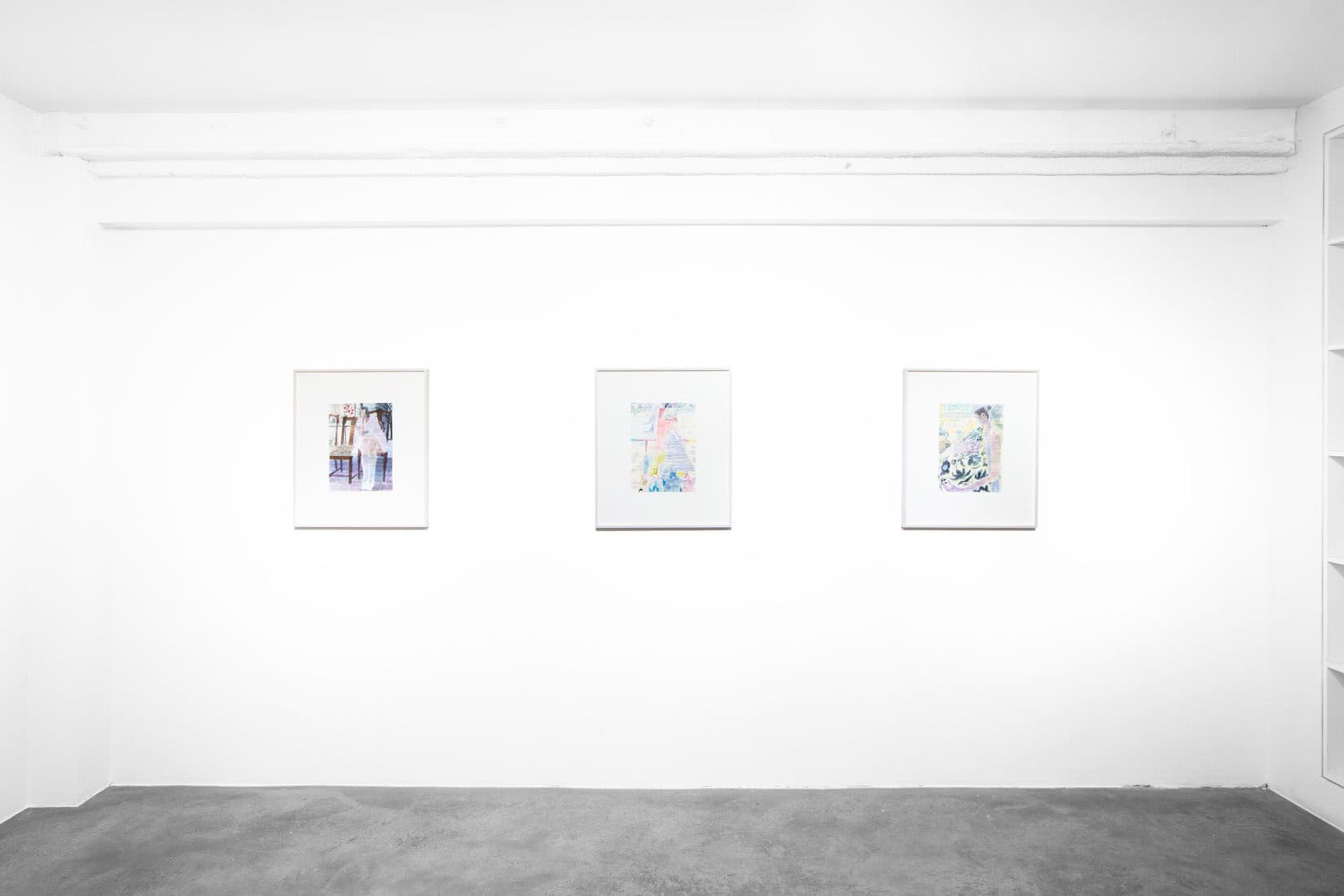
Yoora Lee’s work is typified by her wavering brushstrokes – like fibres of a cloth, thin layers come together to give the impression of the static on a television screen, creating tapestries of complex narratives. Lee’s affinity for the technology of the 1990s derives from an interest in television and media – revisiting the decade through pre-internet television and animation, Lee explores how the past may be edited and replicated by those who hadn’t experienced it. Examining the influence of media on our collective memory, Lee often works from secondary images, such as photos taken from a computer or phone screen, allowing her paintings to act as simulacra, nostalgic portraits of false realities. Lee not only finds inspiration in the aesthetics of film and television, but also actively engages with its techniques, using the medium of painting as a way to edit reality. Assuming the role of editor, Lee carefully choreographs compositions, colour grading her moving images, allowing her to collage different moments together, altering the passage of time.
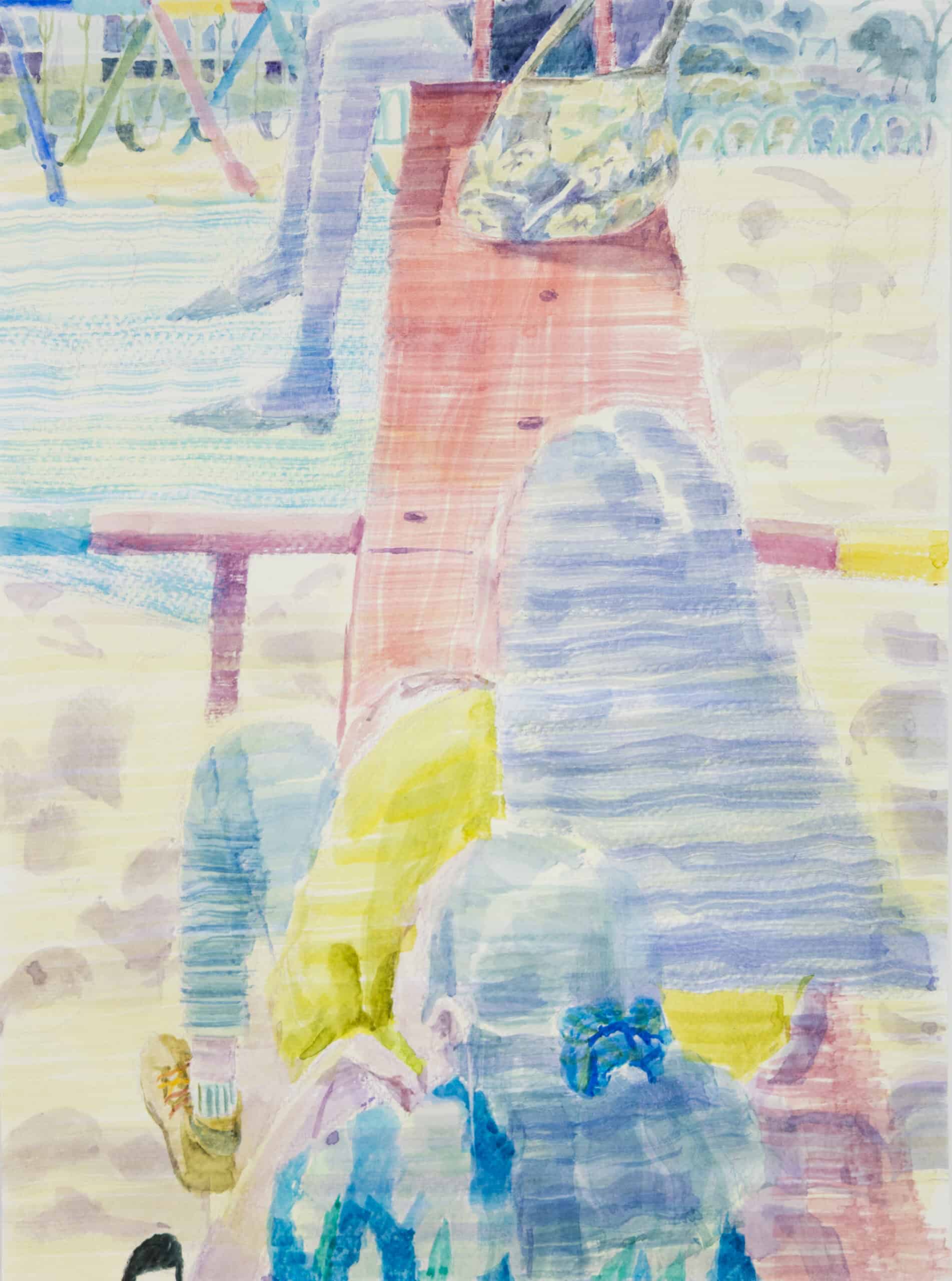
More recently, Lee’s work has shifted towards the depiction of inhabited spaces. Her exhibition Not Yet Home presents works which explore two interwoven themes, capturing both shared domestic space and childhood environments. Where paintings such as Seesaw depict fleeting childhood memories bathed in nostalgia, quotidian moments captured in paintings such as Shared Corners highlight a contemporary sensibility which Lee skilfully portrays through a muted colour palette and depictions of technology, be it a glimpse of a computer screen or compositions influenced by the world of cinema. Revisited from a distance, these places carry a mixture of tenderness and estrangement, her ebbing brushtrokes creating hazy thresholds which immortalise the space in-between, allowing us to pause in a moment of transition and flux. Her paintings often feature a central character, always anonymous and understated, inviting the viewer to project their own perspective onto the work. In Building Aquarium, the side profile of a figure looks onto a nebulous blur of aquarium-goers, their limbs awash in pale greens and soft blues. The horizontal sequence of bodies gradually merges into the amorphous shapes of sea life, creating a sense of undulating movement akin to water softly bobbing up and down.
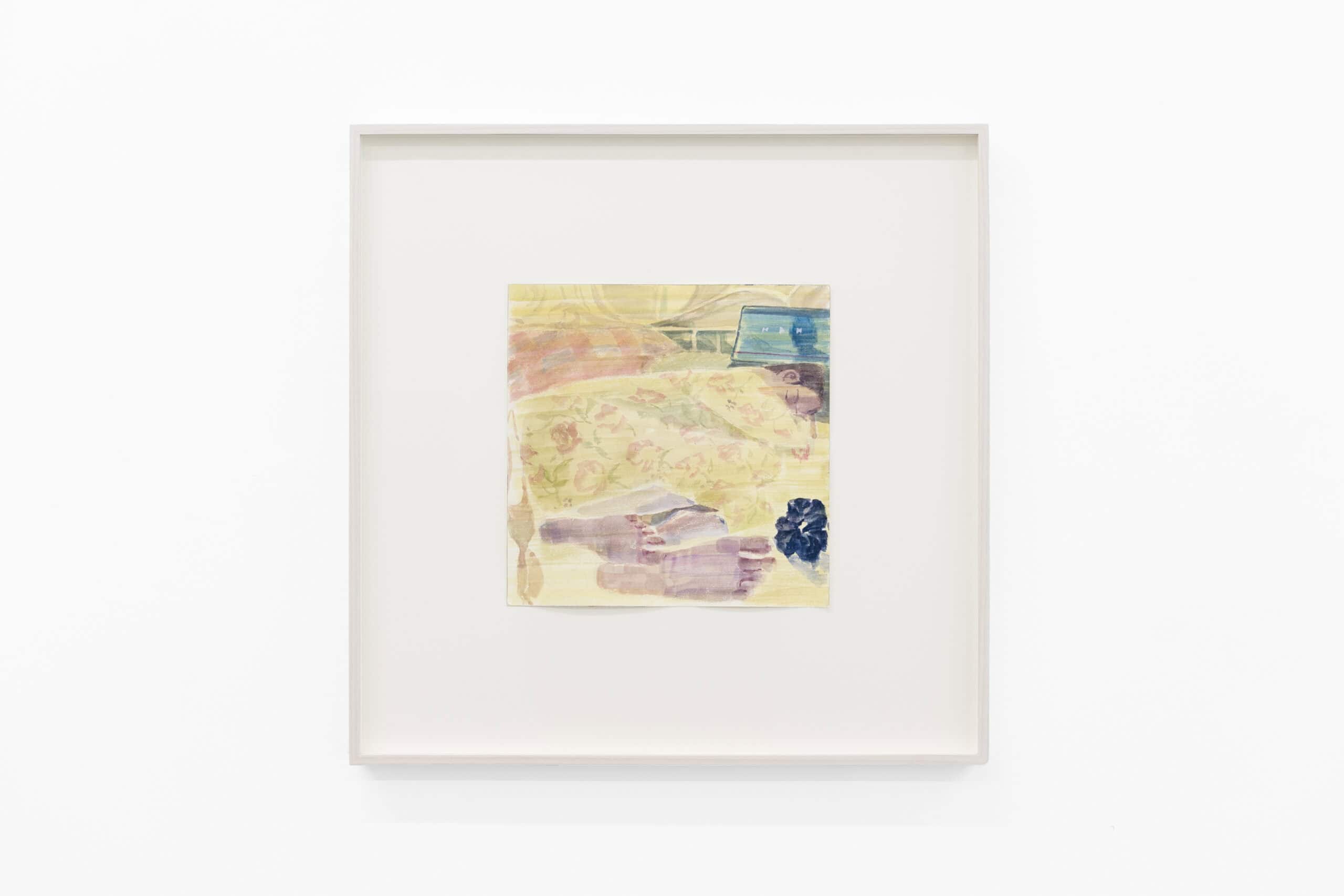
Lee’s use of cool tones, inspired by the blue light of a screen or the faded colour of old video stills, reinforces the palpable emotional atmospheres within her compositions. Subtle yet dense, Lee’s paintings often have a nostalgic air. In Floral Pillow, we observe a gentle caress – the central figure’s arm, textured with static lines, softly traces the sides of the canvas, her enlarged hand creating a sense of movement as our eyes follow the act of the embrace. The distorted perspective of someone working at a desk disrupts this embrace, creating a feeling of uncertainty. Yet, the familiarity of a floral patterned blanket and faded echoes of mundane objects – a vase, computer mouse, sprawling wires, evoke a poignant nostalgia. The same feelings are created in Lee’s Not Yet Home – enlarged feet tinged in purple poke out through a similar floral patterned duvet, its soft green tone echoed throughout the rest of the background, encasing the viewer in a cocoon of domesticity. Behind her, a laptop sits open, a paused video illuminating the screen as she turns away to rest. Both pieces, comforting yet vague, capture a melancholia which is prevalent across Lee’s work, exploring the complexity and loneliness often associated with the paradigm shift accompanying the transition from analog to digital media.
Deftly negotiating scenes of familiarity and obscurity, memory and fiction, Lee’s work comfortably sits in the space between, balancing a multitude of perspectives and sub-narratives all bathed in the same cool tones. Lee describes her work as “a painful collision of different things and at the same time a mixture of ecstasy”- indeed, it would seem that her screen-like paintings contain these paradoxes, as does our reading of them – her static surfaces distance us, yet simultaneously allow us to permeate through their layers
(By Emily Naughton)