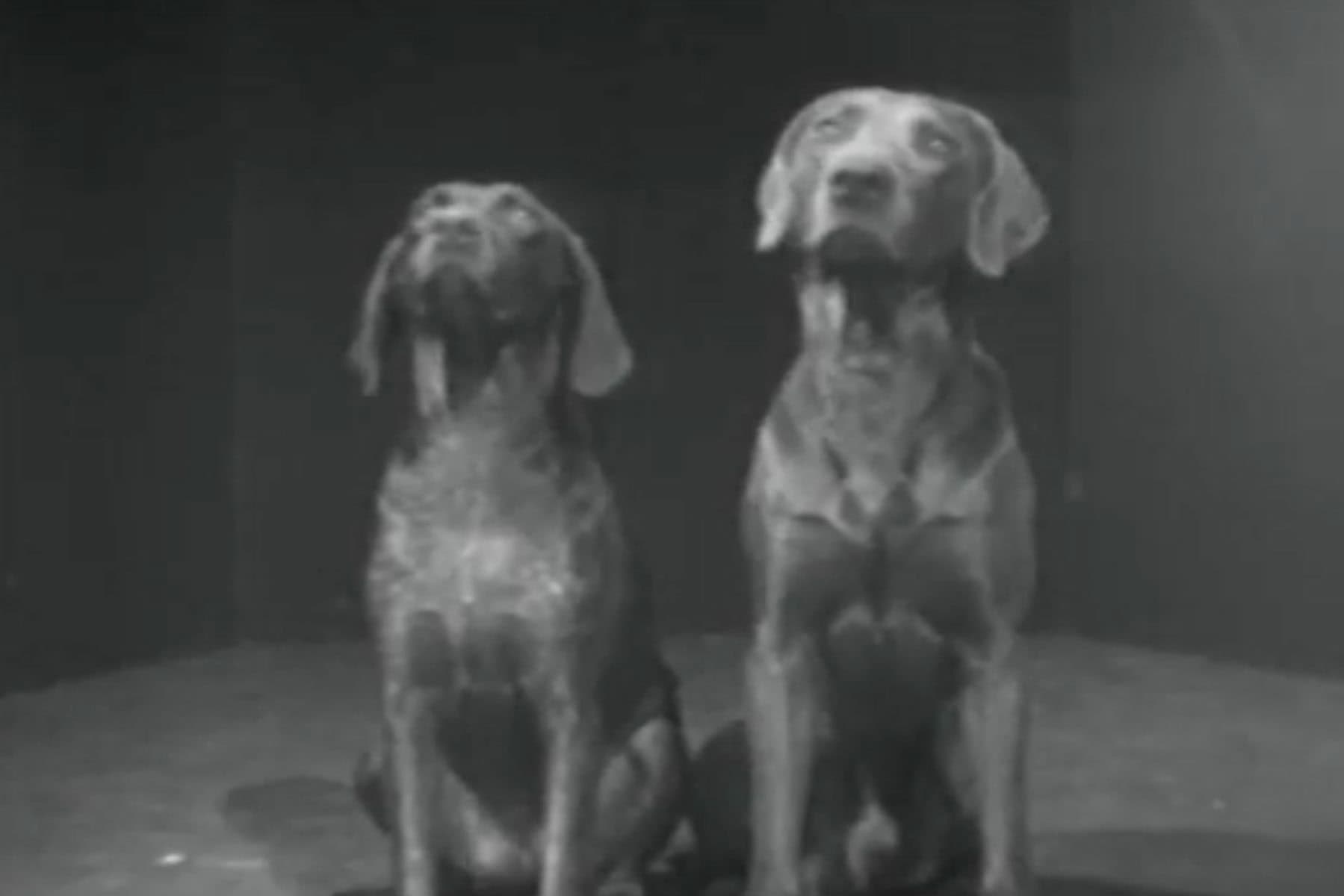
I think when there's humor it's as a result of something else, and I think when I say something else that I'm trying to get beneath the veneer of the world and trying to understand the world.
John Baldessari
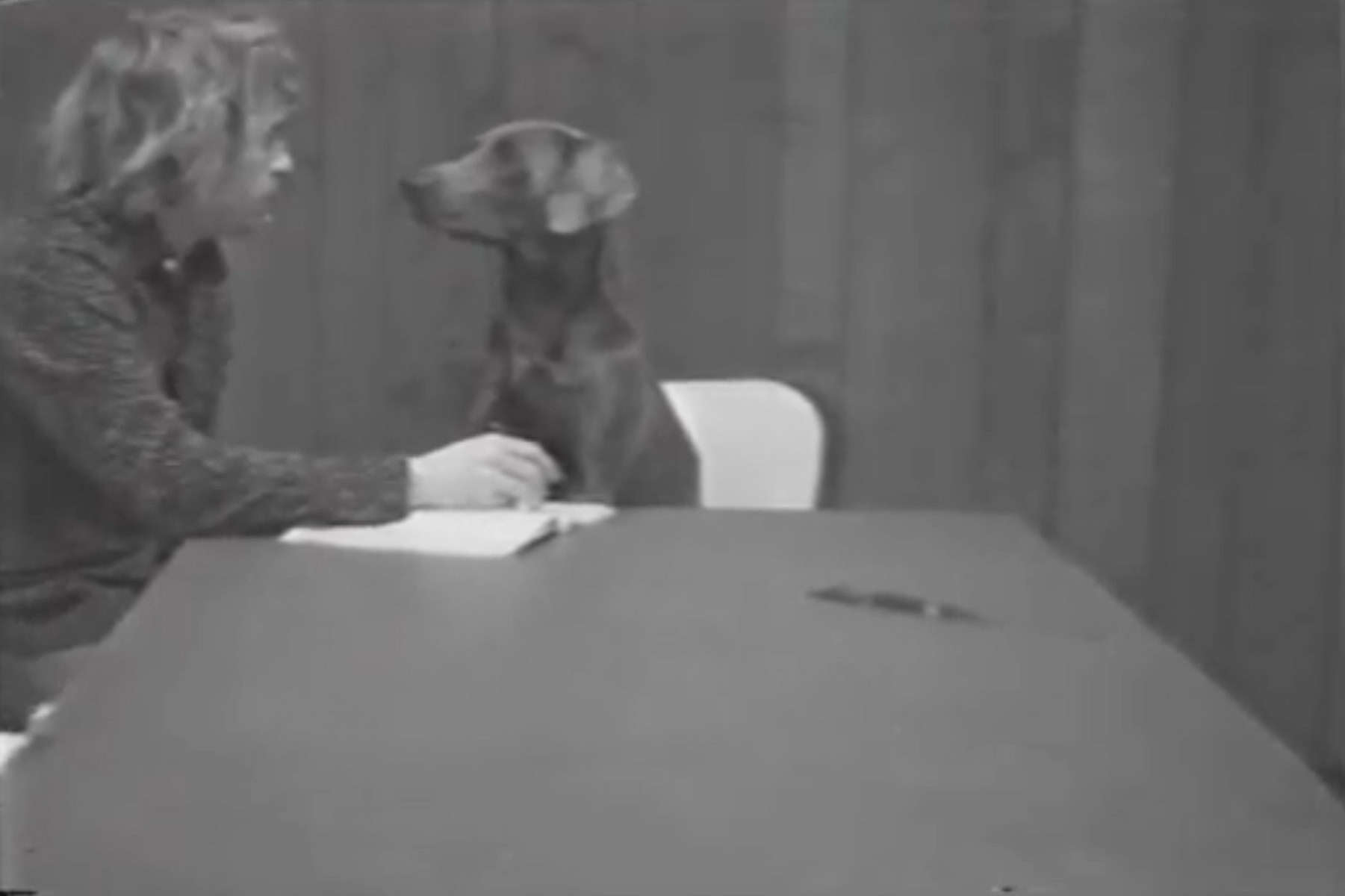
William Wegman, Spelling Lesson, 1973-74
Emerging from California in the 1970s, West Coast Conceptualism formed a critical counterpart to Conceptual art on the East Coast, through its commitment to politics, grounding in geographical and historical contexts, and tendency towards humour. In New York, Conceptual artists such as Joseph Kosuth, Sol Lewitt and Hans Haacke embodied a sense of gravity, rejecting the visual in lieu of pure, dematerialised ideas. Through sculptural actions, performance and sound the movement sought to eliminate the object in a reaction against traditional forms of art, and many artists moved out from galleries and museums as a form of institutional critique. Language was preferred as a medium which could be reproduced independently of the armature of the object, such as in Sol Lewitt’s instructions for drawings, detailing how an artwork should be made.
William Wegman’s work evolved within the context of West Coast Conceptualism alongside artists such as John Baldessari and Ed Ruscha. In response to East Coast practices, they created a distinct visual language and approach grounded in satire, absurdity and the vernacular. Wegman’s exploration with film, which began while teaching at the University of Wisconsin, continued as he moved to Los Angeles in 1970, a combination of documentation, parody and subtle criticism of art making. He adopted his weimaraner, Man Ray, while living in Long Beach, who became his collaborator for twelve years, often featuring in his work. His collaboration with Man Ray and his improvisational way of filming, whereby his camera was used as his sketchbook allowed him to record the most sudden or ephemeral situations. In these short vignettes, props and incongruities in found everyday objects act as comic devices, such as in Massage Chair (1972), where the description of an ordinary chair as an innovative product parodies television advertisements in a humorous critique.
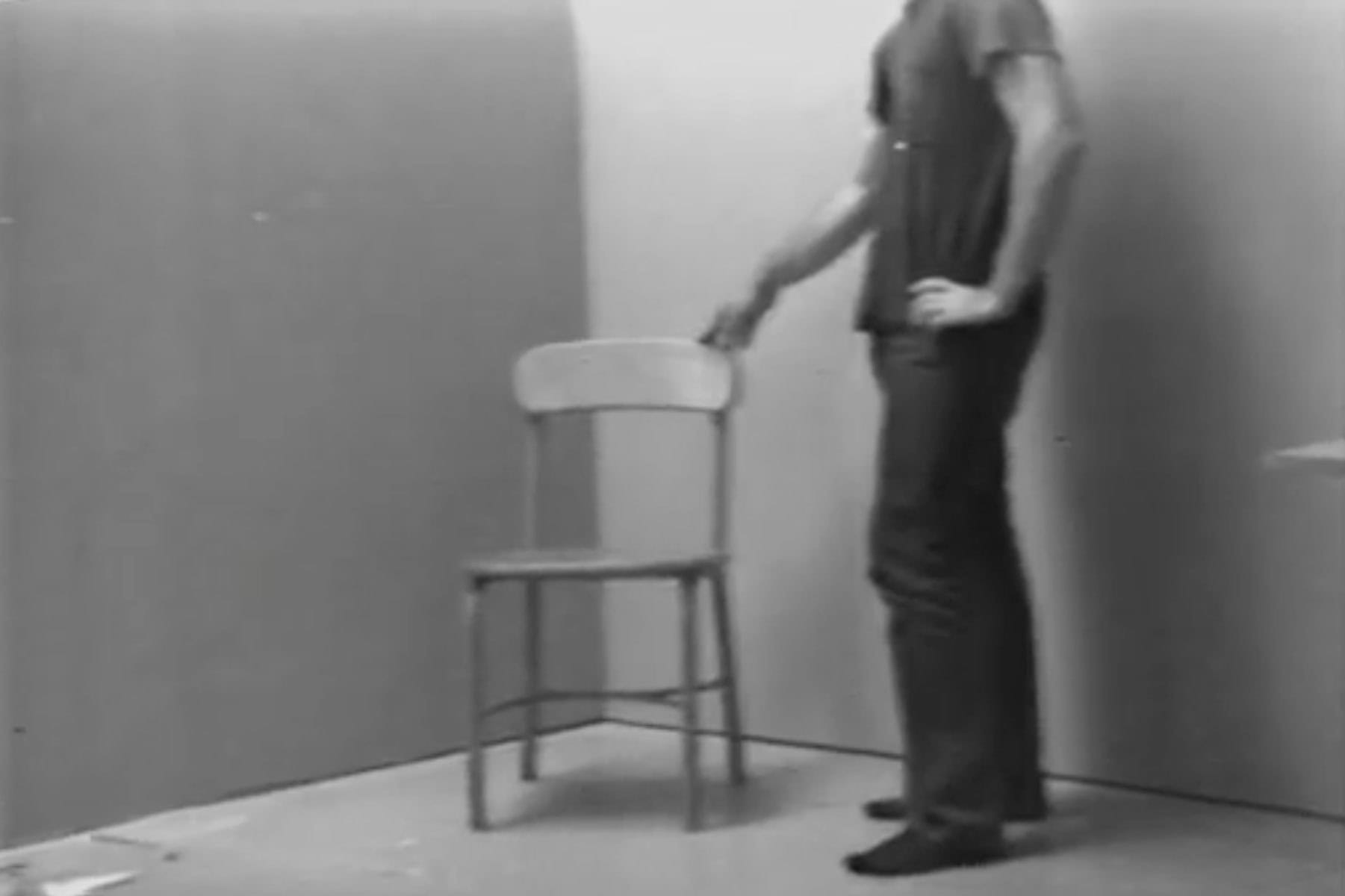
William Wegman, Massage Chair, 1972-73
West Coast Conceptualism’s use of “failure as an aesthetic strategy” resulted from its proximity to the counterculture movement. The failure of the counterculture and hippie movements in the 1970s, which brought to an end the long sixties, an era marked by its tumultuous political landscape, created a discourse of failure which inspired these artists. Wegman’s use of humour is often underpinned by themes of failure, frustration or disappointment. California as context, not only the birthplace of the counterculture movement, but also a hub of the defence industry in the wake of the burgeoning Vietnam War, not to mention environmental and racial issues, gave the movement its political grounding. Wegman and his counterparts often employed failure as a tool to reveal the powerful role of process within art and relinquish the control of the artist in favour of audience participation. Los Angeles in particular was a great source of inspiration for the West Coast Conceptualists – its juxtaposing landscapes inspired artists like Ruscha, who saw the manicured towns and surf culture opposed with gritty urban areas and dry deserts as the perfect backdrop to challenge the rise of commercialism. The perception of Los Angeles by those in New York also inspired the “self-aware dumbness” often exhibited in Wegman’s work. This dialogue with the East Coast created a “feedback effect”, whereby the movement’s most powerful work arose from a critique of the movement itself.
Through the use of puns, palindromes and fragmented dialogue, Wegman’s early videos oppose the severity of Conceptualism in its East Coast variety. In videos such as Spelling Lesson (1973-4), Wegman corrects Man Ray’s spelling of “beach”, (“You spelled it B-E-E-C-H… We meant beach like the sand”), parodying these rules and forming a direct dialogue with the movement on the East Coast, confronting the very questions which characterised the advent of conceptual art in the first place.
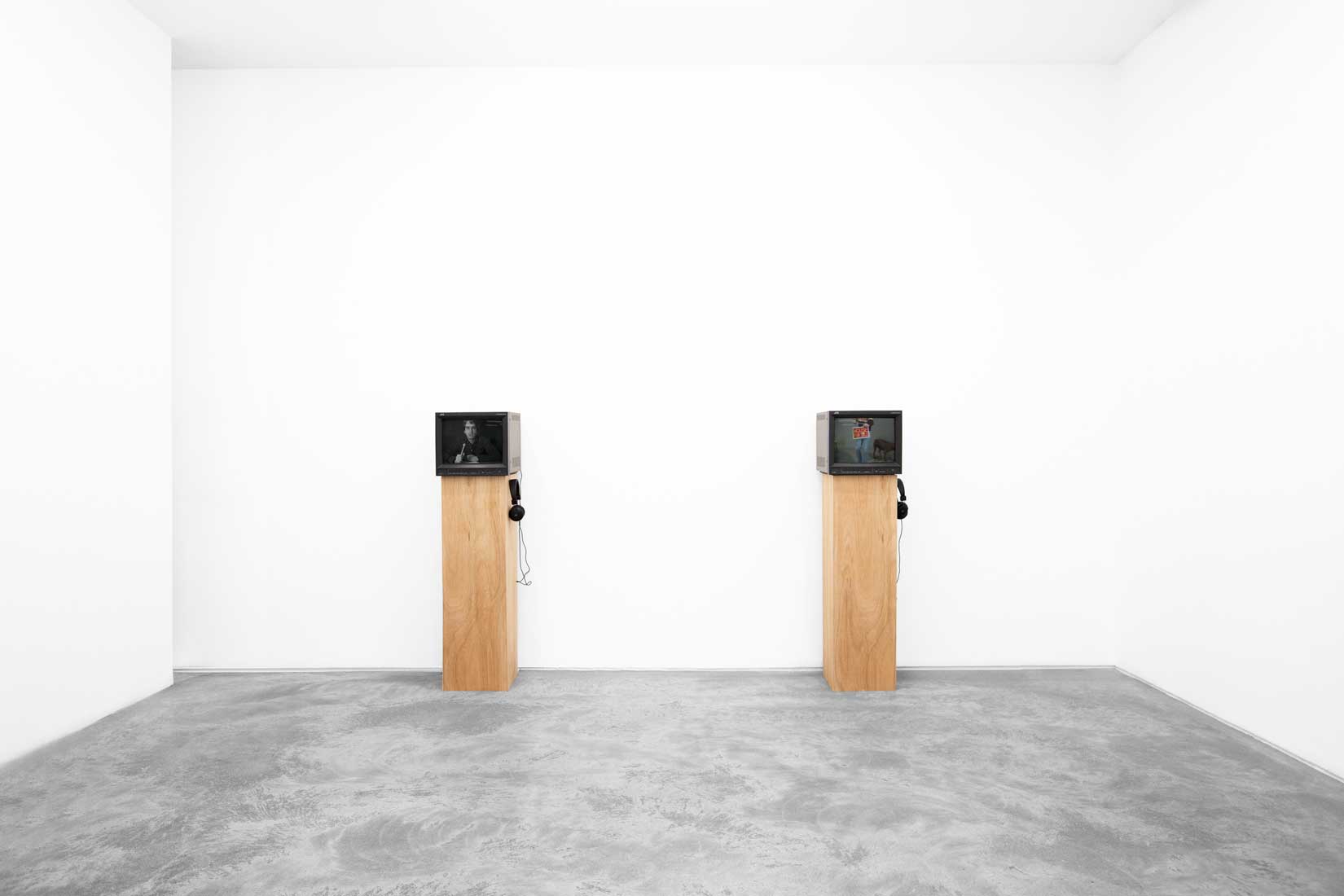
William Wegman, Video Works, 1970-77
The use of language to create additional layers of meaning, where one doesn’t require added knowledge to ‘get it’ reveals how Conceptualism’s rules and orders can reinforce stoic notions about art. Combating this with humour, Wegman’s work explores the interconnectedness between mind and body, contesting the significance of materiality itself and in the words of Simon Critchley, inviting us to “become philosophical spectators upon our own lives”
(By Emily Naughton)